
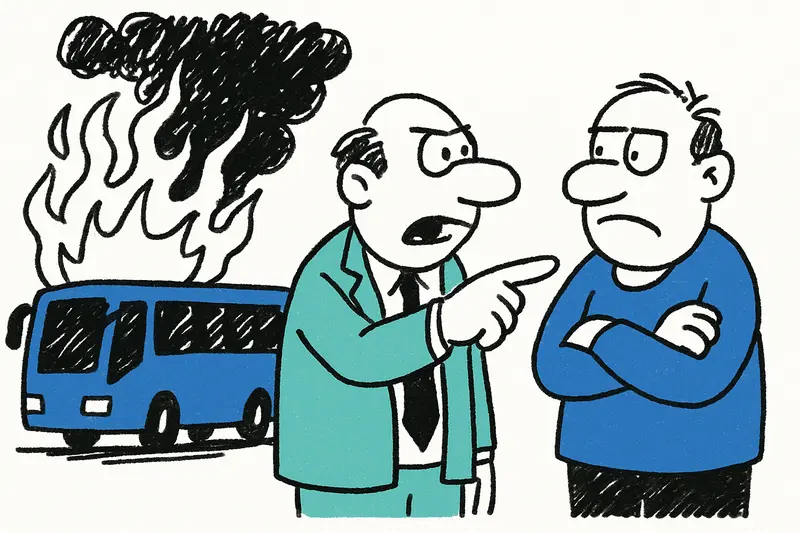
Bus in flames on the Vía de Cintura near Son Hugo: Who is responsible?
Bus in flames on the Vía de Cintura near Son Hugo: Who is responsible?
A coach burned out completely in the evening on the Vía de Cintura heading toward the airport. Firefighters, Policía Local and Guardia Civil extinguished the fire. Why do such incidents occur at night and what needs to change?
Bus in flames on the Vía de Cintura near Son Hugo: Who is responsible?
A night fire causes traffic jams, questions and a scrutiny of bus safety
Late on Friday evening a coach was in full blaze on the Vía de Cintura at the level of the municipal swimming pool Son Hugo. Around 10 pm flames and thick smoke rose into the night sky; firefighters, Policía Local Palma and Guardia Civil arrived quickly and extinguished the burning vehicle. Fortunately there were no injuries, only property damage. The cause is still unclear and is currently under investigation.
Key question: Why does a bus burn down in the middle of Palma — is it an isolated case, technical failure or a gap in maintenance and oversight?
The scene on the Vía de Cintura is not one people want to see often: blue lights reflecting on the wet road, drivers getting out to take photos, the smell of burnt rubber hanging in the air. Residents on Carrer de Son Hugo later reported sirens and the dull rumble of firefighting efforts. Such impressions raise everyday concerns: we use buses daily, rely on technology and control — but how robust are these assumptions really? Similar incidents on the Vía de Cintura have been reported, such as Skid Hazard on the Vía de Cintura: Burst Pipe Triggers Serious Motorcycle Accident.
Viewed critically, the incident reveals several weaknesses that need to be discussed. First: technical causes cannot be ruled out — the engine bay, brakes or electrical system are typical flashpoints in vehicle fires. Second: operational and maintenance processes. How thoroughly are coaches inspected, especially those operating outside city lines? Third: infrastructure and traffic safety. A burning vehicle on the ring road quickly blocks several lanes and endangers emergency personnel and other road users.
The public discourse currently often lacks the perspective of daily users: travelers, commuters, night workers affected by sudden closures. Incidents like Son Gotleu: Five Injured After Bus Collision – A Wake-Up Call for Palma's Streets underline these concerns. Also rarely discussed is the transparency of maintenance records of commercial bus companies and how inspections by authorities are organized. Instead of media outrage, many residents want clear answers and practical rules.
What went well on site: The alarm chain worked: fire brigade and police were on scene quickly, the fire was extinguished and injuries were prevented. But quick does not always mean sufficient: traffic control, cordons and informing stranded passengers took time and resulted in delays in clearing the Vía de Cintura.
Concrete solutions: 1) Stricter and publicly viewable maintenance records for coaches, 2) mandatory fire protection and extinguishing systems in modern long-distance coaches, 3) regular inspections by responsible authorities according to a uniform testing schedule, 4) better traffic management concepts for the ring road, such as temporary diversion lanes and faster communication to drivers and airport shuttles, 5) targeted training for bus drivers and emergency services for burning vehicles.
Such measures sound technical, but they are everyday protection: less congestion, reduced risk to people, less lost time — and fewer images of columns of fire on the city outskirts that linger in conversations.
The investigation into the cause of the fire will show whether it was a technical defect, material failure or a rarer trigger. Until then, the memory of the night with the glowing bus remains a wake-up call for better prevention. On the Vía de Cintura, where traffic is slow even during the day, we should not wait for the next siren to react.
Conclusion: No personal injuries are a relief — but luck must not replace planning. Authorities reacted correctly; now politicians, companies and inspectors are called upon to ensure such an incident does not become routine.
Frequently asked questions
What happened to the bus on the Vía de Cintura in Palma?
Was anyone hurt in the bus fire near Son Hugo in Mallorca?
Why do buses catch fire, and what are the usual causes?
How does a bus fire affect traffic on the Vía de Cintura in Palma?
Who investigates a bus fire in Palma, Mallorca?
Are coaches in Mallorca inspected often enough for fire safety?
What should drivers do if they see a vehicle fire on Palma’s ring road?
Why is the Son Hugo area in Palma mentioned in the bus fire report?
Similar News
Rental Car Theft in El Arenal: What This Incident Reveals About Our Gaps
A teenager steals a running rental car in El Arenal, flees on foot, climbs over walls and is caught by the Guardia Civil...
Red Rope in Palma's Library: What Helps Against Selfie Tourism — and What's Missing
Palma's city library cordoned off an area with a red rope to keep selfie tourism away from reading and working activitie...
Fort San Carlos: Museum, Harbor Dispute — and a Conflict That Demands Answers
The military museum at Fort San Carlos sits right on Palma's harbor, with unexpectedly quiet rooms filled with cannons a...
Old Town Under Pressure: When a Doorway Becomes a Sleeping and Shower Place
For months a woman has been living with a parasol, a clothes rack and personal belongings next to the social welfare off...
When Shopping Weighs Heavier: Mallorca Demands a Tax Pause on Food and Fuel
Rising prices are putting pressure on households and agriculture. The Balearic Islands are calling for temporary tax rel...
More to explore
Discover more interesting content

Can Cap de Bou

Townhouse Lleo 72
