
Serious Accident at Caló des Moro: What Must Change to Prevent Jumps Ending Like This?
Serious Accident at Caló des Moro: What Must Change to Prevent Jumps Ending Like This?
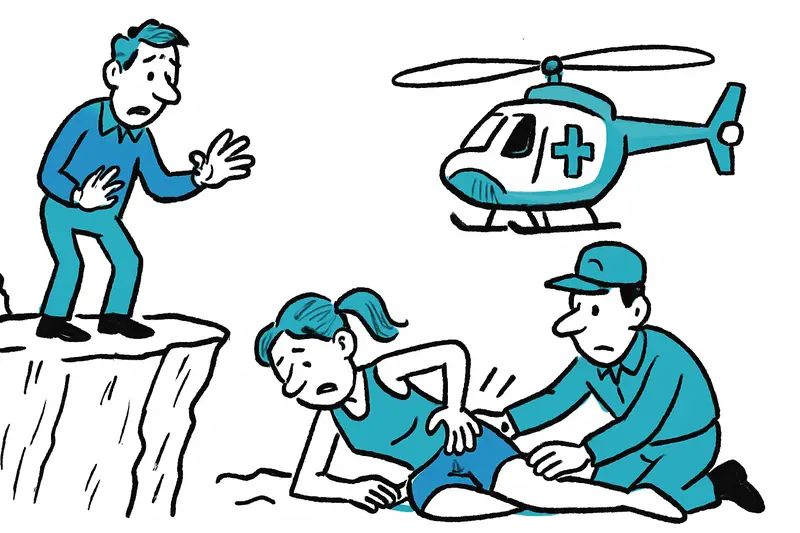
A 17-year-old suffered serious lower back injuries after jumping from a roughly 30-meter-high cliff at Caló des Moro. Rescuers brought her ashore and a helicopter then flew her to the hospital in Inca. Time for a reality check: how safe are our cliffs really?
Serious Accident at Caló des Moro: A 17-Year-Old Seriously Injured After Cliff Jump
On the afternoon of May 21 a 17-year-old at Caló des Moro in Santanyí suffered serious lower back injuries after apparently jumping from a cliff of about 30 meters into the sea. The local police were first on the scene and brought the teenager to shore. Once she was stable enough for transport, a fire department rescue helicopter flew her to the hospital in Inca.
Key Question
Why do serious accidents keep happening in well-known coves like Caló des Moro — and are municipalities, rescue services and the tourism sector doing enough to prevent such incidents?
Critical Analysis
The incident shows two sides: the excellent work of the rescuers and the obvious risks present at many coastal spots on Mallorca. Caló des Moro is a narrow, spectacular cove with steep cliffs, narrow paths and often densely packed visitors. In such landscapes the line between adventure and life-threatening danger is thin. Young people seek an adrenaline rush, social media supplies the images, and sometimes a daring jump ends in severe spinal injuries, as documented in When Dares Turn Deadly: Examining Cliff Jumps on Mallorca's East Coast.
As for the rescue, many things went as one would hope: rapid first aid by the local police, quick access to the shore, stabilization and air transport to a suitable hospital. The system works when something happens. But a functioning rescue system is no substitute for prevention — and this is precisely where the problem lies.
What Is Missing from the Public Debate
We often talk about interventions after an accident: helicopters, emergency medicine, legal proceedings. Rarely, however, do we discuss realistic prevention that reaches people in everyday settings like Santanyí. Public warning signs are scarce in some places, often only in Spanish or inconspicuous. There is a lack of targeted campaigns that meet young people where they are: on Instagram, in schools and at meeting spots. Hardly discussed either is how access routes and informal paths are laid out: if a trail leads directly to an unsecured edge, that's a structural issue.
A Scene from the Afternoon
Imagine Caló des Moro on a hot day: the smell of pine resin in the air, cicadas buzzing, bags and towels spread on hot rocks. A few fishermen stand on the upper rim watching the sea while groups of young people take photos, laugh and let clothes flutter. The stairway down to the cove is steep, some visitors wear flip-flops, others climb barefoot. In this mix of relaxation and noise, situations quickly arise in which bravado and inattention come together — and then something goes wrong.
Concrete Solutions
Prevention must be practical. Initial measures could be implemented immediately: highly visible warning signs in multiple languages with clear information about jump heights, currents and injury risks; simple pictograms that reach non-readers as well; discreet but effective barriers at particularly dangerous edges. Second, municipalities and conservation authorities should publish joint maps of hazard points — online and at tourist centers — and update these maps regularly, mirroring post-event reviews such as Rockfall at Sa Calobra: What are the lessons from the Ma-2141 closure?.
Third: education instead of bans alone. Awareness work in schools, targeted social media clips that show real cases and consequences, and partnerships with influencers who reach young people would achieve more than prohibition signs that no one reads. Fourth: seasonal deployment plans with rescuers or lifeguards at particularly frequented coves, especially during the warmer months. Fifth: technical aids such as GPS emergency codes at access points to help rescuers find hard-to-reach coves.
Who Needs to Get On Board?
What is needed is not a monolithic program but a networked responsibility: municipalities like Santanyí, the Balearic health system, fire and rescue services, but also hosts, landlords and tour operators. Private actors in particular can contribute to awareness with information leaflets, emails and key fobs. Several high-profile incidents, such as Three serious accidents in one night: What's wrong with Mallorca's country roads?, show the strain on emergency services and the need for coordinated prevention.
Conclusion
The quick rescue operation at Caló des Moro may have prevented worse outcomes. Still, that must not be the end of the discussion. Instead of only talking about helicopters and hospital corridors, we must seriously address warning systems, structural measures and targeted education. Otherwise the same scene will repeat: hot rocks, clicking cameras — and in the end a rescue operation that could have been avoided.
Frequently asked questions
What is the weather usually like in Mallorca in early spring?
Can you swim in Mallorca in spring?
What should I pack for a trip to Mallorca in spring?
Is spring a good time to visit Mallorca?
What is Palma de Mallorca like in spring?
Are Mallorca beaches busy in spring?
What is the best way to explore Mallorca in spring?
Do I need warm clothes for Mallorca evenings in spring?
Similar News
More water than last year: Mallorca's reservoirs breathe easier
September rain refilled the Tramuntana's reserves: overall fill around 35 percent, Cúber at 40.42 percent, Gorg Blau at ...
Three Luxury Hotels in Banyalbufar: Lots of Money, Many Questions
A Danish investor plans three exclusive accommodations in Banyalbufar — including the historic Son Valentí. The announce...
2.1 tonnes of cocaine on sailing yacht off Spain's coast – a reality check for the coastguard
A 14-metre yacht was seized with 2.1 tonnes of cocaine. Who monitors the ports, how does the international hunt succeed ...
Heat Bonus in Mallorca: 100 Euros Extra for Outdoor Staff at MarSenses
MarSenses pays employees who worked outdoors in August an extra €100 as recognition. Lighter uniforms, reduced hours for...
Renovating in Mallorca: What You Really Can Do Without Neighbour Consent
Many think they can do whatever they want in their apartment. That's partly true — but only as long as structural elemen...
More to explore
Discover more interesting content

Can Cap de Bou

Townhouse Lleo 72
