
Calvià Invests 25 Million: Between Renewal and Construction-Site Logic
Calvià plans 25 million euros for boulevards, drainage works and the Galatzó open-air museum. Plenty of money and big promises — but how sustainable are the measures in practice? A look at risks, noise and local opportunities.
Major construction in Calvià: More space, better paths, reopened houses — and many questions
When in the morning the coffee machine hisses at the Plaça and the chairs of the cafés on Carrer del Mar are stacked up, people are talking about the same topic: the investment. The municipality of Calvià has put together a package — Calvià launches €25 million infrastructure program – opportunities, risks and unanswered questions. That sounds like a new beginning. But under the dust of the excavators lies a central question: will we end up with streets and museums that are truly better and more sustainable?
What is planned — briefly and concretely
The focus is on two visible projects: the redesign of the boulevard in Peguera (around 3.4 million euros) and the extensive restoration of the open-air museum Galatzó. In Peguera the promenade should be tidier: new benches, better lighting, wider areas for pedestrians. At Galatzó it is about roughly 3,500 square meters of usable space; after restoration the first floor and the roof should be accessible. Both projects make sense — but the details will decide whether it becomes a pleasant place or a manufactured promenade.
Where the money comes from and why that matters
The 25 million are not a purely municipal effort: EU funds (Next Generation), grants from the tourism levy, funds from the island council and the state, as well as the municipality's own contributions finance the package. That is clever in one respect: larger infrastructure problems like stormwater drainage can be tackled this way. Particularly precarious sections such as Caravela road are allocated around five million euros. On the other hand, dependencies arise: if grant approvals are reduced or funds delayed, the schedule slips.
What is often neglected: operation, maintenance and climate
Investment sums sound good in meetings and brochures. In practice, however, follow-up financing determines success or later decay. Who pays for the upkeep of the new boulevards? Who continues to take care of the cleaning, lighting and repair of drainage channels? Especially at Galatzó regular conservation measures are needed — otherwise in a few years one will again have closed buildings because of decay.
On the subject of stormwater drainage: modern planners no longer rely solely on pipes but on green infrastructure — permeable surfaces, retention zones, trees with water-retaining substrate. Such solutions may cost a bit more initially, but they save on repairs in the long term and protect groundwater. Here a clear indicator would be desirable: how much of the five million goes into nature-based measures and how much into concrete channels?
The people on site: opportunities, noise and engagement
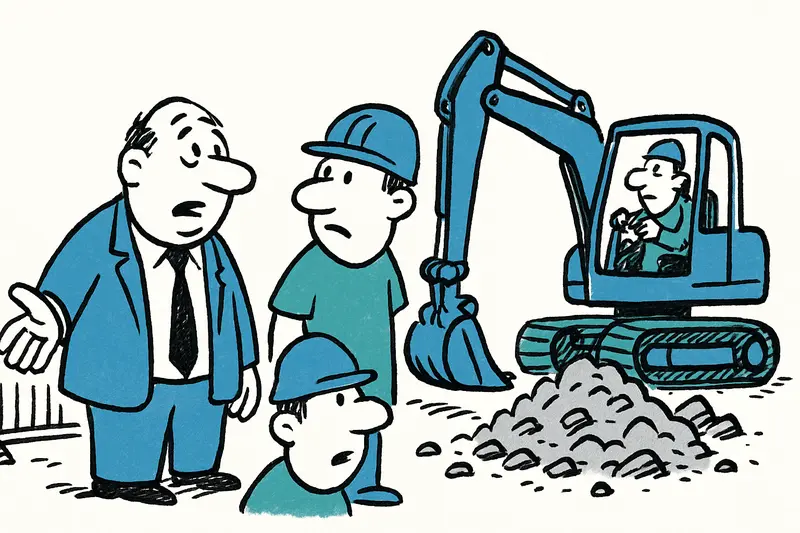
For residents, business owners and walkers the package means tangible changes. In the short term it brings construction noise, restricted zones and dust. Children stop to watch machines, the church bell rings over a street with fresh asphalt — typical days in Calvià during the building phase. In the medium term, better sidewalks and fewer floods could raise quality of life. It is important that the municipality keeps communication open: clear construction schedules, diversion routes for deliveries and access for local businesses.
Those you rarely hear: small shopkeepers and conservators
In discussions about large sums, small actors often get squeezed: kiosk owners, family boutiques, local craftsmen. They need planning security. The same applies to museum staff and conservators: when will the experts for wood, clay and traditional building materials come? Who decides on modern interventions like accessibility or climate control at Galatzó without losing the historic character?
Concrete proposals — so 25 million is not just a flash in the pan
Some pragmatic approaches could reduce risks and increase benefits:
1. Phased planning with priorities: Tackle the tricky drainage points first, then the aesthetic work on the boulevards. This keeps core functions intact even if individual projects are delayed.
2. Green water management: More space for infiltration, biotope strips and porous surfaces instead of pure concrete channels. Good for the climate, groundwater and long-term costs.
3. Maintenance fund: A small annual pot from the tourism levy for upkeep and repairs, managed transparently.
4. Transparent communication: Clear construction calendars, digital maps with closures, citizen forums in Peguera and Calvià so cafés and shops can plan.
5. Heritage conservation with expertise: For Galatzó an interdisciplinary team of conservators, historians and accessibility experts should decide — not just civil engineers.
Conclusion: seize opportunities, avoid mistakes
The figure of 25 million raises expectations — and rightly so. This money can noticeably improve Calvià: fewer floods, walkable boulevards, a lively open-air museum. To prevent this from being a short-lived blaze, planning, maintenance and bold ecological choices are needed. If the municipality now not only sends in excavators but also sets the course for sustainable operation, the investment drive will be more than construction noise: a real gain for local people.
And until then: at the next coffee on the Plaça, simply lend an ear. Between the clatter of plates and the whirr of air conditioners you might already hear the rhythm of a city in transformation.
Frequently asked questions
What changes are planned in Calvià and Peguera?
Why is Calvià investing so much in infrastructure now?
Will the works in Calvià cause traffic problems or noise?
What is special about the Galatzó restoration in Mallorca?
How will the Calvià investment help with flooding and drainage?
What should visitors to Peguera expect during the boulevard works?
How important is maintenance after big public works in Mallorca?
Is the Calvià investment focused only on tourists?
Similar News

Maribel: Five Decades of Service – Housekeeper from Peguera Celebrated with a Special Honor
Over 50 years in the hotel business: María Isabel “Maribel” Molinos was honored in Palma at the Nit del Turisme by Unive...

Orange Alert over Parts of Mallorca: Are We Prepared?
Dark clouds and an announced wet spell have triggered an Orange alert in parts of Mallorca. A reality check: what's miss...

Sundair & Co.: Sale speculation and what it could mean for Mallorca
Rumors about a possible sale of the airlines Sundair and Fly Air 41, which belong to Schauinsland-Reisen — and whether b...
Anne Wünsche in Mallorca: A job offer with a catch — who fits the role of personal assistant?
Influencer Anne Wünsche has left Berlin and is urgently looking for a full-time personal assistant in Mallorca. Why the ...

Daily from New York: Palma Between Boom and Strain
United will increase the Newark–Palma route to daily flights in 2027 using Boeing aircraft (231 seats). What does the in...
More to explore
Discover more interesting content

Can Cap de Bou

Townhouse Lleo 72
