
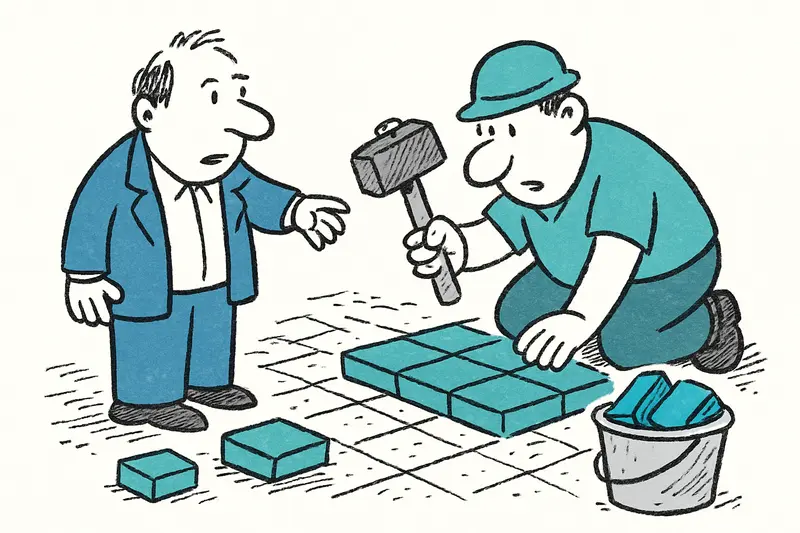
Calvià invests 25 million: paving, the Finca, Paguera — smart planning or just patchwork?
Calvià is spending €25 million on roads, the restoration of the Finca Galatzó, a new boulevard in Paguera and stormwater drainage. Is the money enough — and is it being used wisely?
Major paving program in Calvià — between jackhammers and sunsets
In September, Calvià will launch an extensive infrastructure program: around €25 million will flow over the next twelve months into roads, the restoration of the Finca Galatzó, the new boulevard in Paguera and stormwater drains. As reported in Calvià inicia un amplio programa de infraestructura: 25 millones de euros en doce meses, at first glance that sounds like good news: fewer potholes, prettier town centres, fewer puddles after heavy showers. On a second look, however, questions arise that are often given too little attention in the public debate.
The key question: impact over sparkle — is the money really enough?
€25 million sounds like a big move. The fact is: it will be a patchwork of priorities. Five to six million are budgeted for the Finca Galatzó, a part goes to Paguera, part to roads and the rest to stormwater drainage. The real question is: will lasting solutions be created — or will superficial problems be painted over? In Mallorca the following summer season often decides the quality of an investment. Will the new paving withstand October rain, winter storms and summer heat? Or will we see the familiar loose stones and deeper puddles next year?
Finca Galatzó: conservation, not a quick fix
The restoration of the historic Finca is the most visible single project. Nearly €5.7 million are to be spent on walls, paths and visitor routing. More on the planned budget and works is available in Calvià quiere invertir 25 millones de euros en calles, la Finca Galatzó y el bulevar de Paguera. Scaffolding and small teams with tape measures are nicer to watch than bulldozers. That is exactly good: historic walls do not tolerate heavy machinery. What matters now is care rather than haste. Whoever skims on the substance pays twice later — in repairs, declining visitor numbers and loss of reputation.
Paguera boulevard: wider promenades, but for whom?
In Paguera, wider sidewalks, new lighting and barrier-free access are planned. Local coverage of the boulevard plans appears in Calvià inicia gran ofensiva: 25 millones para bulevares, canales y el museo Galatzó. A plus for residents and beachgoers. But the boulevard is also an economic space: cafés, souvenir shops, delivery traffic and evening crowds all meet here. How will loading zones, bicycle parking and seating areas be balanced against each other? Who plans the construction phases so that small businesses are not forced into hibernation? Details on traffic management and how delivery times will be handled are still missing. And that is not a small detail: poorly timed construction phases can threaten livelihoods.
Stormwater drains: invisible, decisive — and often misdesigned
Modernizing stormwater drainage is not a luxury but a necessity. Heavy showers turn streets into streams. Intact channels protect asphalt, houses and shops. But it is not only about pipes. It is about retention, infiltration areas and linking with green spaces that absorb water. Instead of pure concrete, permeable paving, infiltration trenches (rigoles) and bioretention areas should be considered. That reduces peak runoff, protects groundwater and extends the lifetime of the asphalt.
The everyday polka: noise, detours, construction schedules
Those who live in Calvià know the sounds: early engines, the creaking of scaffolding, jackhammers, delivery vans honking around corners. The municipality plans stages so that shops can remain open. Experience shows: good phasing only works with good communication. Bus routes will be rerouted, parking spaces will disappear, residents need clear alternative routes. A site manager recently said dryly: "Deadlines on Mallorca have their own logic." That may sound charming, but it is little comfort for those affected when family life, work and tourism collide.
What is often missing — and how it could be done better
Too rarely is follow-up maintenance, monitoring and transparent information taken into account. Concrete proposals that should be part of the planning:
- Prioritization by network benefit: first the main axes and links to emergency services, then residential streets and footpaths.
- Permeable surfaces and green infrastructure: permeable paving, infiltration trenches (rigoles), tree pits that absorb water and bioretention areas instead of pure concrete pipes.
- Delivery and access management: clearly designated loading zones, time restrictions for delivery vehicles and temporary stopping zones during construction.
- Communication: weekly construction updates online and on information boards on site; simple maps with detours for pedestrians and drivers.
- Maintenance reserve & monitoring: a small fund for follow-up maintenance and a monitoring plan with measurable success indicators (paving condition, water retention, traffic flow).
- Involve local craftsmen: awarding contracts to local companies reduces transport routes, builds know-how and strengthens the local economy.
- Hardship fund for businesses: small aid when businesses demonstrably suffer revenue losses due to construction works.
A realistic outlook
Calvià can show visible improvements within a year — but only if planning, transparency and long-term maintenance go hand in hand. Otherwise the classic Mallorca phenomenon threatens: after the opening the paving stones are already loose and the rain reveals what really needed to be improved. The positive side is: there is a chance to turn the current wave of investments into a sustainable upgrade — with fewer puddles, better accessibility and a Finca that is visited with pride once again. Whether this succeeds depends not only on the money but on how it is used.
Those who stroll past the Finca Galatzó in the morning hear the clinking of tools, smell fresh cement and see planners spreading out maps. That sounds like work — and like the possibility to do it a little smarter this time.
Frequently asked questions
What is Calvià doing with the €25 million infrastructure budget?
Will the new paving in Calvià last through Mallorca’s rain and summer heat?
Why is stormwater drainage such an important issue in Mallorca towns like Calvià?
What is being restored at Finca Galatzó in Calvià?
How will the new boulevard in Paguera affect residents and visitors?
Will shops stay open during the roadworks in Calvià?
What should businesses in Calvià expect during the construction phase?
Is Calvià’s investment plan focused on short-term fixes or long-term improvement?
Similar News
The End of the Cheap Ride? Why Mallorca Is Hit Harder by the Fuel-Price Shock
Gasoline and diesel average close to two euros per liter. What this means for commuters, supply chains and renters in Ma...
Relaxed liquid rules in Munich: What Mallorca travelers will notice
At Munich Airport the 100-milliliter rule will be lifted at all checkpoint lanes — thanks to new CT scanners passengers ...
For 45 Years on Mallorca — and Then This: How a Market Visit in Santa Ponsa Became a Lesson
A woman who has lived on the island for decades lost money and important documents at the Mercat Setmanal in Santa Ponsa...
10 percent surcharge on the beach: How legal and transparent is the extra charge at Playa de Muro?
A German part-time resident noticed days after a restaurant visit in Playa de Muro that the bill included a flat ten per...

Body near the Llevant Market: What this death says about our city
A man was found dead on Sunday afternoon near the Llevant Market. Police say the death appears natural. The scene raises...
More to explore
Discover more interesting content

Can Cap de Bou

Townhouse Lleo 72
