
Cardiac arrest in the Tramuntana: Why a rescue often depends on chance
Cardiac arrest in the Tramuntana: Why a rescue often depends on chance
A 47-year-old cyclist suffered a cardiovascular arrest near Lluc. What went well, what is missing in the mountains — and how can Mallorca better protect people?
Cardiac arrest in the Tramuntana: Why a rescue often depends on chance
Key question: Are the supply chains and local preparedness sufficient to prevent someone in the Serra de Tramuntana from being left to chance at the roadside?
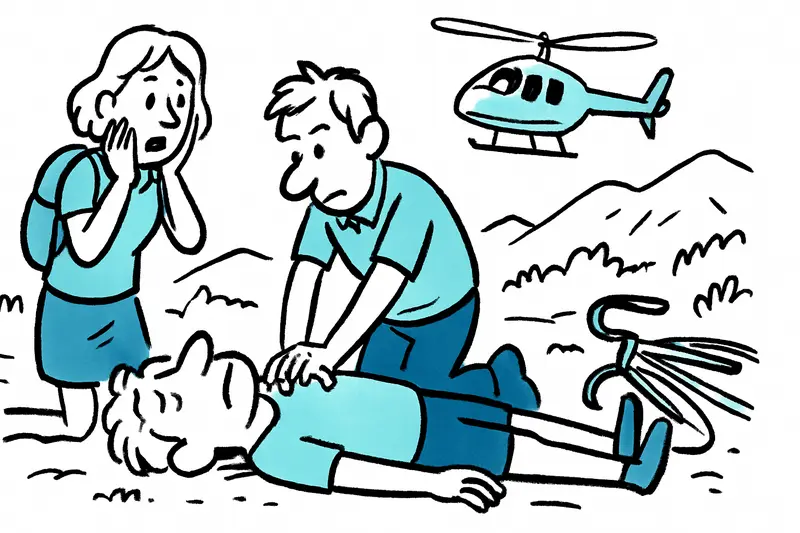
In the morning, at around 10:25 a.m., a 47-year-old cyclist collapsed during a tour near the Lluc monastery. Passers-by and several medically trained people who happened to be nearby immediately recognized that the man was not breathing and began resuscitation measures. Emergency medical service 061 alerted a rescue helicopter; the helicopter landed on the football field in Lluc and then flew the patient to Son Espases University Hospital in Palma. There he was admitted to the intensive care unit; his condition was reported as critical.
Such emergencies in the mountains are unfortunately not rare on Mallorca: road cyclists seek the steep climbs of the Tramuntana, day-trippers hike to viewpoints, and in autumn the roads are still busy, as with a fatal heart attack in Caimari.
Critical analysis: The rescue chain worked at a crucial point — thanks to first responders with medical training who were present by chance, resuscitation was started immediately. That is reassuring on the one hand, but on the other it reveals a weakness: first aid depended largely on luck. Official response structures such as helicopters and ground teams proved reliable, but until they arrive every minute counts; reporting on four rescue operations in one afternoon shows how often mountain rescues are complex and pressured.
What is often missing in the public debate: discussions usually revolve around alerting and air rescue, less about the minutes before. The questions that are rarely asked: Where are defibrillators in the Tramuntana? Are there good mobile reception spots to call for help and transmit the exact location? Are hiking and cycling routes clearly marked so control centers can assign a precise landing site? And how well are leisure groups trained in basic resuscitation?
From everyday life on Mallorca: If you ride the Ma-10 near Escorca early in the morning, you meet groups of road cyclists, couples with hiking poles and the local baker's van selling warm pa amb oli to tourists. The route to the Lluc monastery is popular, parking lots fill quickly, and next to the football field there is often a pile of sports bags — ideal conditions to notice injuries quickly, but also places where access routes and landing zones can be tight and confusing, as in other incidents such as Dead at the Na Torta Viewpoint in Valldemossa.
Concrete solutions: 1) Install defibrillators at central points: the Lluc football field, the visitor center, refuges and larger parking areas should have publicly accessible AEDs and be clearly signposted, following British Heart Foundation guidance on public access defibrillators. 2) Emergency maps and waypoints: place QR codes at heavily frequented sections that, when scanned, send precise GPS coordinates to the emergency control center. 3) Volunteer first responder network: cooperation between cycling clubs, trekking groups and local bars to train in Basic Life Support and act as first contacts in an emergency. 4) Mark landing zones: clearly marked and included in emergency plans helicopter landing zones along the Ma-10, maintained by municipalities so pilots can land faster. 5) Information campaign: brief notices at bike rental stations and hotels — what to do in a collapse, how to place an emergency call, where AEDs are located. 6) Equipment for rescue services: mobile rescue backpacks and better coordination with local clergy and forestry offices, who are often first on the scene.
One must not forget: prevention helps. Cyclists should have medical check-ups, avoid dehydration and salt imbalance before training rides, and keep an eye on the heat. A simple emergency card with blood type and a contact name in the jersey can make a difference.
Pointed conclusion: That doctors and nurses happened to be on site was luck — no substitute for a systematic network of devices, signage and training. The Tramuntana is a popular recreational area, not a medical island. Mallorca can and must learn from these incidents: visible AEDs, clear landing zones and more local first responders make the minutes before the helicopter's arrival count. Otherwise rescue will often remain a matter of chance.
Frequently asked questions
When is the best time to visit Mallorca for outdoor activities?
What should I pack for a Mallorca trip to stay comfortable?
Are Mallorca's beaches good for swimming and family trips?
How can I get around Mallorca without a car?
What are some easy day trips from Palma to experience Mallorca's scenery?
What practical tips help with packing and planning for Mallorca?
Are there budget-friendly ways to enjoy Mallorca without staying in busy tourist zones?
What should I know about Mallorca's weather patterns to plan a trip?
Similar News

Sunset and Sake: How Formentor and Palma Enliven the Late Season
Cabañas, theatrically presented cocktails and a sake spritz on the rooftop: Formentor and Palma blend luxury and everyda...

Between Arrival Hall and Hospital: 109 Capsules, One Case and Many Questions at Palma Airport
A traveler from Belgium was arrested at Palma Airport with 109 cocaine capsules, more than a kilogram. The case shows ho...

Why the Cologne–Palma Flight Stalled in Cologne — a Reality Check
A Eurowings A320 (EW584) came to a halt at the gate in Cologne/Bonn. Passengers had to disembark and wait more than two ...
Cardiovascular Collapse in Peguera: Rescue on the Beach and the Questions That Remain
An 88-year-old Swiss man was recovered unconscious from the sea off La Romana (Peguera) and, after prolonged resuscitati...

Shipwreck before the first departure: How the 'Bus Nàutic' failed due to planning mistakes
A multimillion-euro port project in Palma collapsed before a vessel ever sailed. Key question: Why did the 'Bus Nàutic' ...
More to explore
Discover more interesting content

Boat Tour with BBQ along Es Trenc Beach

Private transfer from Mallorca Airport (PMI) to Pollensa
