
Cas Català: Man photographed children – How safe are our beaches?
Cas Català: Man photographed children – How safe are our beaches?
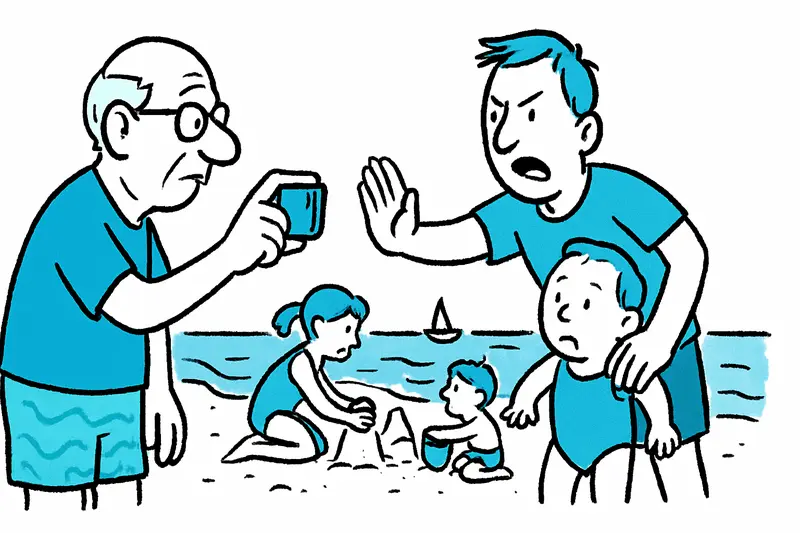
At the beach of Cas Català, parents observed an elderly man repeatedly filming children and babies with his mobile phone. The police were alerted, but the man had already disappeared. A reality check on the situation at Mallorca's family coves.
Cas Català: Man photographed children – How safe are our beaches?
On Wednesday morning, between roughly 9:30 and 10:30, a quiet cove near Palma was thrown into turmoil: parents saw an elderly man repeatedly pull out his smartphone and apparently record children and babies. The incident took place at the small cove of Cas Català, a place where the morning routine includes the sound of the waves, the clatter of buckets and the smell of sunscreen.
Key question
How should parents, residents and the authorities react when someone on the beach is suspected of taking photos of minors — and what is missing in the public discourse?
Critical analysis
The accounts are clear: a man described as about 70–80 years old, wearing glasses, with white hair, blue eyes and a distinctive swimsuit, positioned himself where many children were playing. Witnesses say he pretended to film the sea but repeatedly pointed the camera at the little ones. A father put himself between his one-year-old daughter and the man and alerted the Policía Local of Calvià. By the time officers arrived, the man had already gone.
What is often missing in such situations is clarity about what is legally possible and what makes sense: in Spain, photographing in public is not automatically a criminal offense. The decisive factors are the purpose, the context and whether the images are later used abusively. The police can act if there is reasonable suspicion; but without clear evidence the scope for action is limited. That understandably leaves parents feeling powerless.
What is missing in the public discourse
There is too little discussion about how a community can act preventively: what roles do lifeguards, the local Policía Local and the municipal administration play? Tragedy in Son Bauló: Small Cove, Big Questions — How Safe Are Mallorca's Unassuming Beaches? underscores why preparedness and clear roles matter. Where are clear instructions for visitors on how to report suspicions? And how do you protect families' privacy without panicking or making hasty accusations?
Everyday scene from Mallorca
Imagine Cas Català on a summer day: small boats bobbing on the horizon, children building sandcastles among patches of seaweed, and cutlery clinking on a promenade café. It was in exactly this everyday setting that something unsettling happened — a moment that passes quickly but lingers. The parents did not go to a lawyer; they stood there with wet hair, voices trembling, as a neighbor reached out to another while the waves kept rolling in.
Concrete solutions – immediate and medium-term
For parents: stay calm, keep children close, collect eyewitnesses and note descriptions, time and location. If possible, take a photo of the suspect from a safe distance (generally permitted in public areas) and secure witness statements. Call the police (in acute danger, dial 112); inform the Policía Local of Calvià if it is not an immediate emergency.
For the municipality and authorities: increase visible presence at family-friendly beaches, train lifeguards in handling suspicious incidents and provide a short leaflet for parents. Installing signs with clear reporting procedures would be practical. Technically: a local reporting app or hotline that connects beach guards and police quickly; the ongoing plan to install sensors on around 150 beaches from summer 2026 highlights the trade-offs between monitoring and privacy.
For the neighborhood: beach WhatsApp groups work surprisingly well here. Such local networks can rapidly coordinate witnesses without creating hysteria.
Conclusion
The incident in Cas Català showed that parents' concerns are real; legal and police instruments exist but are often hard to access in the moment. We need more visible prevention, informed by debates such as Digital Eyes on Mallorca's Beaches: Protection or Surveillance?, clear reporting channels and simple rules for conduct on the beach. No vigilantism, but also no ignoring — an island community that stands together can better contain such unpleasant moments.
For now: be watchful, observe, report — and keep children close. Cas Català can remain a bay for families if we stay vigilant and act together.
Frequently asked questions
When is the best time to visit Mallorca for good weather?
Is Mallorca a good destination for beach swimming and water activities?
What should I pack for a Mallorca trip?
How do I get around Mallorca: public transport or car rental?
What family-friendly activities are available in Mallorca?
Are there scenic day trips to consider in Mallorca?
What should I know about Mallorca's beaches safety and etiquette?
Where can I experience local Mallorcan food and markets?
Similar News
Plata stays Plata: Young people take over, Llonguets remain
A small bar on Carrer de l'Argenteria will continue: Tolo Serra hands the place over to young Mallorcans at the end of t...

Unnoticed in the Luggage Compartment: How a Boy Traveled More Than 100 Kilometers in a Team Bus
A minor traveled in the undercarriage of a team bus for more than 100 kilometers until his cries for help were heard. A ...

Cap Vermell Grand: Second Michelin Key – a Gift for the East
The Cap Vermell Grand in Capdepera has been awarded its second Michelin key. For the region this elevates the luxury off...
Eurowings lets four aircraft carry names – a friendly idea that also reaches Mallorca
Eurowings is launching a campaign: four Airbus A320s are to carry the first names of people who help others in everyday ...
From the Reality Studio to the Pitch: Aleks Petrovic Makes Mallorca His Base
The former participant in numerous TV shows moves from Dubai to the island and launches a project with FC Germania Mallo...
More to explore
Discover more interesting content

Can Cap de Bou

Townhouse Lleo 72
