
Celebrities, One-Point Drama and a Summer Evening in Santa Ponça: Padel Celebrates in Mallorca
Celebrities, One-Point Drama and a Summer Evening in Santa Ponça: Padel Celebrates in Mallorca
Around 400 players, a radical format — and well-known faces on the courts of the Mallorca Country Club: the One Point Challenge in Santa Ponça mixed sport, fun and summery island vibes.
Celebrities, One-Point Drama and a Summer Evening in Santa Ponça: Padel Celebrates in Mallorca
One Point Challenge attracted amateur teams, pros and names from film and football to the court
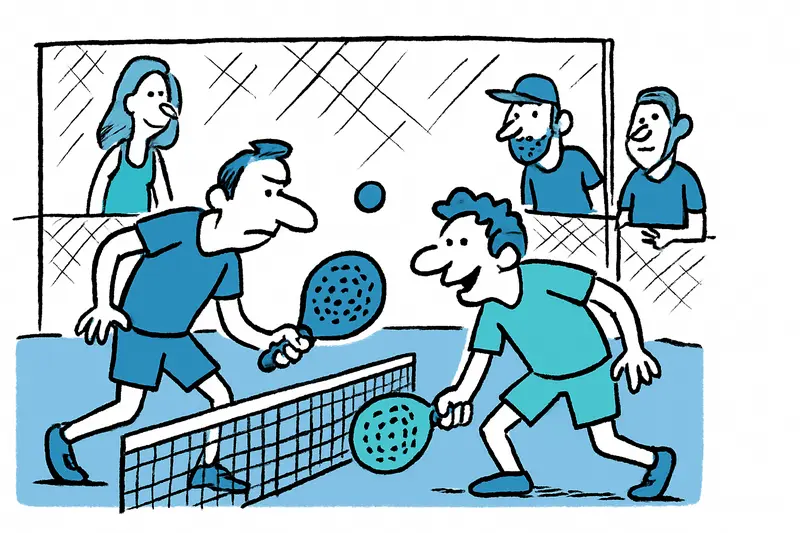
On Saturday a distinctive sound could be heard in Santa Ponça: the sharp snap of balls against glass walls, occasional laughter, a coach calling instructions and, in the background, the steady murmur of the sea. On that late-summer day the Mallorca Country Club transformed into a colorful mix of tournament arena and neighborhood festival. About 400 players in roughly 192 teams took part in the One Point Challenge Tour — a format in which every rally really felt like a small final.
The twist: a single point decided victory or defeat. No long sets, no tactical time travel — whoever won the point moved on. That creates pace, surprises and atmosphere. Known faces filled the stands while ambitious amateurs and seasoned players shared the court. Actor Uwe Ochsenknecht picked up a racket, former pros such as Claudio Pizarro, Marcell Jansen, David Odonkor and Patrick Owomoyela took part, presenter Jana Azizi and influencer Younes Zarou were also there. German padel player Denise Hoefer joined in; between selfies and quick matches there was time for a few light-hearted jokes.
The event, supported by bett1.de, Skjur and Cupra, offered more than matches: a supporting program, Ibiza-like late-summer heat and a few cool drinks on the club terraces turned the competition into a public event that lasted into the evening hours. Organizer Edwin Weindorfer was on site and kept an eye on the details — from the schedule to the music drifting occasionally from the club bar. The atmosphere? Relaxed, but with serious sporting ambition.
In the end the winners were decided: Stefan Böhnke and Nick Merten. They took home the €10,000 prize and a wildcard to the series final in December in Munich, where the OPCT top teams will compete for a total prize pot of €100,000. For many participants that was reward enough: on Mallorca the small, fast format has established itself as a stage for surprises — giving players of all levels a chance to step into the spotlight.
What this tournament does for Mallorca is easy to describe. It brings people together: local club members, resident sports fans, tourists who happen to stop by and visitors drawn by celebrity interest. Santa Ponça benefits from an event that feels neither overblown nor exclusive; it fits into local leisure culture and enlivens cafés, parking lots and the small shops along the access road to the club. Such events generate short-term economic activity — from gastronomy to taxi drivers — and strengthen the sense of community in the neighborhood.
A small everyday scene lingers: two older gentlemen on the wall beside the court, who have watched tennis every Sunday for years, praised the “new balls” and loudly debated whether the one-point system is really fair. Children ran barefoot across the grass, a dog slept in the sun, and a group of young tourists filmed the final for their stories. That is Mallorca’s mix: sporting intensity meets seaside ease.
There is inspiration in the simplicity of the concept. Padel here does not need a huge roster of sponsors or excessive staging to work. A good court, an open audience and a bit of boldness are enough. In the future the island could continue to rely on such formats: short, audience-friendly competitions that connect amateur and professional levels and create real meeting places in small towns like Santa Ponça.
Conclusion: The One Point Challenge in Santa Ponça was not a glossy, glamorous spectacle but a lively tournament day with celebrities, heart and many small moments. For Mallorca it is further proof that sporting events here are more than mere competitions — they are meeting points, economic boosters and a piece of local life.
Frequently asked questions
When is the best time to visit Mallorca for pleasant weather and manageable crowds?
Can I swim in Mallorca outside the peak summer months?
What should I pack for a trip to Mallorca?
Are there family-friendly activities to enjoy in Mallorca?
How can I get around Mallorca without renting a car?
What experiences should I not miss on Mallorca?
What are the standout dishes to try in Mallorca?
Do I need to know Spanish or Catalan in Mallorca, and what currency is used?
Similar News
Body near the Llevant Market: What this death says about our city
A man was found dead on Sunday afternoon near the Llevant Market. Police say the death appears natural. The scene raises...
Who stays, who goes? A reality check on the future of Mallorcans
An emeritus island geographer sees Mallorcans on the defensive: What does this mean for everyday life, housing and the i...
Acquittal after secret photos in Cala Millor – what the court ruling leaves out
A German tourist photographed a three-year-old girl at a hotel breakfast — the judge acquitted him because no sexual int...
Man Exposes Himself in Front of Café in Palma: Why This Must Not Be Dismissed as an Isolated Case
A man was arrested in Palma after he lowered his trousers in front of a café and exposed himself to minors. What does th...
Brawl at the Airport: Who Is Responsible for the Escalation Among Transfer Drivers?
A dispute between two transfer drivers escalated on Saturday morning in the arrivals area of Son Sant Joan. One man was ...
More to explore
Discover more interesting content

Can Cap de Bou

Townhouse Lleo 72
