

Man Exposes Himself in Front of Café in Palma: Why This Must Not Be Dismissed as an Isolated Case
A man was arrested in Palma after he lowered his trousers in front of a café and exposed himself to minors. What does this say about public safety, prevention and the local environment?
Man Exposes Himself in Front of Café in Palma: Why This Must Not Be Dismissed as an Isolated Case
National Police arrest exhibitionist — many questions remain
Last Saturday morning the National Police intervened in Palma: a man of Spanish nationality was arrested after he allegedly pulled down his trousers in front of a café and touched his genitals. According to the officers, several witnesses observed the scene, including a customer with his underage daughter and two café employees. The staff also reported that the man had already behaved conspicuously the day before, a pattern also reported in Sex at a Hotel Pool in Port d'Andratx: When Vacation Freedom Meets Public Exposure.
Key question: Why is an arrest not enough when an apparent repeat offender can appear within sight of children without being stopped?
The description of the incident sounds disturbingly familiar: the clinking of cups, murmured conversations, scooters in the distance — and suddenly a scene that does not belong to a normal Saturday morning on the island. Such incidents not only disturb those directly affected, they make parents, employees and guests look for ways to protect themselves. The police acted on site; that is important. But prevention has to start earlier.
Critical analysis: On the one hand, the case shows that bystanders and café staff were alert and informed the authorities immediately. On the other hand, the report suggests the problem was not new: a man who repeatedly behaves suspiciously near a venue points to failures at several levels — there was apparently no lasting intervention by the operator nor were there sanctioning consequences before the situation escalated, as illustrated by Arrests after threats at the city beach: Why an evening stroll must become safer again. Who bears responsibility when a regular customer becomes a risk?
Public discourse often focuses on the arrest as the end point. What is missing: the perspective of those affected (the children, parents, employees), clear information about preventive measures taken by the venue operators and the question of how repeat offenders can be removed from public spaces or treated more quickly. There is also little public discussion about what help is available for witnesses and victims — both psychological and legal — after such experiences, an issue raised in Assault at Palma Station: Why Visibility Alone Doesn't Protect.
Everyday scene from Palma: Imagine the square or a popular street in Palma, soft light, tourists with ice cream, seniors on benches — and a café with regulars you know. In this neighborhood familiarity is often a protection, but it can also lead to incidents being trivialized: 'Oh, that's just Mr. X again' — and the next day the behavior repeats. That is dangerous because it wastes time during which children remain exposed.
Concrete solutions: 1) Operator training: Cafés and bars should receive short awareness workshops on how to handle sexual harassment, how to secure witnesses quickly and contact the police. 2) Low-threshold reporting paths: A clearly visible notice in the venue with the emergency number 112 and the National Police number (091) can save time in an emergency. 3) Neighborhood network: Local businesses should be able to share information about repeatedly conspicuous individuals — of course within legal limits — so patterns become visible. 4) Preventive presence: More proactive police patrols at family-frequented places during sensitive time windows signal protection. 5) Support for witnesses: Quick access to psychosocial first aid for children and adults after an incident, coordinated by the city council or local NGOs.
Legally, exhibitionism is a crime, and the arrest was the necessary step. But prosecution alone is not enough: repeated incidents often point to underlying mental health issues or addiction. Cooperation between the judiciary, health services and social work is necessary so the cycle does not start again.
A small, concrete proposal that costs nothing: Cafés in busy neighborhoods could designate visible 'safety officers' — one person per shift who knows who to call and what steps to take. This raises the threshold for offenders and gives guests and staff a clear course of action.
Punchy conclusion: The arrest shows that people can intervene and the police respond. That is not enough. If a man is noticed twice in a row, this is a warning sign for the whole neighborhood — and an opportunity to act structurally: better prevention in leisure areas, quick help for those affected and exchange between businesses, police and social services. Otherwise, after the police intervention all that remains on the terrace is an uneasy feeling — and the question of whether it will go as lightly next time.
Frequently asked questions
What should I pack for Mallorca depending on the season?
Is Mallorca easy to explore without a car?
When is the best time to visit Mallorca for quieter beaches?
What are good, family-friendly activities in Mallorca?
Is the sea in Mallorca suitable for swimming and water sports?
What can I see on a day trip from Palma?
What local Mallorcan foods should I try?
Do I need any special safety tips or health considerations when visiting Mallorca?
Similar News

Brawl at the Airport: Who Is Responsible for the Escalation Among Transfer Drivers?
A dispute between two transfer drivers escalated on Saturday morning in the arrivals area of Son Sant Joan. One man was ...
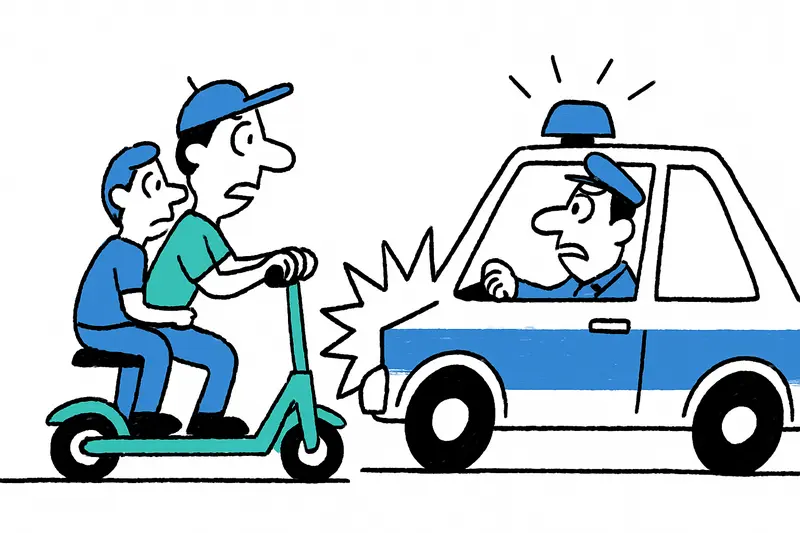
Collision in Palma: Why an E-scooter and a Patrol Car Ended Up on a Collision Course
At an intersection in Palma in early September a young e-scooter rider collided with a local police patrol car. No one w...
Warty on the Green: When a Cyborg Is Supposed to Learn Golf in Mallorca
A silver humanoid named Warty visits Son Gual – as advertising for Water D and as a guinea pig for golf lessons. A criti...

Balearics Consider Restrictions on Second-Home Purchases – a Reality Check
The regional government is examining whether purchases of second homes by non-residents can be restricted in future — bu...

Concert and Tasting at Sa Torre de Santa Eugenia: Music, Cuisine and Mallorcan History on September 18
An evening at a historic estate: chamber music, a tasting menu paired with wines from Macià Batle, and proceeds benefiti...
More to explore
Discover more interesting content

Boat Tour with BBQ along Es Trenc Beach

Private transfer from Mallorca Airport (PMI) to Pollensa
