
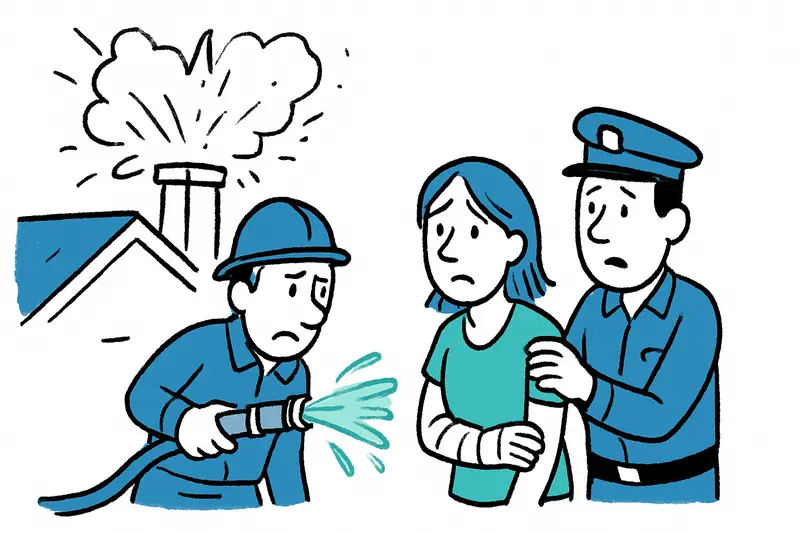
Chimney Explosion in Coll d’en Rabassa: 18-Year-Old Seriously Injured — Investigation and Safety Questions
An explosion in a chimney in Coll d’en Rabassa seriously injured an 18-year-old yesterday. Police are investigating how a spray can apparently ended up in the flue. A look at safety gaps and prevention options in private homes.
Explosion in Coll d’en Rabassa: Young woman seriously injured, neighbors shocked
In the late afternoon, around 3:30 PM, a loud bang turned the quiet Coll d’en Rabassa into a scene of hectic rescue work. Neighbors reported a flash, choking smoke and sirens wailing through the residential streets. Fire crews arrived with several vehicles. Two people were injured; an 18-year-old woman suffered severe burns and was taken to the Son Espases University Hospital.
The central question: How could this happen?
Investigators in Palma are currently examining how an aerosol can — reportedly an insect spray — could have gotten into the chimney and caused an explosion when the fireplace was relit. That is the working hypothesis of the emergency teams, but no final conclusion has been reached yet. The key question remains clear: How careless or accidental must storage or handling have been for flammable gases to be drawn into an open fireplace?
Amid the dramatic scene, a sober view is warranted: an open fireplace creates a draft that can suck gases from adjacent cavities or openly stored containers. If a flammable aerosol comes into contact with a flame, acute danger arises within seconds — a risk many underestimate, especially in households with young people.
What is often missing from the public discussion
Eyewitnesses describe a hectic picture: breathing protection teams, water on the pavement, neighbors with anxious faces. Such scenes dominate the reports. Less attention is often paid to the context: How are spray cans and other flammable substances stored in the home? Who is responsible in multi-family buildings — tenants, landlords? And how well informed are young adults about the dangers of open flames?
Structural factors also play a role. Old or poorly maintained chimneys, damaged caps and missing spark arrestors increase the risk that foreign objects can enter the flue. In tourist-heavy neighborhoods and with frequent apartment turnover, regular inspection of these installations can be neglected.
Concrete opportunities and solutions
The current investigation offers a chance to reassess habits and regulations. Some practical measures that can have quick effects:
1. Awareness campaigns: Information leaflets for tenants and homeowners about the risks of aerosols, proper storage and behavior when using a fireplace — distributed via neighborhood associations, property managers or schools.
2. Mandatory inspections: Regular chimney checks and the installation of spark arrestors should be more strictly enforced. Older systems in particular benefit from annual inspections.
3. Landlord responsibility: Landlords should highlight fire safety in rental agreements and provide basic safety equipment such as spark arrestors and fire extinguishers.
4. Disposal options for spray cans: Municipalities could promote collection campaigns for empty or defective aerosol cans to reduce unnecessary storage in apartments.
5. Strengthen emergency knowledge: Short first-aid trainings, guidance on how to respond to burns and a clear alarm chain (numbers, assembly points) in residential complexes help mitigate consequences.
Local impressions and outlook
For the residents of Coll d’en Rabassa it was an uneasy night. Dog barking, questions to curious passersby and lingering agitation remained. Police are asking for witnesses: did anyone notice anything unusual in the hours before the explosion? Any observation could advance the investigation.
The incident is a sobering reminder: fire safety is not an abstract regulation but part of everyday life. Often it takes only a brief moment of inattention, a misplaced item or a missing cover — and a routine becomes an emergency. Coll d’en Rabassa is not a sensational location but a normal part of Palma. That is precisely what makes this so serious: what happened here could happen anywhere.
Our sympathy goes out to the young woman and all those affected. We will follow the investigation and report on what conclusions authorities and the neighborhood draw from it.
Frequently asked questions
Why are chimney fires and explosions a concern in Mallorca homes?
What should I do if a fire or burn accident happens at home in Mallorca?
How should aerosol cans and insect sprays be stored safely in Mallorca apartments?
How often should a chimney be checked in Mallorca?
What makes older chimneys in Palma more risky?
Who is responsible for fire safety in rented Mallorca flats?
What should neighbours in Coll d’en Rabassa do if they saw something unusual?
How can Mallorca residents reduce fire risk at home during winter?
Similar News
When Paradise Becomes Unaffordable
Hotel rooms, paella and the weekly grocery shop: Mallorca is becoming more expensive for many. Who pays the bill — guest...
End at Ballermann: What Is Lost with the Dino Mini Golf at Playa de Palma
On October 25 the dinosaur mini-golf course at Playa de Palma will close after more than 30 years. Why the city is recla...
Expensive Address Calvià: What Does First Place Mean for Mallorca?
The National Institute of Statistics (INE) ranks Calvià as Spain’s most expensive municipality for property purchases. W...
Emergency over Spain: Ryanair Dublin–Tenerife flight diverted to Santiago after medical emergency
A Ryanair flight from Dublin to Tenerife was diverted to Santiago de Compostela due to a passenger's acute health proble...
Ten Years in a Tent: A Couple in Son Verí and the Gaps in the Housing Market
A British couple has lived for around ten years in a makeshift shelter near Son Verí. Their story is not an isolated cas...
More to explore
Discover more interesting content

Can Cap de Bou

Townhouse Lleo 72
