
Civil Servants on Workation: How Granular Can State Work Be Under Palm Trees?
Civil Servants on Workation: How Granular Can State Work Be Under Palm Trees?
German ministries partly allow mobile work from other EU countries. What that means for security, taxes and fairness — and which rules are currently missing.
Civil Servants on Workation: How Granular Can State Work Be Under Palm Trees?
Key question: Should federal employees be allowed to work permanently from other EU countries — and if so, under which clear rules?
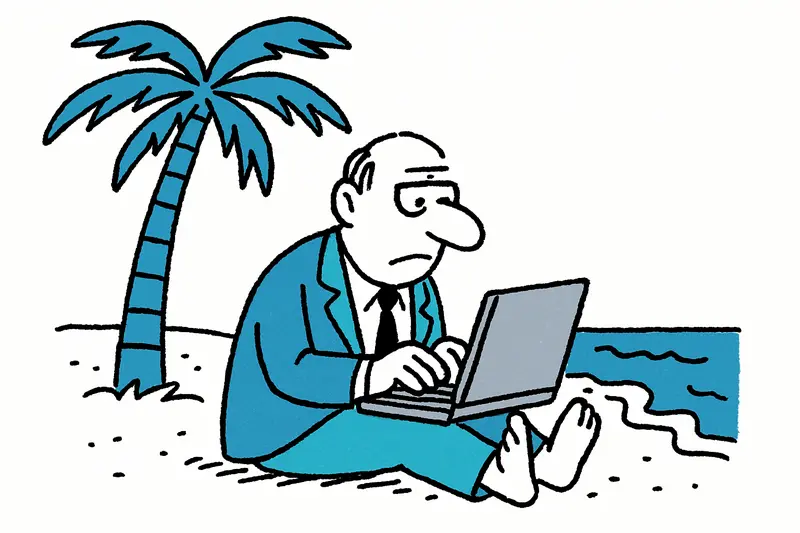
The image is familiar: laptop on the lap, the sound of the sea, followed by a jump into the water. On Mallorca you see them increasingly often, foreign laptops at the street cafés on the Passeig Marítim or in the small bars of Santa Catalina (see Workation on Mallorca: Between Sea View and Reality Check).
The facts: Several federal ministries have so far had generous rules for mobile work from other EU countries. Some offices permitted up to 100 percent home office, others have procedures that allow a simple notification. After public criticism, some departments have already tightened rules: mobile work should in future only be possible within Germany, otherwise limited home office allowances remain.
Critical analysis: The debate has been reduced too much to images. Political outrage or pictures of civil servants "on the beach" hit a nerve with the public, but do not address the core questions: What about data security, fitness for duty, legal responsibilities and social security issues when a civil servant works for months in another EU country? What are the effects on teamwork, availability and leadership? And how is equal treatment ensured among colleagues who cannot avoid presence tasks?
What is missing from the public discourse: First, a systematic listing of risks — from IT security to tax and social security complications. Second, reliable transparency: how many employees use this option, for how long and in which functions? Third, an assessment according to the sensitivity of the activity: some tasks can be decentralized without problems, others cannot. Fourth: consequences for local communities in Mallorca, which must share housing and infrastructure with temporary long-term guests (see Conscription debate: Could Mallorca face a shortfall in young visitors?).
An everyday scene in Mallorca: On a Tuesday afternoon in Palma, 25 degrees, small waves lap at the pier, in a café near the cathedral a young woman types on her computer, talks to colleagues in Berlin and orders a café con leche in between (see Three Weeks on Duty at Playa de Palma: Between Shifts, Coffee and Small Successes). She is not a nomad in the classic sense, but an employee doing a two-month workation. Next to her sits an older hotel porter complaining about rising rents. Such scenes show the dilemma: quality of life for individuals, but tangible pressure on rents and everyday infrastructure.
Concrete proposals: 1) A central register for mobile work from abroad that publishes anonymized figures; 2) a binding limit per calendar year (e.g. a total of 60 working days in other EU countries) and a reporting obligation with approval pathways; 3) clear security requirements (official VPN, certified devices, local network checks) as well as mandatory IT risk assessment before approval; 4) explicit rules on tax and social security consequences in cooperation with the finance and social security ministries; 5) differentiation by job categories: exclude core functions that require immediate presence, allow flexible administrative tasks; 6) leadership duties: supervisors must set availability windows, reporting obligations and return deadlines; 7) pilot phases and evaluations — no blanket approvals without data.
A practical suggestion for Mallorca: cooperation between municipalities and landlords could regulate short-term housing for workations, with minimum standards for internet, waste disposal and registration obligations. That protects locals and maintains quality for temporary work stays.
Politics and administration face a concrete modernization task: it's not about banning or romanticizing work under palm trees. It's about rules that ensure fitness for duty, legal clarity and fairness. Without such rules the discussion remains a mix of outrage and wanderlust — and that helps neither the service nor island communities.
Conclusion: Sun, sea and good espresso are a privilege, not a work instruction. If the state wants to permit its employees more flexible workplaces, it must first do its homework: transparent figures, clear deadlines, technical security and fair rules. Otherwise the free workation quickly becomes a bureaucratic special case — with consequences for administration and home communities like Mallorca alike.
Frequently asked questions
Can civil servants work remotely from Mallorca?
Why are governments restricting workations for public employees?
Is it legal for German state employees to work from another EU country?
What risks come with working from Mallorca for months at a time?
How many days can civil servants work from abroad?
Why does working from Palma affect local rents and housing?
What rules would make workations in Mallorca more manageable?
What do public employers need to check before allowing work from Mallorca?
Similar News
More water than last year: Mallorca's reservoirs breathe easier
September rain refilled the Tramuntana's reserves: overall fill around 35 percent, Cúber at 40.42 percent, Gorg Blau at ...
Three Luxury Hotels in Banyalbufar: Lots of Money, Many Questions
A Danish investor plans three exclusive accommodations in Banyalbufar — including the historic Son Valentí. The announce...
2.1 tonnes of cocaine on sailing yacht off Spain's coast – a reality check for the coastguard
A 14-metre yacht was seized with 2.1 tonnes of cocaine. Who monitors the ports, how does the international hunt succeed ...
Heat Bonus in Mallorca: 100 Euros Extra for Outdoor Staff at MarSenses
MarSenses pays employees who worked outdoors in August an extra €100 as recognition. Lighter uniforms, reduced hours for...
Renovating in Mallorca: What You Really Can Do Without Neighbour Consent
Many think they can do whatever they want in their apartment. That's partly true — but only as long as structural elemen...
More to explore
Discover more interesting content

Can Cap de Bou

Townhouse Lleo 72
