
Clínica Rotger introduces direct cholangioscopy — greater precision for bile duct diseases
Clínica Rotger introduces direct cholangioscopy — greater precision for bile duct diseases
Clínica Rotger in Palma expands its services: with direct cholangioscopy, bile and pancreatic ducts can be examined more precisely, stones removed and hard-to-reach tissue samples taken — minimally invasive and often without an inpatient stay.
Clínica Rotger introduces direct cholangioscopy — greater precision for bile duct diseases
Minimally invasive procedure supplements endoscopy in Palma
On a mild morning in Palma, when delivery bikes ring along the Passeig curbstones and the cafés still smell of café con leche, a new technique has arrived in the treatment rooms of Clínica Rotger. The clinic now offers direct cholangioscopy — a small instrument with a big impact for patients with problems in the bile ducts and pancreas.
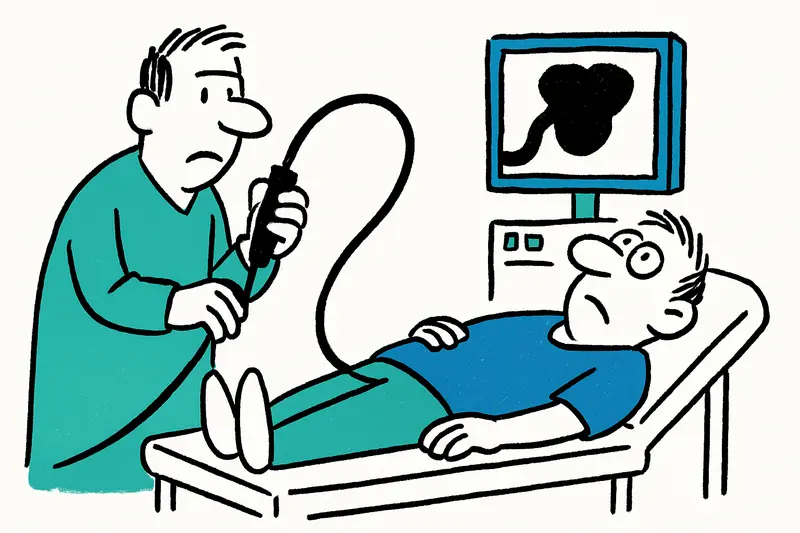
The method works from the inside: a very thin, flexible endoscope passes the mouth, esophagus and stomach and reaches the section of the small intestine where the bile and pancreatic ducts open. There the device provides high-resolution images, allows targeted biopsies and can, in special cases, break up stones on site. The probes used are smaller than three millimeters and have instruments that would otherwise be difficult to access.
For daily life in Mallorca this means concrete advantages. Many people who live or work here tend to put off complaints — out of fear of major procedures or long hospital stays. With this technique, examinations and treatments can often be performed without external incisions, under sedation, with little pain and frequently on an outpatient basis, a trend also seen with Wide-Bore MRI and AI: Juaneda Shortens Examinations in Palma. That shortens the time to diagnosis and reduces the burden on patients and their families.
The clinic's endoscopy team — including specialists Dr. Ángel Cañete, Dr. Isabel Maestro and Dr. Sam Khorrami — has integrated the new devices into the existing range of endoscopic ultrasound and ERCP. While endoscopic ultrasound makes ultrasound usable from the stomach and ERCP provides access via X-ray–controlled techniques, direct cholangioscopy complements the view directly inside the duct system and thus expands therapeutic options.
A concrete example from practice: small stones hiding deep in the bile ducts can often only be found with direct vision and specifically fragmented with lithotripsy. Likewise, tissue samples can be obtained from areas that were previously not clearly assessable. This leads to more precise findings and therefore to more individualized treatment decisions, without immediately requiring open surgery.
The clinic emphasizes that all procedures are performed in specially equipped rooms under sedation. High-resolution cameras and modern electrosurgical tools allow findings to be recognized, documented and, when possible, treated in a single session. This spares patients and relieves the healthcare system of unnecessary follow-up procedures.
From my daily observations in Palma: people here look for short distances and clear answers. When an examination quickly and effortlessly reliably points to a therapy, it is noticeable in the neighborhoods around the Plaça and the harbor. Less waiting, less pain, a quicker return to everyday life — these are reasons why such technological steps are well received here.
For the island, the expansion of services also means that complex cases can be treated locally; local health initiatives, such as Robot at Son Espases promotes blood donations in Spanish and Catalan, reflect efforts to keep services accessible. This is important because many patients are reluctant to make long trips to the mainland or to distant clinics. A broader range of minimally invasive methods can therefore improve both medical care and quality of life locally.
Looking ahead: those who live on the island or are visiting benefit from a closer integration of diagnostic procedures. Direct cholangioscopy is not a panacea, but it is a helpful tool to clear up uncertainties and shorten treatment pathways. In a city where you can quickly pop to the baker's in the afternoon and hear the sea in the evening, it is a real everyday relief.
In short: with the introduction of this technique, Clínica Rotger has sensibly expanded its spectrum. For patients in Mallorca this means more precise diagnoses, less invasive procedures and often a faster return to normal life rhythms.
Frequently asked questions
What is direct cholangioscopy, and why is it used in Mallorca?
Is direct cholangioscopy a painful procedure?
Can bile duct stones be treated without surgery in Mallorca?
Do you need to stay overnight after cholangioscopy at Clínica Rotger in Palma?
When is direct cholangioscopy used instead of ERCP or endoscopic ultrasound?
What symptoms might lead to a bile duct examination in Mallorca?
How does Clínica Rotger in Palma perform direct cholangioscopy?
Why is having direct cholangioscopy available in Mallorca important for patients?
Similar News
Mistaken identity with fatal consequences: Brutal assault in S'Aranjassa — what's missing in the follow-up?
At S'Aranjassa a visitor to a finca was tied up, beaten and thrown out of a van. Three men have been arrested, including...

High heel slips, car accelerates: accident on Camí de Son Hugo
A woman lost a high-heeled shoe on the forecourt of the sports facility at Camí de Son Hugo. The car accelerated, mounte...

Phone Scam: How Two Hotel Employees at Playa de Palma Lost Thousands of Euros
One morning in September, two reception employees at Playa de Palma were pressured by alleged alarm-company staff — in t...
When the Wallet Becomes a Danger: Attack in Peguera and Lessons for Mallorca
In Peguera, two women are said to have stolen the wallet from a 75-year-old German couple. When the victim intervened, t...
Plata stays Plata: Young people take over, Llonguets remain
A small bar on Carrer de l'Argenteria will continue: Tolo Serra hands the place over to young Mallorcans at the end of t...
More to explore
Discover more interesting content

Can Cap de Bou

Townhouse Lleo 72
