
Robot at Son Espases promotes blood donations in Spanish and Catalan
Robot at Son Espases promotes blood donations in Spanish and Catalan
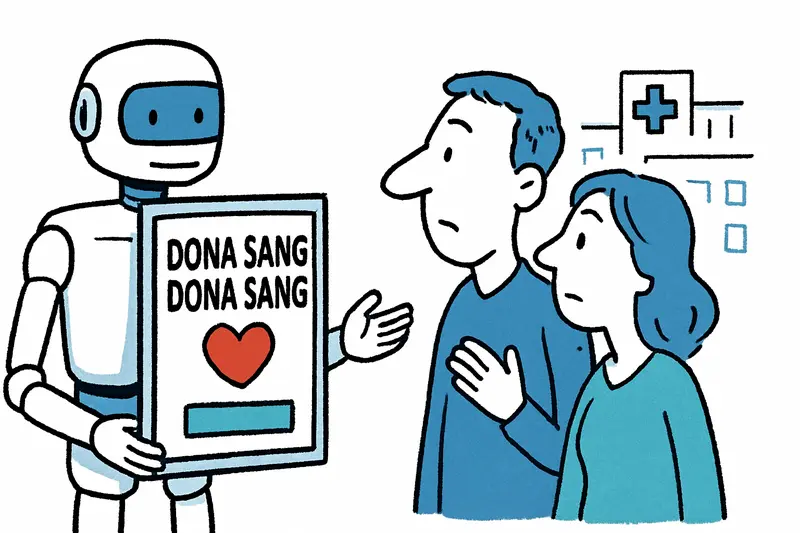
A mobile display has been introduced at the Son Espases hospital complex to inform people about blood and plasma donations — in Spanish and Catalan — and to allow direct appointment bookings.
Robot at Son Espases promotes blood donations in Spanish and Catalan
At the entrance and in the wide corridors of the Son Espases hospital complex an unusual visitor has appeared recently: an autonomously driven information screen that addresses patients, relatives and staff. As described in Un robot en Son Espases promueve la donación de sangre en español y catalán, the small robot rolls quietly past the coffee aroma from the hospital cafeteria, stops in front of seating areas and shows short videos, informational texts and the option to book an appointment for a blood or plasma donation directly on its touchscreen.
The device speaks the two common languages of the island: Spanish and Catalan. Whoever selects a language on the screen is shown explanatory films, notes on the requirements for donating (see WHO information on blood safety) and the opening hours of the donation units. Some visitors tap shyly at first, then more decisively on the display — younger people are mainly interested in the ability to fix an appointment online, while older visitors prefer to watch the short clips and speak with the nurse who stands a few meters away at the reception desk.
For hospital staff the robot is not a competitor but a support. The routine of ward life — the clatter of bed trolleys, duty assignments, conversations at the bedside — remains, but the initial information about blood donations is now more often provided by the robot. This temporarily relieves colleagues at the reception and creates additional visibility for supplies that can become scarce during a winter with many flu cases, as discussed in Son Espases al límite: por qué se posponen las operaciones — y qué podría ayudar ahora.
The interactive appointment-booking function is particularly practical: arriving visitors choose a slot, enter a phone number and receive a confirmation. This reduces walking and follow-up questions. Moreover, the campaign reaches not only people who are already in the hospital: relatives, suppliers and visitors are informed — often it is ordinary people from the neighborhood or from work who, after a short conversation, spontaneously make an appointment.
From Palma's perspective the device is a small experiment with signaling effect: according to the hospital, it is the first of its kind in Spain, and similar robots are planned for hospitals on the neighboring islands in the future. On Mallorca itself the effect can be slightly different: the island is small enough that good ideas travel quickly from place to place. A rolling info-screen that reaches people in two languages fits well with an island that mediates daily between tourism, commuters and locals.
A warm everyday scene shows how the new offering is received: on a mild morning an older gentleman leans on the railing near the main entrance, reads the information attentively and casually tells a young woman next to him how he used to donate regularly — both smile when the device displays a reminder about the duration of a plasma donation. Such small encounters, which normally happen between doors and waiting times, receive an invitation to participate through the robot.
Where this could lead is a matter for speculation: similar rolling information stations at train stations, in village health centers or at weekly markets could complement the already strong engagement of local blood donors. For those responsible in the Balearics the technology is above all a pragmatic tool: information, accessibility and booking capability in one — and in the two languages that work best here.
For Mallorca this means a small but visible improvement in everyday healthcare. Not a big promise, rather a practical nudge: a gadget that meets people where they are — in front of the cafeteria, between appointments or on the way out — and lowers the barrier to the next donation a little.
Outlook
If the rolling screens prove effective, the idea could jump to the smaller islands in the following years and accompany further health campaigns. In any case the impression remains: ideas that make everyday life easier arise in Mallorca — sometimes quietly and on wheels.
Frequently asked questions
Can I book a blood donation appointment at Son Espases in Mallorca?
What languages does the Son Espases robot use in Mallorca?
Why is blood donation important in Mallorca during winter?
Who is the Son Espases robot meant to reach?
How does the blood donation robot at Son Espases help hospital staff in Mallorca?
What information does the Son Espases robot show about donating blood?
Is Son Espases in Palma the first hospital in Spain to use a robot for blood donation information?
What does the blood donation robot at Son Espases mean for everyday life in Mallorca?
Similar News
Magaluf: Watchtower Alarm – Lifeguards Pull Unconscious Beachgoer from the Water
After a drama in the late afternoon, two lifeguards at Magaluf beach rescued an unconscious 44-year-old man. He was stab...
Turquoise in the City: How dangerous is the color play of the Sa Riera?
The Sa Riera in Palma suddenly turned turquoise — a pretty motif, but behind the effect lies a discharge of saline waste...

Jeckliner at Sunnesching: Cologne spirit sets sail from Palma
In September 2027 the Mein Schiff 2 briefly becomes a floating carnival stage: four days with Cologne bands, comedy and ...
Finally Home: Mike and Leyla Heiter Buy Villa with Sea View in Mallorca
The reality TV couple Mike and Leyla Heiter have bought a house in Mallorca with a roof terrace and sea view. An Instagr...

Arrest after series in Palma: Who protects apartments from repeat offenders?
The National Police arrested a man in Palma who investigators say may have broken into several apartments. In one incide...
More to explore
Discover more interesting content

Can Cap de Bou

Townhouse Lleo 72
