
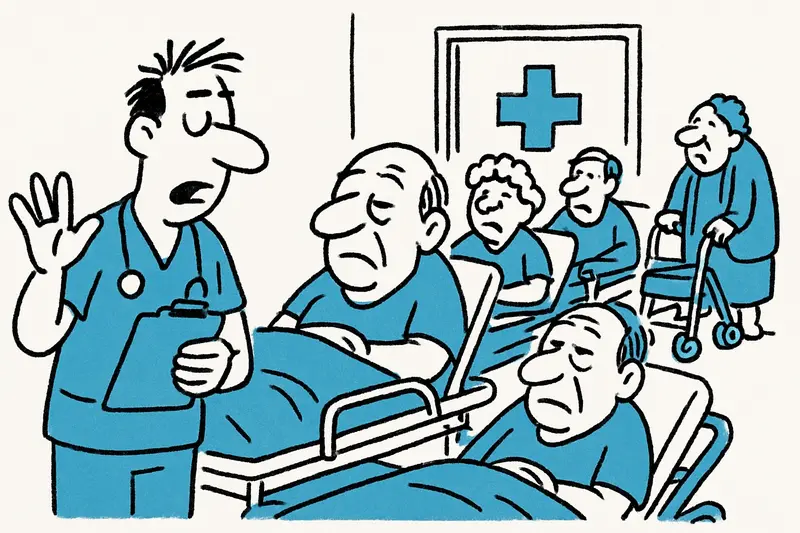
At the Limit in Son Espases: Operations on Standby — How the System Can Breathe Again
Son Espases is struggling with full wards and postponed operations. Behind the chaos are not only more emergencies but also gaps in staff planning, transfer processes and regional coordination. Five pragmatic steps could provide short-term relief.
Emergency department, long corridors, waiting patients — Son Espases feels the pressure
On Wednesday morning it rained lightly, and the glass doors to the emergency department of Son Espases al límite: por qué se posponen las operaciones — y qué podría ayudar ahora closed in time with the next steps. In the corridors there are no flowers, but blankets, walkers and occasionally an empty coffee cup. Phones blink, voices whisper, and now and then the beeping of monitors mixes with the ticking of the clock. A nurse took a short breath and said quietly: "We are working at the limit, but we do not give up."
Central question: Why is the system breaking down right now?
The simple answer would be: more emergencies after the summer, Waiting lists in the Balearic Islands: Too many patients, too little OR time — and what must be done now. The more complex answer is less comfortable: it is not just the numbers, but how the system is organised. Rigid staffing plans collide with unevenly distributed rehab and outpatient capacities, surgical vacation cycles clash with demand, and transfers are delayed because suitable aftercare places are missing. That means: even if beds are freed up at short notice, diagnostics, physiotherapy and discharge planning remain bottlenecks.
At Son Espases this is compounded by high occupancy of general wards, increased demand for intensive care beds and logistical delays in internal processes. Taken together, this leads to planned operations being postponed — not because operating theatres are missing, but because no one keeps the recovery bed available afterwards.
What has been tried so far — and why it is not enough
The hospital has responded with faster transfers, more flexible ward allocation and coordination with other hospitals on Mallorca. The Balearic health ministry has released additional beds. Such measures are necessary, but often reactive and short-term. A few extra mattresses or an increased bed quota help little if the interfaces to outpatient care, rehabilitation or social discharge planning are missing.
There is little discussion about how strongly scheduled OR lists, vacation planning and the availability of rehab places interact. A surgeon plans months ahead; outpatient services are organised very differently across the region; and someone who has to wait for rehab after surgery blocks a hospital bed — often much longer than medically necessary.
Five pragmatic approaches that could provide lasting relief
Practical solutions emerge from everyday clinical work that could be tested immediately. They are less spectacular than new buildings, but often more effective:
1. Regional bed management: A daily-updated overview of available beds on Mallorca that also includes private clinics. This speeds up transfers and prevents one hospital from becoming overloaded while capacities exist elsewhere.
2. Short-stay and step-down units: Small intermediate wards for patients who no longer need intensive care but cannot yet go home. Such units relieve pressure on general wards and create quickly usable space.
NHS: Discharge to assess model: Teams of physiotherapists, social workers and nurses who actively accompany discharges, as well as better connections to GPs. This ensures that many people can go home earlier and more safely.
4. Flexible OR scheduling across hospital borders: Distribute planned procedures regionally instead of leaving the burden to one facility. This requires data sharing, coordinated reimbursement models and clear responsibilities.
5. Better communication with those affected: No automatic standard texts, but short personal conversations that explain alternative dates, possible transfers or outpatient options. This reduces uncertainty and frustration among patients.
What people on Mallorca can contribute
An open appeal from the hospital: only go to the NHS guidance on when to use emergency departments for genuine emergencies. This is not a moral reproach but a practical necessity. A cough or a simple urinary tract infection can often be treated on an outpatient basis — a call to the family doctor can do a lot. Small, important things also help: keep contact details up to date, check e-mails and answer return calls. In the current situation many decisions are made via short phone calls — those who are reachable help the flow.
Looking ahead — local, pragmatic, frank
Bottlenecks in large hospitals are not surprising, but they show how narrow the path is on which our care balances. In the coming days additional beds and better coordination will be examined — that can provide short-term relief. In the long term, however, a different attitude is needed: better interfaces between hospital and outpatient care, usable intermediate units and regional, transparent planning.
My impression on site is sober: the mood is serious, not hysterical. In the corridor you hear the monitors' beeps, the ticking of a clock and the murmur of colleagues' conversations. Many professionals are trying to manage the situation — with creativity and commitment. In the short term that is often enough. But if we want to prevent such bottlenecks from becoming routine, we need room for structural change, the courage for organisational reordering and a measure of consideration from all of us.
Frequently asked questions
Why are operations being postponed at Son Espases in Mallorca?
Is Mallorca’s hospital system under pressure after summer?
What can help relieve pressure on Son Espases in Mallorca?
When should you go to the emergency department in Mallorca?
What is a short-stay or step-down unit in a hospital?
Why does discharge planning matter so much in Mallorca hospitals?
Can private clinics in Mallorca help reduce pressure on public hospitals?
What should patients in Mallorca do if they are waiting to be contacted by hospital staff?
Similar News
Serious Fall at the Son Ferriol Roundabout: Who Protects Us from Gaps in Road Design?
A 77-year-old driver fell early Saturday morning with his car from the upper section of a roundabout in Son Ferriol. The...
Inca in Toilet Stress: Why Wet Wipes Are Crippling the Sewer System — and What Needs to Happen Now
The city of Inca warns: wet wipes are clogging almost all wastewater pipes. A guide to why this happens, what's missing ...
Control with a Mask in Santanyí: Protest, Culture or Administrative Offense?
In Santanyí the local police escorted a traditionally masked activist away. Was it an identity check, an administrative ...
Up to €9,000 Fine in Inca: Why Wet Wipes Can Blow Up the Sewers — and What We Should Really Do
The municipality of Inca warns of blockages caused by wet wipes — fines of €300 to €9,000 are possible. A reality check:...

World Cup Trophy in Palma: Two Days Up Close
The World Cup trophy is coming to Palma at the end of October: two days on display at City Hall, and on 31 October photo...
More to explore
Discover more interesting content

Can Cap de Bou

Townhouse Lleo 72
