
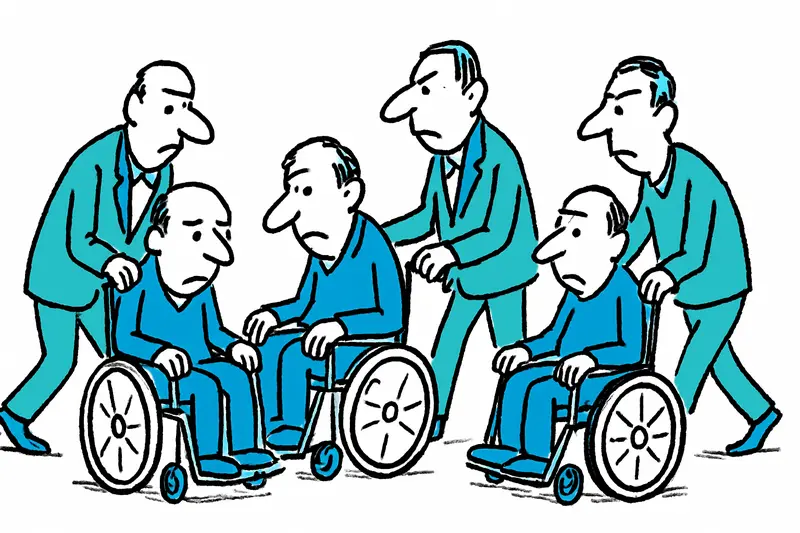
Cocaine in Wheelchairs: How the System Was Circumvented — and What's Missing
Cocaine in Wheelchairs: How the System Was Circumvented — and What's Missing
Ten defendants in Palma accepted penalties after bringing cocaine to Mallorca hidden in wheelchairs. An analysis of how the network exploited vulnerabilities, which everyday gaps remain, and what measures are needed.
Cocaine in Wheelchairs: How the System Was Circumvented — and What's Missing
Key question: How could a smuggling ring use medical aids as cargo for more than a year without alarm bells ringing louder?
On 3 February a chapter concluded in Palma that raises many questions. Ten accused accepted sentences totaling 23 years of imprisonment and fines in all cases. Investigators from the National Police and customs intelligence traced the suspects; according to court information the network operated from April 2023 to July 2024. During raids authorities also discovered an unauthorized laboratory where the product was apparently cut.
At first glance the scheme seems almost absurd: wheelchairs, normally symbols of help, served as casings for packages of cocaine. That is precisely the trap. Airports and ports see medical aids every day that suggest vulnerability. Heavy suitcases, awkward seats, emotional scenes — all this softens routine checks. Anyone walking the Ramblas in Palma in the morning hears the clatter of luggage, sees people with walking aids, families, taxis. This everydayness can provide cover for criminals — similar finds such as Half a Tonne of Cocaine at Playa d'en Bossa: Who Benefits — and What Must Change? underline the security gaps.
The analysis shows several weak points: First: logistical blind spots. Aids are often treated as special baggage, which can mean faster handling and fewer X‑ray scans. Second: diffusion of responsibility. Between airlines, ground staff, social services and customs it is not always clear who is responsible for spot checks. Third: local processing. The discovery of an illegal laboratory suggests the route was not just transport but facilitated local production — with the known consequences for prices, addiction and crime in the neighborhood, as seen in operations linked to 675 Kilos of Cocaine: What the Find Means for Palma, Inca and Binissalem.
What is currently missing from the public debate is above all the perspective of the vulnerable. People with disabilities and those who rely on support must not be broadly suspected, but their situation is being instrumentalized. Nor has there been an open discussion yet about how private suppliers of medical equipment, second‑hand shops and charitable transport services should be controlled. The question of whether checks at airports, ferry terminals and parcel centers are technically and personnel‑wise sufficient also receives too little attention; recent reporting on Drugs, Millions and Suspected Abuse of Office: What the Major Operation in Mallorca Reveals highlights how institutional failures can deepen the problem.
A look at everyday life: at the Mercado del Olivar traders sit behind piles of oranges, only a few meters away people in need of rehabilitation wheel by. A taxi driver casually mentions guests who "order everything" — from a wheelchair to a massage. Such scenes show how mundane and close the problem is. Police and customs cannot be everywhere at once; the neighborhood often notices small irregularities earlier than official bodies.
Concrete approaches that could help:
1) Technical and procedural improvements: Mandatory screening of special baggage according to spot‑check rules; use of portable scanners for bulky aids; tamper‑evident seals for internationally shipped medical devices.
2) Clear responsibilities: Agreements between airports, airlines, customs and social services on who inspects which indicators — complemented by verifiable documentation requirements so cases do not disappear in the system.
3) Control of local supply chains: Registration and random audits for sellers of used aids, cooperation with shippers and charitable organizations (such as Caritas) that often organize transports.
4) Prevention instead of only repression: Community programs in vulnerable neighborhoods, low‑threshold addiction services, and support for people who could be misused as intermediaries — for example volunteers or caregivers acting out of economic necessity.
5) Stronger international networking: Sharing information on container and baggage patterns with partners in origin countries, targeted control of shipping routes from South America, and a focus on chemicals used for cutting the drug.
Some of these proposals cost money; others require legal changes or better coordination. But money and rules are easier to organize than lost trust. The balance is delicate: airports and ports must become safer without further stigmatizing or turning away people with disabilities.
Conclusion: The convictions mark a success for the investigators — yet the story also shows how creatively and ruthlessly smugglers exploit gaps. Mallorca needs an honest debate about how to protect vulnerability rather than instrumentalize it. If we continue to ignore the small everyday details — the taxi drivers, the freight forwarders, the second‑hand shops — the streets that smell of coffee and fish in the morning will remain vulnerable to new tricks. It would be better to treat the city's loud chimes as an alarm and take the quiet signals seriously.
Frequently asked questions
How could cocaine be hidden in wheelchairs in Mallorca?
Why are airports and ferry terminals in Mallorca vulnerable to drug smuggling?
What happened in the Palma cocaine case with the wheelchairs?
What is missing from the debate about disability and drug smuggling in Mallorca?
How can Mallorca improve checks on special baggage and medical equipment?
What role did local processing in Mallorca play in the cocaine network?
What can local businesses in Palma do to help spot suspicious activity?
Why does the Mallorca case matter beyond one police operation?
Similar News
Magaluf: Watchtower Alarm – Lifeguards Pull Unconscious Beachgoer from the Water
After a drama in the late afternoon, two lifeguards at Magaluf beach rescued an unconscious 44-year-old man. He was stab...
Turquoise in the City: How dangerous is the color play of the Sa Riera?
The Sa Riera in Palma suddenly turned turquoise — a pretty motif, but behind the effect lies a discharge of saline waste...

Jeckliner at Sunnesching: Cologne spirit sets sail from Palma
In September 2027 the Mein Schiff 2 briefly becomes a floating carnival stage: four days with Cologne bands, comedy and ...
Finally Home: Mike and Leyla Heiter Buy Villa with Sea View in Mallorca
The reality TV couple Mike and Leyla Heiter have bought a house in Mallorca with a roof terrace and sea view. An Instagr...

Arrest after series in Palma: Who protects apartments from repeat offenders?
The National Police arrested a man in Palma who investigators say may have broken into several apartments. In one incide...
More to explore
Discover more interesting content

Can Cap de Bou

Townhouse Lleo 72
