
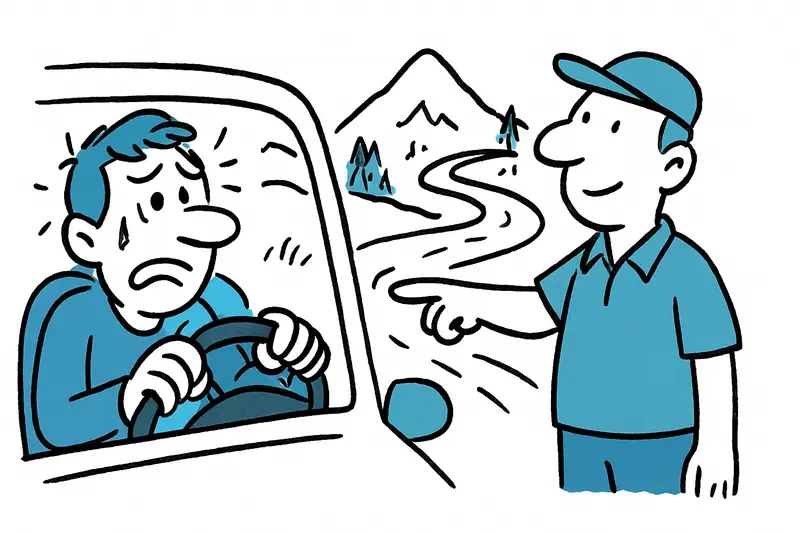
Mallorca's Curves without a Racing Heart: Staying Safe on the Tramuntana & Co.
Anyone who wants to experience the PM-221 or the switchbacks around Puig Major with a calm pulse needs less panic and more concrete measures: checks, driving technique, a rental-car briefing — and structural changes to the roads.
Mallorca's curves: How much respect is healthy, how much panic is unnecessary?
The PM-221 in the early morning: cold Tramuntana wind on your face, bus engines still rumbling in the valley, and the light falling low over olive trees and steep rock faces. For many visitors such a road is emblematic of Mallorca — and for many drivers a challenge. The central question remains: How can you enjoy the island's beauty without feeling your heart race in the bends?
The simple routine before departure
Often only a small safety ritual is missing. Not out of pedantry, but because it prevents accidents: check tyre tread and pressure, clean windows and lights, adjust mirrors. Note the fuel level — there aren't petrol stations on every corner in the Serra — and set the navigation so it doesn't route you through a narrow village centre. A short stretch, a strong coffee in Port de Sóller or the Sóller market, and a glance at the weather app: fatigue and sudden showers are treacherous on the island's roads.
Driving technique: brake before the bend, trust in the bend
The basic principle is simple, but often ignored: reduce speed before the bend, not in it. The way you look matters: look towards the exit of the bend, not at the front wheel. Panic and late braking turns a harmless hairpin quickly into a problem. On narrow roads with line buses and motorcycles this also means: hold your lane, keep slightly more to the right for better visibility, and never overtake recklessly.
When driving downhill: use engine braking and downshift instead of riding the brakes. Letting brakes overheat on long descents is an underestimated risk — you sometimes only notice it when the pedal goes soft.
Weather, road surface and the pitfalls of the Tramuntana
Rain-wet shaded sections, fine gravel at the roadside after maintenance work, or fallen olives and pine needles can change the radius of a curve in seconds. And then there's the Tramuntana: sudden side winds can push vehicles off course. Smooth, anticipatory steering and reduced speed here are not courtesy but lifesaving measures.
Rental-car drivers: small risks, big consequences
For hire cars: take a short test drive — braking distance, steering feel — and consider the vehicle size. A compact car is often more relaxed on narrow mountain roads than a large van. Check the insurance coverage: what does the policy cover for scratches on steep rock edges? Practical extras help: phone holder, offline maps, torch in the glove compartment. On the first day, prefer a shorter round trip rather than immediately tackling the PM-221 or Puig Major; for specific rental-driver advice see Tips for driving rental cars in Mallorca. Plan breaks — 90 minutes at a stretch is a good rule of thumb.
What is missing in the public debate
Usually people talk about “speeding” but not enough about the dynamics between coaches, groups of motorcyclists and rental cars. Bus drivers know the route, many tourist bikers do not — this leads to risky overtaking and tailgating; for a rider-focused checklist see practical safety tips for motorcyclists in Mallorca. Road equipment also plays a role: few escape bays, hard-to-read signs, missing temporary warnings during storms or heavy rain; observers of popular stretches such as the MA-10 highlight sand and missing signage in Cruising Safely on Mallorca: What Tourists and Authorities Should Finally Do Differently.
Concrete proposals — what authorities, rental companies and municipalities could do
The island is not a race track, and it could demonstrate that with simple, concrete measures. Possible approaches:
1) Infrastructure: additional pull-outs at critical points, improved drainage in shaded areas and finer gravel removal after construction work.
2) Visibility & information: large, highly visible pictograms before tight bends; temporary electronic speed displays on heavily frequented stretches; warning signs for strong crosswinds.
3) Rental-car obligations: a short mandatory information sheet at pickup — “Top 5 tips for winding roads” — and a note about the nearest service for larger vehicles. Small measures, big effect.
4) Test and awareness offers: local driving safety days or short briefings by rental companies could give holiday drivers the routine they need — not a driving test, more of a refresher with mountain-road tips.
Checklist for relaxed bends
Before setting off: tyres, lights, mirrors, fuel, navigation destination. While driving: brake in time, look to the bend exit, keep your lane, do not overtake. In bad weather: even slower, lower gear, larger gaps. In a rental car: brief vehicle test, check insurance, use a phone holder.
A final view: less panic, more shared responsibility
Mallorca does not mean winning a sprint. It means a pause at the monastery, the sound of the Tramuntana between the rocks, the scent of fresh coffee in Port de Sóller. With a little respect for the road — combined with pragmatic, structural improvements — you can enjoy the curves without a racing heart. And if driving does become too exhausting: buses, trains and hiking trails are available — the island won’t go anywhere.
Frequently asked questions
Is it safe to drive Mallorca’s mountain roads if you’re not used to tight bends?
What should I check before driving in Mallorca’s Tramuntana?
How should you drive safely on Mallorca’s bends and hairpin turns?
What is the safest way to drive downhill in Mallorca’s mountains?
Are Mallorca’s mountain roads more difficult in wind or rain?
What should rental car drivers know before driving in Mallorca?
Is the PM-221 in Mallorca suitable for nervous drivers?
What can visitors do in Mallorca if they do not want to drive mountain roads?
Similar News

Maribel: Five Decades of Service – Housekeeper from Peguera Celebrated with a Special Honor
Over 50 years in the hotel business: María Isabel “Maribel” Molinos was honored in Palma at the Nit del Turisme by Unive...
Orange Alert over Parts of Mallorca: Are We Prepared?
Dark clouds and an announced wet spell have triggered an Orange alert in parts of Mallorca. A reality check: what's miss...

Sundair & Co.: Sale speculation and what it could mean for Mallorca
Rumors about a possible sale of the airlines Sundair and Fly Air 41, which belong to Schauinsland-Reisen — and whether b...
Anne Wünsche in Mallorca: A job offer with a catch — who fits the role of personal assistant?
Influencer Anne Wünsche has left Berlin and is urgently looking for a full-time personal assistant in Mallorca. Why the ...

Daily from New York: Palma Between Boom and Strain
United will increase the Newark–Palma route to daily flights in 2027 using Boeing aircraft (231 seats). What does the in...
More to explore
Discover more interesting content

Can Cap de Bou

Townhouse Lleo 72
