
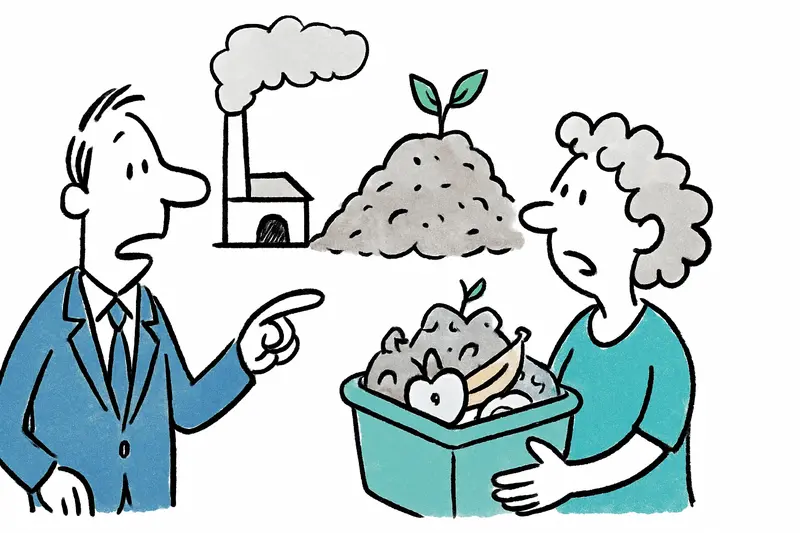
Compost instead of Crematorium: New Biowaste Facility for Llucmajor
Compost instead of Crematorium: New Biowaste Facility for Llucmajor
Llucmajor will get a new composting facility from 2026. With around 30 million euros and EU funding, about 21,000 tonnes of organic waste per year on the island will be turned into valuable compost – less incineration, more circularity.
Compost instead of Crematorium: New Biowaste Facility for Llucmajor
When driving through Llucmajor in the morning, you can currently hear the honking of delivery vans on the MA-19 and the distant clatter of market stalls. From 2026, a different sound could become more noticeable at the town's entrance: the quiet hum of a facility that turns food scraps and garden waste back into soil. The Consell de Mallorca and the EU are jointly investing around 30 million euros in the project – a large part of the sum comes from European funding programs.
What is planned
A composting facility is planned in Llucmajor that will process about 21,000 tonnes of organic waste per year. This means kitchen waste, green waste and similar organic fractions. The goal is clear: to process more bio-waste locally and send less material to incineration ramps. This reduces transport effort, saves CO2 and at the same time provides nutrient-rich compost for agriculture and green spaces on the island.
Why this makes sense for Mallorca
Mallorca is not large, but every ton that stays on the island counts. The island not only imports many goods, it has so far also exported waste streams that are burned elsewhere. A local facility changes this logic: it creates a resource from what was often only a problem. For farmers, gardeners and municipalities, composted fertilizer could become affordable and regionally available. Less incineration also reduces annoying smoke or odor nuisances in the area – something residents especially notice on clear, windless days, as described in Foul-Smelling Promenade, Empty Promises: Hoteliers in S'Arenal Put Pressure on Llucmajor.
A piece of everyday life
Imagine everyday scenes where families drop off their bio-bags at Llucmajor's weekly market, school caretakers refresh flowerbeds with clean compost, and neighborhood projects offer workshops on correct sorting. Such images are not futuristic but exactly the idea behind the facility: to see waste not as an end, but as the beginning of a circular economy. And yes, this also means that separation at home must be taken seriously – no plastic bags in the bio-bin, please.
What matters now
The decision and financing are in place; commissioning is scheduled for 2026. In the coming months, planning and approval steps will follow, then construction phases and finally testing. For island residents this means: inform, participate, separate. Local administrations could start information campaigns and involve schools with visits or guided tours. The facility also offers job opportunities in operations, logistics and education.
Quiet, unassuming and practical: that is how to describe the idea that is now taking root in Llucmajor. When the sea glints over the rooftops from the Plaça del Mercat in the afternoon and the palms rustle in the wind, it would be pleasant to know that much of the biowaste does not disappear, but returns to the fields (Who cleans up the sea? Almost eight tons of waste off the Balearic Islands — and the uncomfortable answers). A small circular miracle, in the middle of everyday life – and without much hype.
Frequently asked questions
What is the new biowaste facility planned for Llucmajor?
Why is Mallorca building a composting plant in Llucmajor?
What kind of waste will the Llucmajor facility accept?
When will the Llucmajor biowaste facility open?
How much organic waste will the Llucmajor plant process each year?
Will the new Llucmajor facility help reduce smells and smoke in the area?
What should residents in Mallorca do with their bio-waste now?
What benefits could the Llucmajor compost plant bring to Mallorca?
Similar News

Fear in the Sa Teulera Forest: Youth Groups Harass Cruising Zone in Palma
In the wooded area of Sa Teulera, those affected report verbal attacks, property damage and intimidation. How safe is th...
Axa opens first health center in Palma: €3 million, 650 m² and more local access for La Vileta
In the heart of La Vileta, Axa has opened its first own health center in Mallorca. On around 650 square meters and with ...

30 Years of Nit de l'Art: What Palma's Art Night Really Shows — and Conceals
Nit de l'Art celebrated its thirtieth anniversary: full galleries, young visitors — and the quiet tensions between the a...

Hunt for Older Holidaymakers: Arrests after Suspected Pickpocketing in Port d'Andratx and Bellver
Five suspects were arrested after investigators accuse them of targeted pickpocketing of elderly tourists in Port d'Andr...

Knife stabbing in Magaluf: Why it must not remain an isolated incident
A 21-year-old tourist was stabbed in the chest in Magaluf and is in life-threatening condition. A reality check: what's ...
More to explore
Discover more interesting content

Can Cap de Bou

Townhouse Lleo 72
