
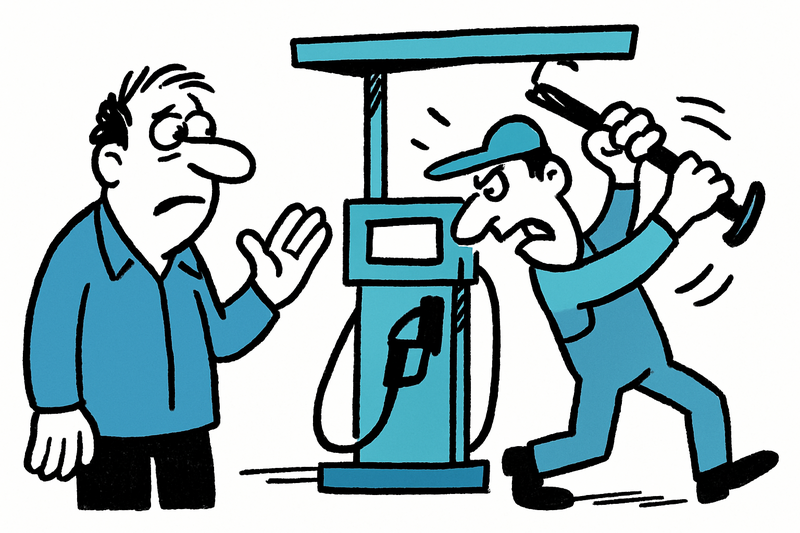
The End of the Fuel Pumps at Plaça Progrés – Court Gives Green Light
The TSJIB has ruled: the gas station at Plaça Progrés must be removed. What the ruling means for residents, shopkeepers and urban planning — and which questions remain open.
Court ruling on Plaça Progrés: an end to the pumps – but no precise timetable
Plaça Progrés looks, on a late morning, much as it always does: delivery vans squeeze between flower stalls, a son pushes a pram past, two tourists with wheeled suitcases photograph the building facades. But beneath the surface lies a turning point for Palma. The Superior Court of the Balearic Islands (TSJIB) has dismissed the gas station operator's appeal, according to Plaça Progrés: Court clears the way — but who will the space be created for? – the facility on the corner, a relic from the 1950s, can no longer claim protected status based on the existing permits. The consequence: the pumps are to be removed to make space for a planned underground car park.
The central question: when and how will the site be cleared?
The court has set the legal direction. In practice, much remains undecided. The ruling does not set a deadline ordering immediate demolition. Instead, a marathon of negotiations between the city administration and the operator now begins: costs, schedules, technical requirements – all must be negotiated. On site, however, another date is ticking: the gas station company is paying recurring fines of almost €3,000 every eight days. Financial pressure that some passers-by comment on loudly on certain mornings: 'This won't last long,' says an older man, while the bakery around the corner stuffs croissants into paper bags.
What is often underplayed: environmental risks and responsibility
Public debate is often dominated by narratives about parking and urban quality of life. Less discussed are potential legacy contaminants in the soil. Gas stations that have operated for decades often leave fuel residues in the ground. The court ruling therefore means not only demolition but also a responsibility for soil investigations, decontamination and safe disposal, as noted by local reports such as Tribunal confirma: La gasolinera en la Plaça Progrés debe ser demolida. Who will bear these costs if the operator is in financial difficulty? And who will guarantee that contaminated areas are not uncovered uncontrolled during construction? These questions should now be asked more loudly.
Those affected: residents, shopkeepers, operator
Sentiment on the square is divided. Rosa, a neighbor, remembers the place without cars: 'We used to play boules here; now it all looks like traffic.' A young father with a stroller hopes for space to play. Shop owners worry: months of construction could drive customers away. The operator, meanwhile, not only loses income but also faces the challenge of reassigning skilled staff and covering potential disposal costs. A fair compensation would be necessary, but who will organize it? The city? The operator? A dedicated fund?
Urban planning versus reality: opportunities and risks
For the municipality, the ruling is a milestone on the way to a more people-friendly city center: less through-traffic, more space for people, trees and café tables. An underground car park can paradoxically enable both – parking capacity and more surface area for pedestrians. But practice knows delays: rising costs, lengthy tenders, possible new lawsuits. The danger is that a chance turns into years of wrangling. Therefore a clear project plan is needed: transparent tenders, fixed financing mechanisms and an early communication strategy with residents and businesses.
Concrete proposals that should be put on the table now
A few pragmatic steps so that the ruling does not remain mere theory:
1) Negotiation timetable with clear deadlines: The city and the operator should agree a binding schedule, including interim targets for soil tests and demolition work.
2) Environmental checks and transparency: Soil chemical investigations should be made publicly available before construction begins. Rules on who covers remediation costs should be contractually clarified.
3) Protection for local businesses: Noise and access plans, temporary promotional measures and compensation models so that cafés and shops do not lose out.
4) Social compensation: The jobs of the gas station employees should be taken into account – retraining, severance or placement offers.
5) Citizen participation: An open planning dialogue for the design of the surface after the car park is finished, including greening, lighting and street furniture.
Looking ahead
The court has removed a legal obstacle. But whether Plaça Progrés will truly become a quieter, greener place will be decided in the coming months not in courtrooms but in negotiation rooms and on the construction site. Between delivery vans, croissants and the hum of mopeds, the square remains a lively place — and the people here will watch closely. Not only judges but the neighbors of Palma will ultimately shape whether the ruling becomes a gain for the city or merely a long-lasting provisional solution.
What remains: A court decision, compulsory fines and many open questions. The clock is ticking, but the pace is still unclear.
Frequently asked questions
What does the court ruling on the Plaça Progrés gas station mean for Palma?
Is the gas station at Plaça Progrés in Mallorca being demolished immediately?
Why is the Plaça Progrés gas station in Palma such a big issue?
Could the Plaça Progrés site have soil contamination after so many years as a gas station?
Will nearby shops and cafés in Palma be affected by work at Plaça Progrés?
What kind of parking project is planned for Plaça Progrés in Palma?
What happens next after the court decision on Plaça Progrés?
How long could the Plaça Progrés project take in Mallorca?
Similar News
The End of the Cheap Ride? Why Mallorca Is Hit Harder by the Fuel-Price Shock
Gasoline and diesel average close to two euros per liter. What this means for commuters, supply chains and renters in Ma...
Relaxed liquid rules in Munich: What Mallorca travelers will notice
At Munich Airport the 100-milliliter rule will be lifted at all checkpoint lanes — thanks to new CT scanners passengers ...

For 45 Years on Mallorca — and Then This: How a Market Visit in Santa Ponsa Became a Lesson
A woman who has lived on the island for decades lost money and important documents at the Mercat Setmanal in Santa Ponsa...
10 percent surcharge on the beach: How legal and transparent is the extra charge at Playa de Muro?
A German part-time resident noticed days after a restaurant visit in Playa de Muro that the bill included a flat ten per...

Body near the Llevant Market: What this death says about our city
A man was found dead on Sunday afternoon near the Llevant Market. Police say the death appears natural. The scene raises...
More to explore
Discover more interesting content

Can Cap de Bou

Townhouse Lleo 72
