
Crack in the Heart of Palma: Hole under the Cathedral Steps Causes Concern
Crack in the Heart of Palma: Hole under the Cathedral Steps Causes Concern
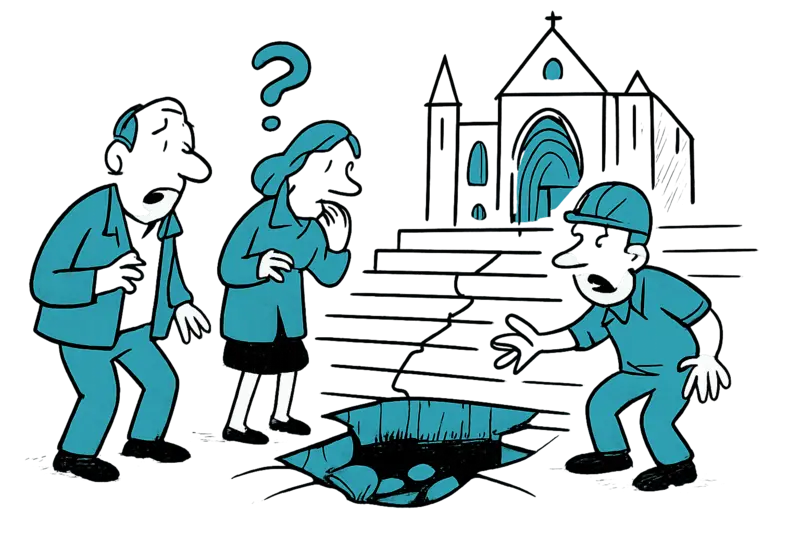
A cavity of up to five cubic meters was discovered beneath the stairs to Palma's cathedral. Why action was taken only now, who is responsible and how the city should protect visitors.
Crack in the Heart of Palma: Hole under the Cathedral Steps Causes Concern
Key question: Why did it take months for the city to begin a thorough assessment — and what must be done now to ensure the millions of visitors are not put at risk?
On the steps to Palma Cathedral many visitors only notice the tourist bustle: guided groups, selfies and the sound of the nearby tram as it rattles along the Plaça de Cort. Behind this everyday backdrop a serious construction problem has emerged. A cavity with a volume of up to five cubic meters was found beneath a section of the stairs. To prevent further subsidence, the spot was provisionally filled with gravel. Visible cracks had already been noticed in February.
The facts are sparse but clear: a defect in a municipal water pipe led to water losses. The leaked water apparently washed material out of the structure and thus created cavities. Parts of the stair ensemble have been cordoned off since. Nevertheless, more extensive investigations were ordered only about two weeks ago.
This has caused displeasure among heritage conservators and local politicians, who have pointed to other recent heritage incidents such as Partial Collapse at the Baluard de Sant Pere in Palma – What Now?.
City officials said that material samples are now being taken at several points and the overall condition is being assessed; the structure dates from 1900 and has not undergone renovation in the last three decades.
In short: damage is visible. The cause is linked to a faulty pipe. And the administration's response allowed months to pass. That is the situation that concerns us — and therefore it is worth taking a closer look.
Critical analysis
First: the time gap between the first detection of cracks in February and the now-started assessment is problematic. At a highly frequented tourist spot that is crossed daily by thousands of people, there should be no prolonged periods of deliberation without interim measures. Second: the provisional filling with gravel may provide short-term stability, but it does not replace a geotechnical investigation. Without a precise diagnosis, uncertainties remain about the extent and depth of further cavities.
Third: the connection between infrastructure failure and loss of fabric demands a systemic approach; similar infrastructure failures have prompted scrutiny after events like Wall Collapse at Palma Airport: More Than an Accident — How Safe Are the Major Works Really?. It is not enough to repair only the visible break. Water pipes, drainage and the structure of the old buildings must be considered together. Fourth: information to the public and to businesses around the cathedral has so far been scant. That increases distrust and fuels rumors.
What is missing from the public debate
There is little discussion about how the water supply and monitoring of the historic old town should be organized in the future. Likewise missing is a transparent cost and time estimate for necessary securing and renovation measures. It is not being discussed whether there should be short-term visitor redirection or clear emergency routines for large crowds — that is, who would take responsibility in an emergency and how evacuations could be practiced.
A everyday scene in Mallorca
On the Passeig des Born in the early afternoon: a guide speaks loudly about Gothic windows, pigeons peck crumbs from the wall, vendors with ice cream cones wave to tourists. In this picture the hole under the steps seems almost out of place. But the people who cross this way daily are not extras; they are residents, vendors and visitors who rely on swift, reliable answers.
Concrete solutions
1) Immediate action: extended cordoning and rerouting of visitor flows on high-traffic days; visible signage and staff as points of contact on site. 2) Diagnostics: rapid geotechnical investigations — for example ground-penetrating radar (GPR), sondages and targeted test drilling — to clarify the extent and depth of further cavities. 3) Water check: immediate inspection and, if necessary, renewal of the affected pipe by the municipal utility company, combined with an audit of the surrounding drainage systems. 4) Coordination between construction and heritage protection: formation of an external expert panel of conservators, structural engineers and geotechnical specialists and an independent body to monitor progress, echoing calls after incidents such as Hole in the Roof of Valldemossa Charterhouse: Wake-up Call for a Historic Quarter. 5) Monitoring: installation of permanent sensors at critical points for early detection of settlement or moisture loss. 6) Transparency: a public timeline with clear milestones and regular updates for residents and businesses.
Conclusion
The discovery of the cavity of up to five cubic meters is serious. That visible cracks appeared as early as February and that the administration only belatedly initiated a large-scale investigation raises questions about priorities and accountability. Palma now needs two things at once: rapid, effective protective measures for people and a thorough, technically sound renovation plan that preserves the cultural heritage. If the city administration, utilities and experts work systematically together and communicate transparently, the situation can be brought under control without panic. Continued hesitation risks not only further structural damage but also loss of trust — and that in the busiest corner of Palma.
Frequently asked questions
Why did it take months to start a thorough assessment of the hole beneath the Palma Cathedral steps?
What safety measures are currently in place near the Palma Cathedral stairs?
What caused the cavity under the Palma Cathedral steps?
What are the planned steps to fix the Palma Cathedral stairs?
How will visitors be affected when visiting the Cathedral area?
What about communication and timelines for the restoration work?
Could this issue affect long-term safety and tourism in Palma's old town?
What practical tips should visitors follow in Palma during this situation?
Similar News

S'Aranjassa, Schinkenstraße and Silence: How the 'Bierkönig' Case Must Be Reopened
Almost 29 years after the murders many questions remain. More than 100 tips came in after a TV reminder of the case – ti...
Two serious accidents in one morning hour: Why people are being seriously injured on Mallorca's roads again
In the early morning hours there were crashes on the MA-19 near Llucmajor and on the MA-5020 near Porreres. Three people...

Surprise over Palma: Saudi aerobatic team draws colorful trails
On Wednesday afternoon jets of the "Saudi Hawks" caused a stir: in white, green and red they flew over Palma and Son San...
Left Alone in Palma: What Lies Behind the Case of the 20-Month-Old Boy?
A 20-month-old child in Palma was reportedly left for hours at a time without food or supervision. Who protects the youn...
Spray Against Guests: Graffiti in El Terreno and What's Missing
An English anti-tourist slogan has been painted on the Boho Corner in El Terreno since Tuesday. Why such actions appear ...
More to explore
Discover more interesting content

Can Cap de Bou

Townhouse Lleo 72
