
Two serious accidents in one morning hour: Why people are being seriously injured on Mallorca's roads again
Two serious accidents in one morning hour: Why people are being seriously injured on Mallorca's roads again
In the early morning hours there were crashes on the MA-19 near Llucmajor and on the MA-5020 near Porreres. Three people are seriously injured. A reality check: speed, road infrastructure and enforcement.
Two serious accidents in one morning hour: Why people are being seriously injured on Mallorca's roads again
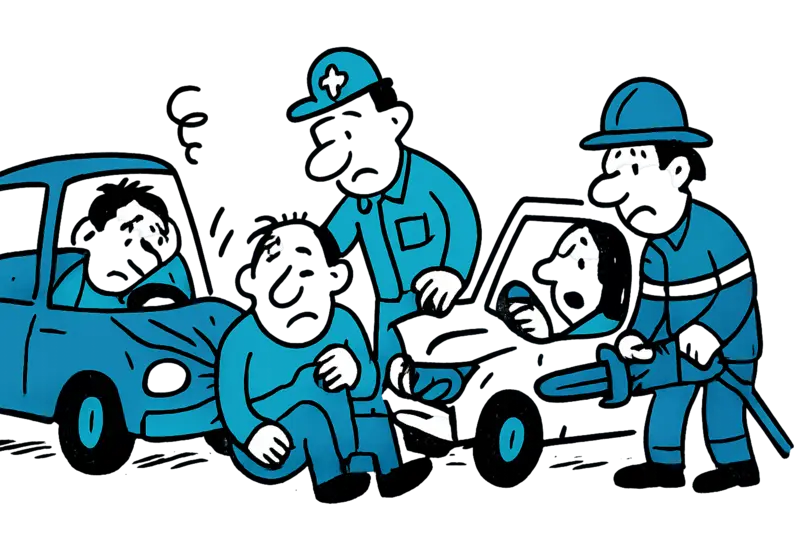
At dawn on Thursday morning there were two severe collisions on Mallorca: Around 4 a.m. a car apparently lost control on the MA-19 near Llucmajor – according to emergency service 061 excessive speed was suspected – both occupants suffered serious injuries and were taken to the Son Espases and Son Llàtzer hospitals. Around 7 a.m. there was a crash on the country road MA-5020 between Llucmajor and Porreres. A small van collided head-on with a car; both drivers were traveling alone, were trapped and had to be freed by the fire brigade, in one operation a door had to be cut out. In total four people were injured, three of them seriously.
Key question
Why are such serious accidents piling up in the early morning hours, and what is going wrong: is it only excessive speed – or are structural measures, clear signage and noticeable controls missing on these stretches?
Speed is the obvious explanation, as shown by events on the MA-19: especially on motorways around the airport many vehicles drive faster than allowed at night and in the early morning. But speed alone does not explain everything. The MA-5020 near Porreres is a classic country roads: tight bends, changing visibility and hardly any hard shoulder. If a vehicle for an unclear reason veers into the oncoming lane, it almost inevitably leads to a head-on collision.
What is often missing in public debate is a sober assessment of the infrastructure. Red warning markings, central islands or lane narrowings, a continuous central guardrail where overtaking is risky, rumble strips before danger points – such measures do not prevent every accident, but they significantly reduce the number of head-on collisions. Equally little discussed is how lighting, reflective road markings and regular maintenance of road signs can improve the safety record.
The role of enforcement and prevention is also too rarely linked to concrete countermeasures: mobile speed checks at accident hotspots, targeted alcohol and drug checks during night and morning hours and visibility campaigns for trucks and small vans. There are also simple but effective local steps: 30 km/h zones at village entrances, better guidance of access roads to villages such as the so-called 'apricot village' near Porreres and clearer warnings about gradients and bends.
A small everyday note on the impression: On the MA-19 early in the morning you see delivery vans, cleaning vehicles and commuter cars, many with poor lighting, some with the radio on. Voices on the hard shoulder are quiet, the night cleanup is underway – and it is precisely then that accidents happen that demand families, emergencies and rescue services.
Concrete solutions that can have a short-term effect: targeted, staggered speed checks; temporary road closures at particularly dangerous spots until permanent protection measures are built; more warning beacons and mobile guardrails; better coordination of emergency response locations so patients reach the appropriate hospital even faster. In the medium term, the safety concept should include wide-ranging central protection systems, an analysis of accident hotspots by the transport authority and a publicly accessible action plan.
Communication also plays a role: when authorities provide transparency about causes of accidents and planned countermeasures, pressure on decision-makers increases, and drivers better understand why speed limits, construction sites or new barriers are necessary. Without this transparency the feeling remains that 'it just happens', and that helps no one.
Conclusion: The two morning accidents reveal a mixture of human error and structural gaps. Anyone who refers solely to individual blame misses the chance to save lives permanently. Mallorca's roads need not only warnings, but visible, location-specific measures – and noticeable controls. Otherwise this sad rhythm will repeat when night kisses the morning.
Frequently asked questions
What factors are behind serious morning road crashes on Mallorca?
How should I adjust driving on Mallorca at dawn or in the early morning?
Why is the MA-19 around Mallorca's airport area risky at night?
What makes the MA-5020 between Llucmajor and Porreres a high-risk stretch?
What road-safety measures could help Mallorca reduce these crashes?
What short-term steps could authorities take at dangerous spots on Mallorca’s roads?
How can Mallorca improve safety at village entrances and access roads?
Why is transparency about accident causes important for road safety in Mallorca?
Similar News

S'Aranjassa, Schinkenstraße and Silence: How the 'Bierkönig' Case Must Be Reopened
Almost 29 years after the murders many questions remain. More than 100 tips came in after a TV reminder of the case – ti...
Surprise over Palma: Saudi aerobatic team draws colorful trails
On Wednesday afternoon jets of the "Saudi Hawks" caused a stir: in white, green and red they flew over Palma and Son San...
Left Alone in Palma: What Lies Behind the Case of the 20-Month-Old Boy?
A 20-month-old child in Palma was reportedly left for hours at a time without food or supervision. Who protects the youn...
Spray Against Guests: Graffiti in El Terreno and What's Missing
An English anti-tourist slogan has been painted on the Boho Corner in El Terreno since Tuesday. Why such actions appear ...
Medicum Mallorca on the Paseo Marítimo: New Medical Centre for an International Audience
A new medical centre in Palma aims to attract international patients: on 400 m² within walking distance of the Auditoriu...
More to explore
Discover more interesting content

Can Cap de Bou

Townhouse Lleo 72
