
Left Alone in Palma: What Lies Behind the Case of the 20-Month-Old Boy?
Left Alone in Palma: What Lies Behind the Case of the 20-Month-Old Boy?
A 20-month-old child in Palma was reportedly left for hours at a time without food or supervision. Who protects the youngest before it comes to an arrest?
Left Alone in Palma: What Lies Behind the Case of the 20-Month-Old Boy?
Key question: How can such a small child repeatedly be left unsupervised for hours — and what is missing in our care?
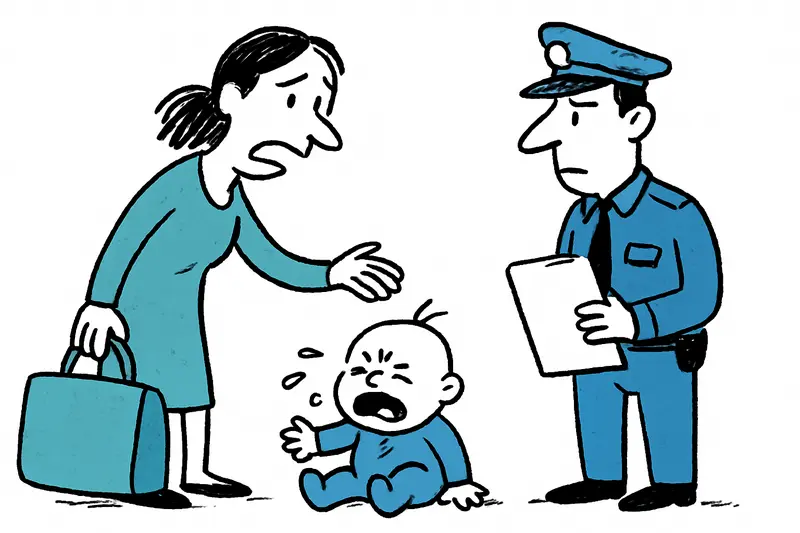
Investigations in Palma report a 20-month-old boy who, according to a relative, was repeatedly left for hours without food and without supervision. According to the accounts, the mother often entrusted the boy to other relatives, was away overnight at times, and even left the child to bathe unattended. Police investigated on suspicion of neglect, and the mother was arrested last week.
These facts are distressing, but they above all raise a simple, urgent question: Where did the system fail before it came to punitive measures? In Palma's streets you can already hear the delivery vans on Passeig Mallorca in the morning, people call and laugh at the Olivar market — and in between live families who hardly attract attention until something terrible happens. This coexistence doesn't make the problem smaller but more visible: emergencies often remain behind closed doors.
Critical analysis: There are several levels at which prevention can fail. First, family support: if close relatives reported the case, that shows there were warning signs. But reporting is not the same as immediate assistance. Second, official review routines: reporting means investigating — but how quickly and thoroughly did social services and police follow up on the tips? Third, poverty, mental strain, addiction or being overwhelmed can be causes; these factors should not be assumed without evidence, but they are common backgrounds for such cases and require systemic responses.
What is missing in the public discourse: we quickly talk about arrests and blame. Less present is the question of early detection and sustainable assistance. Hardly anyone talks about how neighbors, general practitioners, pediatricians, daycare centers or counseling centers could be better networked. We rarely talk about adequate housing conditions and hygiene as part of child welfare, about affordable childcare or about low-threshold services that reach parents in crisis.
Everyday scene from Mallorca: I think of Calle Sindicato on a late morning, of the older woman watering the plants, of the young mother with a buggy who quickly fetches rolls. Such scenes offer chances for early intervention: a brief look, a friendly question, passing on a tip to the right place — that can make a difference, as recent incidents show: Careless Moment in Llucmajor: Family Rescues Two-Year-Old from Pool – Medical Teams Fight for His Life. When people in the neighborhood look away, isolation grows; when they look, problems can become visible more quickly.
Concrete approaches: First, better cooperation between police and social services: reports should trigger a clearly defined review and intervention protocol, including home visits by trained professionals. Second, expand points of contact: counseling centers with low-threshold opening hours, family guides who assist with administrative procedures. Third, promote neighborhood initiatives: training for neighbors, landlords and daycare staff on recognizing and reporting possible neglect, and to handle acute risks highlighted by Playground attack in Palma: Who protects our children from unleashed dogs?. Fourth, take housing and hygiene standards seriously: social housing and support programs must also include criteria for child welfare and cleanliness and offer practical help — waste disposal, pest control, hygiene training. Fifth, preventive services: accessible psychological help, parenting courses and emergency care for overloaded families.
Important: help must not always start with prosecution. Investigations and protective measures are necessary, but in many cases early interventions relieve everyone involved and prevent escalation. That does not mean responsibilities become blurred — rather, structures must exist that stabilize families before children are endangered.
Concise conclusion: This case in Palma is an alarm signal, not an isolated incident, however individual it may be. The arrest is a reaction; the challenge is to strengthen the web of neighborhood, social services and public offerings so that a 20-month-old boy never ends up at risk for weeks or months. Those who look around in the shadow of the Tramuntana or at the market can do more than judge: ask questions, report, support. That must be our shared aim — louder than the brief outcry of the headline.
Frequently asked questions
When is Mallorca best for sun, sea, and outdoor activities?
How can I plan a relaxed beach day in Mallorca?
What should I pack for a trip to Mallorca?
Is Mallorca good for hiking and outdoor adventures?
How can I get around Mallorca without renting a car?
What should I know about Mallorca’s beaches and swimming safety?
What weather patterns should I expect when planning Mallorca travel?
What local foods should I try when visiting Mallorca?
Similar News
Spray Against Guests: Graffiti in El Terreno and What's Missing
An English anti-tourist slogan has been painted on the Boho Corner in El Terreno since Tuesday. Why such actions appear ...

Medicum Mallorca on the Paseo Marítimo: New Medical Centre for an International Audience
A new medical centre in Palma aims to attract international patients: on 400 m² within walking distance of the Auditoriu...
Lost between rocks and beachgoers: Dolphin in Cala Tirant raises question of assistance
A lone dolphin surfaced on Monday in the shallow bay of Cala Tirant. Lifeguards tried to guide the animal into deeper wa...
Deadly accident at 550 Challenge: What the Zero Car deployment leaves unresolved
A lead vehicle crashes, a well-known participant dies, the rally is cancelled. We ask: Are the safety requirements suffi...
Housing Pressure on the Islands: Why Ibiza Sets the Bar for High Rents
New rental contracts on Ibiza average almost €2,000 — despite a sharp decline in private tourist beds. What does this me...
More to explore
Discover more interesting content

Can Cap de Bou

Townhouse Lleo 72
