
Deadly accident at 550 Challenge: What the Zero Car deployment leaves unresolved
Deadly accident at 550 Challenge: What the Zero Car deployment leaves unresolved
A lead vehicle crashes, a well-known participant dies, the rally is cancelled. We ask: Are the safety requirements sufficient — and what is missing from the public discussion?
Deadly accident at 550 Challenge: What the Zero Car deployment leaves unresolved
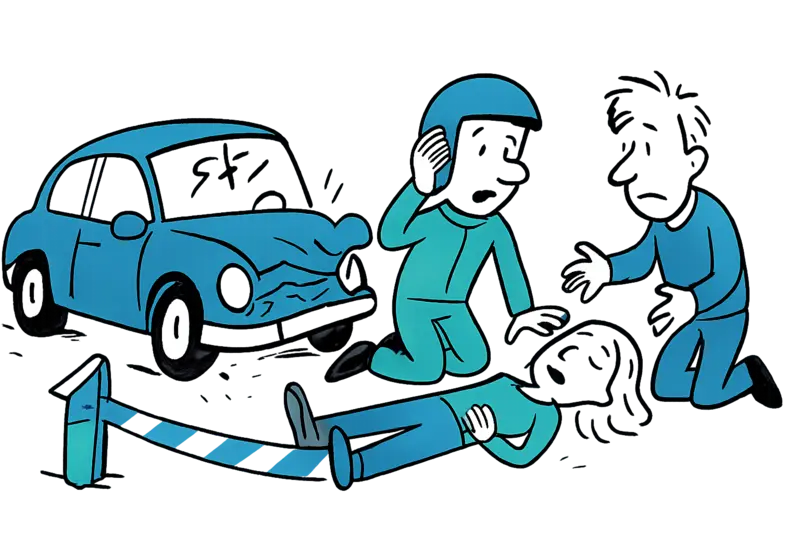
Over the weekend a rally that was otherwise a sporting event on Mallorca's roads ended in tragedy: During the 550 Challenge a Porsche used as a lead vehicle crashed, the passenger, entrepreneur Klaus Rader, died, his co-driver Christina Ettel survived with serious injuries and is still receiving medical treatment. The event was immediately cancelled thereafter. Similar incidents have prompted coverage such as Fatal accident in Alcúdia: Who is responsible — and what needs to change?.
Main question
Could this accident have been prevented — or is a fatal risk at such an event unavoidable?
Critical analysis
According to the organizer the vehicle was operating as a so-called Zero Car, i.e. as a vanguard ahead of the actual field of participants. Such cars are supposed to check the route and point out hazards. Anyone familiar with everyday life on Mallorca knows the narrow coastal roads and the tightly winding mountain passes of the Serra de Tramuntana: a patch of oil, a loosely piled marker post or an incorrectly positioned marshal can be enough to make a drive under realistic conditions turn dramatic. Whether the car was driving in normal inspection mode or at increased speed has not yet been publicly clarified. Related reporting on other coastal and mountain road incidents includes Fatality in Rear-end Collision on Ma-5013: Could the Crash Have Been Prevented?.
The organizer points out that all permits and safety standards were in place. Permits however offer little protection from every conceivable danger. Official approvals say nothing about the concrete implementation on site: distance between marshals, material quality of barriers, radio coverage, escape and rescue routes, and the preparation of the emergency chain — from the paramedic to the hospital — remain separate, verifiable factors.
What's missing in the public discourse
The debate quickly focuses on prominence and blame. Technical and organizational details are often neglected: Were there binding rules for Zero Cars, such as maximum speeds? Were the marshals deployed and trained according to uniform criteria? Were emergency teams stationed at all critical points? How is the priority of realistic test drives versus minimizing risk defined? Such questions have so far been largely absent from reports and initial statements, even in reporting on other fatal crashes such as Fatal accident on the Ma-19 near Llucmajor: Why motorcyclists are repeatedly affected.
A scene from the island
If you drive along the MA-10 on a sunny October morning you notice the tight hairpins and the stone walls where olive groves end. In a café in Sóller residents discuss under the sound of cicadas how fast sports cars can really drive here. In a parking area near Bunyola ambulances stood with engines running after the accident; the blue lights cast briefly flickering shadows on a sagging barrier tape. Such small images make it clear: On Mallorca rally stages are rarely places without everyday life, but intersections with inhabited paths, hiking routes and narrow country roads.
Concrete proposals
1. Formal rules for Zero Cars: Clear, written upper speed limits for lead-vehicle mode; mandatory proof of behavior during reconnaissance runs. 2. Independent safety inspections: External auditors check barriers, communication and rescue routes before each competitive section. 3. Standardized training for marshals: Certified training, radio protocols and checklists so that every marshal knows how to act in an emergency. 4. Emergency planning with real-time resources: Pre-arranged helicopters or specialized rescue, defined access routes for ambulances, and regular drills. 5. Transparent post-incident reporting: Organizers should hand over technical data (on-board recordings, GPS tracks) to an independent body after accidents so lessons can be learned without producing premature blame.
Conclusion
An accident like this affects people, families and an entire island community. The answers must not remain personal statements. Authorities, organizers and the scene must now concretely examine which safety building blocks were missing and how procedures can be improved quickly. Only in this way can the balance between sporting experience and protection of people be reasonably recalibrated.
Frequently asked questions
What is a Zero Car, and how does it affect safety in Mallorca rally events?
What safety measures should Mallorca rally organizers implement to prevent incidents?
What makes Mallorca rally routes challenging for safety?
Where should emergency resources be positioned during Mallorca rallies?
What questions should the public ask about Zero Cars and marshal training after a Mallorca rally incident?
Which Mallorca towns are commonly associated with rally routes and watching the races?
What should spectators know when watching a Mallorca rally to stay safe?
How can post-incident learning improve Mallorca rally safety?
Similar News
Housing Pressure on the Islands: Why Ibiza Sets the Bar for High Rents
New rental contracts on Ibiza average almost €2,000 — despite a sharp decline in private tourist beds. What does this me...
After a Powerbank Fire on a Plane: What Mallorca Travelers Need to Know
A powerbank fire on board makes clear: batteries belong in carry-on luggage — and travelers, airports and airlines must ...
Fire in Can Pastilla: Supermarket behind hotel burns down completely – a reality check
A small supermarket behind a hotel in Can Pastilla burned down completely in the early morning hours. Why a second water...
Private Ambulance in Mallorca: Why a Father Had to Pay €695 Out of Pocket
A German holidaymaker paid €1,095 after an emergency involving his nine-month-old son. His health insurer reimbursed onl...
Real estate boom in Mallorca: 66 new estate agencies — who is being built for?
In the first nine months of 2026, 66 new real estate intermediaries were registered in Mallorca's commercial register. A...
More to explore
Discover more interesting content

Can Cap de Bou

Townhouse Lleo 72
