
Cycling Day in Mallorca: How Much Closure Can the Island Take?
Cycling Day in Mallorca: How Much Closure Can the Island Take?
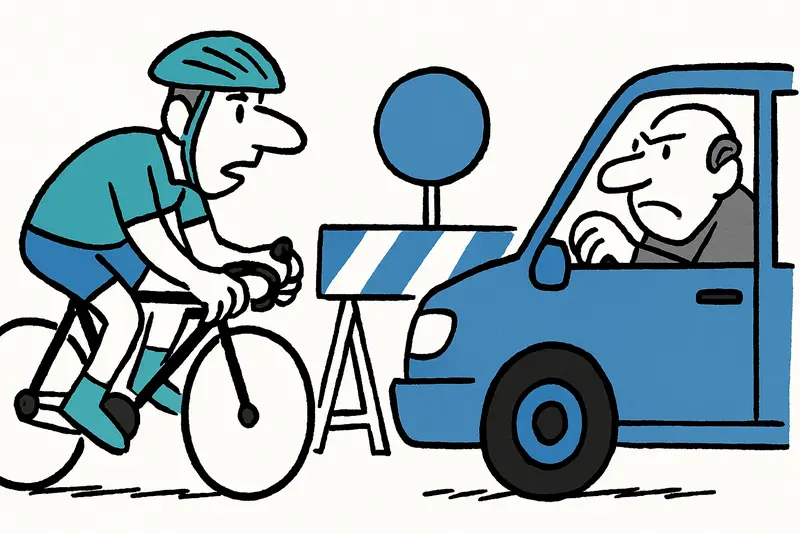
On Saturday 8,500 cyclists start at the Mallorca 312 OK Mobility. The result: large-scale road closures from Playa de Muro to Manacor. A practical test of how to better reconcile mobility and events.
Cycling Day in Mallorca: How Much Closure Can the Island Take?
Key question: Does the island need to organize traffic differently on the day of the Mallorca 312 so that residents and emergency services are not victims of the closures?
On Saturday thousands of race bikes will roll out again: the Mallorca 312 OK Mobility brings around 8,500 participants across three distances (167, 226 and 312 km) to the start and finish in Playa de Muro. The scale is reminiscent of the island's busy cycling periods such as When Mallorca Smells of Chain Oil Again: Autumn High Season for Cyclists. For the island this means a network of temporary road closures stretching from early shift into the evening. Authorities – island council, Guardia Civil, municipal police and civil protection – have set routes and time windows, but on the ground everyday life often appears less tactical and more improvised.
Short and concrete: Individual sections are already closed before dawn (Playa de Muro–Pollença from 05:00 until about 07:45). The Ma-10 towards Lluc and the passages at Coll de Sa Batalla are affected in the morning phase (approx. 06:30–09:50). On the west side Deià and Valldemossa are restricted in the morning hours, later Andratx–Puigpunyent–Esporles follow with closures into the early afternoon. In the east riders and locals must expect closures at the Albufera, Sa Pobla/Santa Margalida and longer stretches between Ariany, Petra and Manacor; the late return of the long course to Playa de Muro can cause restrictions into the late evening.
It sounds factual, but in practice it is louder: In Playa de Muro the morning smells of brewed coffee from the bars on the Passeig as tables are being wiped when the first barriers are put up. An old farmer on the Ma-12, tending his olive trees, wonders how he will move his machinery that day. A nurse from Sa Pobla has a shift change and needs reliable corridors for outpatient calls. Such everyday scenes make clear: closures affect not only visitors, they prevent people from carrying on with their daily lives.
Critical analysis
Coordination between organizers and authorities exists – you can see it in the precise time windows. But two things are missing: first, practical detour routes that are signaled in advance. Second, tangible exceptions and guaranteed emergency corridors for local needs. When closures block a main connection for hours, congestion spills onto side roads, supply chains stall, agricultural transports run into trouble. In short: the burden is shifted rather than controlled.
Information is also often hard to find for people without social media accounts or those who do not follow the island council channels daily. An elderly resident in Valldemossa relies more on the corner shop than on X posts; here an analog information chain is missing. Even other events highlight similar communication challenges, for example Palma on Sunday: Triathlon and Cycling Tour Bring Atmosphere — and Road Closures.
What is missing in the public debate
The discussion usually revolves around sporting dimensions and tourist effects. Little attention is paid to professional groups that are immovable that day: bus drivers, care services, farmers, suppliers, tradespeople. The question of how emergency care across the island is stressed by hours-long closures is rarely asked. And almost nobody asks whether alternative schedules (staggered starts, local time windows) could alleviate the problem. Regulatory changes also get coverage, for instance Riding Side by Side in Mallorca: New Rules — Is That Really Enough?, but they do not answer the practical emergency-access questions raised here.
Concrete solutions
- Set up clearly marked emergency corridors with continuous signage during closures and communication by radio to emergency services.
- Early, multilingual notices in town halls, supermarkets, pharmacies and at bus stations, not only digital notices.
- Temporary traffic management on main axes: dynamic detour plans signed from major access roads (Palma-Ma-13, Ma-15, Ma-12), so locals do not have to divert via side roads, combined with longer-term planning such as More space for cyclists and pedestrians – but is it enough? Mallorca's plan for 60 km of safe routes.
- Shuttle services for commuters between affected places and S-bus or train hubs, tightly scheduled for peak times.
- A local contact phone for urgent individual cases (agriculture, medical transports) with confirmed prioritization by civil protection or municipal police.
- Post-event evaluation with representatives of small businesses, emergency services and residents to measure economic and social side effects.
Conclusion
A bike race of this scale is a logistical masterpiece – for the riders. For the island it only works if planning takes residents' daily lives as seriously as the competition calendar. More visible detours, analog information channels and guaranteed corridors for emergencies would take the pressure out of the morning. Otherwise Saturday will leave an impression: a big spectacle on the road, small people stuck in traffic.
Frequently asked questions
What is the weather usually like in Mallorca in March?
Can you swim in Mallorca in March?
Is March a good time to visit Mallorca?
What should I pack for Mallorca in March?
What is Sóller like in March?
Is Palma de Mallorca busy in March?
What is the beach weather like in Mallorca in March?
What is Valldemossa like to visit in March?
Similar News

Four goals, heart-stopping moments, a message: Germania Mallorca takes three points in Consell — questions remain
The new German club on the island won its first away game in Consell 4:3. Celebration, a 4:0 lead, then a nervous finish...

Mueller continues expanding in Mallorca: Artà in 2026, Can Picafort in early summer 2027
The drugstore chain Mueller is opening two new stores in Mallorca: a 1,400 m² shop in Artà on 5 November 2026 and a bran...
The Painter Who Lived Mallorca: Franz Taussig and His Century-Old Secret
A hundred years ago a young Viennese arrived in El Terreno, sketched the island and called himself Francis Caron. Today ...

Airport dispute: Bridge, forecasts and the question of responsibility
A video by the Spanish transport minister has ignited the dispute over DORA figures, capacities and local governance pow...

The Painter Who Invented Himself: How a Young Viennese Drew Mallorca
A hundred years ago a 19-year-old draftsman arrived in El Terreno. His diary and sheets, long known under the pseudonym ...
More to explore
Discover more interesting content

Can Cap de Bou

Townhouse Lleo 72
