
When 40 Minutes Become an Hour and a Half: Cycling Groups, Jams and Disputes in the Tramuntana
Dense groups of cyclists on the MA-10 cause long delays and heated discussions between locals and riders. How can safety and everyday life be reconciled?
When 40 Minutes Become an Hour and a Half: Cycling Groups, Jams and Disputes in the Tramuntana
How can cars and cyclists share the narrow mountain roads without danger and conflict?
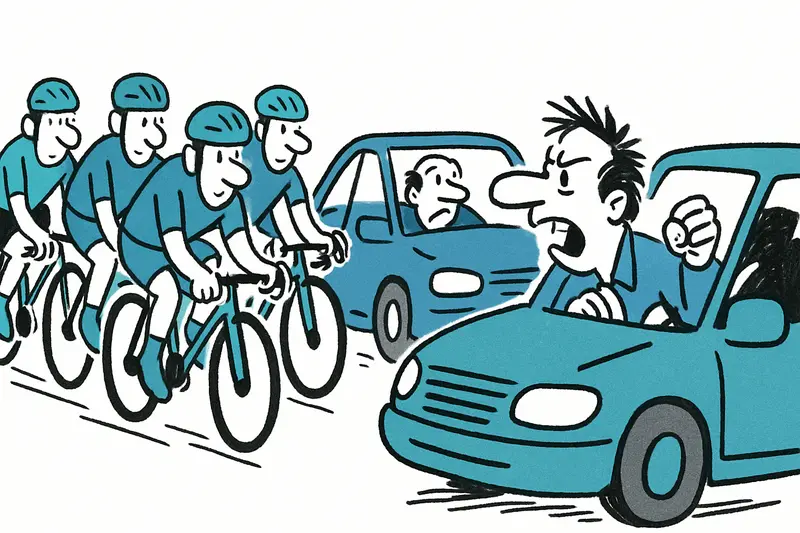
On a late morning on the MA-10, just before Banyalbufar: citrus trees on the slope, the sea sparkling in the sun, and ahead of me a chain of colorful jerseys winding through a hairpin. Cars line up behind, engines hum, windows fogged by impatience. For locals this has become everyday life – yet it still provokes audible irritation.
Mallorca has established itself as a training island for road cyclists. Every year, large parts of the professional and recreational cycling community come here, and there are estimated to be several thousand active cyclists on site. The roads in the Sierra de Tramuntana are a magnet: challenging climbs, spectacular views, mild climate. At the same time, many stretches are narrow, winding and only conditionally suitable for two-way traffic.
The key question: How can narrow mountain roads be organized so that driving time for motorists does not balloon, cyclists can ride safely, and the everyday life of residents does not suffer?
Since changes to traffic law, cycling groups are allowed to ride side by side, and drivers must maintain a minimum passing distance of 1.5 meters when overtaking. The rule is well intended: visibility and protection of cyclists are important. In practice, however, this creates a situation in which a larger group blocks a narrow section for an extended time and following vehicles have hardly any opportunities for safe overtaking.
The debate is heated. A video circulating online shows vehicles crawling at walking speed because cycling groups take a bend. The observer of the clip reports that 40 minutes stretched to 90; similar scenes have led to kilometer-long tailbacks before Sóller. Such scenes cause anger — and raise legitimate safety questions: Are the existing rules sufficient? How are they enforced? And who monitors risky overtaking maneuvers that follow?
What is often missing from the public discourse is a sober inventory: there are too few reliable figures on accident rates on these sections, hardly any systematic surveys of peak times and no transparent listing of which routes are particularly affected. Authorities, local clubs and the tourism sector often talk past each other. The perspectives of professional drivers, residents with tight schedules and group leaders who bear responsibility for large training groups rarely come together at one table.
Everyday scenes on Mallorca sound like this: a farmer at the junction with his load, a school bus stuck behind the queue, a pensioner with an appointment at the hairdresser. These are not abstract numbers, this is daily life that can strain the island's routines. The mood in small lay-bys along the MA-10 ranges from polite waiting to open annoyance when the clock is ticking.
There are concrete solutions, but they require the courage to coordinate:
1) Create data: Temporary traffic counts and an analysis of accident reports along the MA-10 and similar sections. Only with clear facts can priorities be set for where interventions are necessary.
2) Time windows for larger training groups: In especially narrow sections, regulated training times could be introduced in which organizers register large groups. Outside these times motorists would have free passage. This already works elsewhere for hikers or construction sites, and at major local events such as the Night Pilgrimage to Lluc.
3) Visibility and leadership: Group leaders have responsibilities. Training for guides, mandatory identification of large training groups and, where appropriate, escort vehicles with hazard lights would make overtaking more predictable.
4) Infrastructure points: At selected locations pull-out bays or short overtaking lanes could be created; there vehicles could pass safely without risky maneuvers on bends.
5) Digitalization: A local app or reporting channel that provides real-time information about large groups would help commuters and taxi drivers choose alternative routes.
6) Consistent enforcement: Controls of passing distances and group sizes must be more visible. Fines seen only as a squabble do not help; transparently communicated measures do.
No one wants to ban cycling from the island. It brings income, infrastructure and international attention — as during recent road closures for Mallorca by UTMB. But acceptance dwindles when residents experience their daily routes as blocked. It's therefore not only a matter of legal fine-tuning, but of respect in everyday road use: cyclists who act considerately; organizers who plan; authorities who regulate and enforce; and drivers who exercise patience — without provoking dangerous overtaking maneuvers.
Conclusion: The Tramuntana is too beautiful for endless jams and too narrow for rules that only exist on paper. If politicians, the tourism industry and the cycling community jointly pursue pragmatic, locally adapted solutions, the conflict can be eased. Until then on the winding sections: keep your eyes open, drive slowly and better lose five minutes than risk an accident.
Frequently asked questions
Why do car journeys in Mallorca’s Tramuntana often take much longer when there are cycling groups on the road?
Are cyclists allowed to ride side by side on Mallorca’s roads?
What is the minimum distance drivers must leave when overtaking cyclists in Mallorca?
Is cycling in the Tramuntana a problem for residents and commuters in Mallorca?
What can be done to reduce traffic conflicts between cars and cyclists in Mallorca?
Is the MA-10 in Mallorca especially difficult for traffic when cyclists are training there?
Why is the road before Sóller often mentioned in Mallorca traffic discussions?
What should drivers do when they meet a cycling group on a narrow Mallorcan mountain road?
Similar News
When the Wallet Becomes a Danger: Attack in Peguera and Lessons for Mallorca
In Peguera, two women are said to have stolen the wallet from a 75-year-old German couple. When the victim intervened, t...
Plata stays Plata: Young people take over, Llonguets remain
A small bar on Carrer de l'Argenteria will continue: Tolo Serra hands the place over to young Mallorcans at the end of t...

Unnoticed in the Luggage Compartment: How a Boy Traveled More Than 100 Kilometers in a Team Bus
A minor traveled in the undercarriage of a team bus for more than 100 kilometers until his cries for help were heard. A ...

Cap Vermell Grand: Second Michelin Key – a Gift for the East
The Cap Vermell Grand in Capdepera has been awarded its second Michelin key. For the region this elevates the luxury off...

Eurowings lets four aircraft carry names – a friendly idea that also reaches Mallorca
Eurowings is launching a campaign: four Airbus A320s are to carry the first names of people who help others in everyday ...
More to explore
Discover more interesting content

Can Cap de Bou

Townhouse Lleo 72
