
Dead Aunt in Suitcase: Why This Case Raises More Questions Than Answers
Dead Aunt in Suitcase: Why This Case Raises More Questions Than Answers
A court sentenced a woman to 17 years in prison after she confessed to killing her 91-year-old aunt in Sineu and transporting the body in a suitcase to Palma. How could the situation escalate like this — and what is lacking in the protection of elderly people on the island?
Dead Aunt in Suitcase: Why This Case Raises More Questions Than Answers
Key question: How can a care situation spiral to the point that a relative dies and the body is taken in a suitcase to another city?
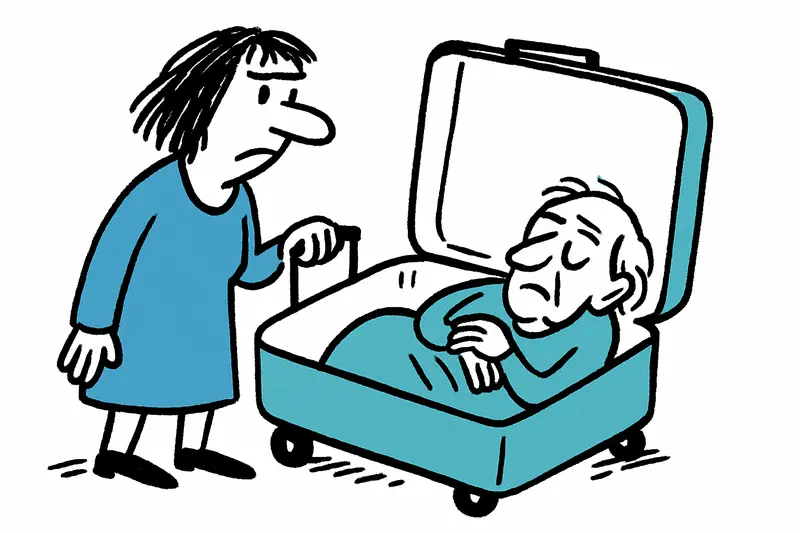
The court ruling is on the table: 17 years in prison for Antonia S.G., who is said to have killed her 91-year-old aunt in Sineu in mid-April 2024. The woman confessed, so there was no jury trial. According to the indictment, she had taken the senior into her care a few days earlier because the woman was experiencing a "progressive cognitive decline". Investigators report severe blows, broken nasal bones, pressure on the chest resulting in broken ribs, and a stab wound to the chest. Afterwards the defendant is said to have tried to cover up the act: cleaning the scene, hiding the body in a suitcase and transporting it to Palma, where emergency services and police later became suspicious.
In short: a brutal isolated case that caused a lot of attention on the island, similar to other local discoveries such as Fatal Discovery in Son Macià: A Case Raising Questions about Protecting Older People.
First: care is often a family matter. In small towns like Sineu people know each other, see neighbors on the plaza, hear the church bells and assume the family will take care. When an older person with cognitive problems suddenly moves in with a relative, this is often not automatically accompanied by professional services. Why was there no prompt check by social services, no visit by a qualified care nurse? In many cases staff and resources for regular home visits are lacking, especially outside Palma, a gap highlighted by reports such as Body Found in Santa Catalina: When an Entire Neighborhood Didn't Notice.
Second: prevention and training. Relatives often take on care tasks without sufficient preparation. No training for aggressive behaviors in dementia, no respite offers, no clear contact point for overload. That creates fertile ground for overwhelm, hidden aggression and in the worst case violence. The fact that an emergency number ("061") was called suggests the defendant also sought help—or at least tried to justify the situation. Emergency crews became suspicious; that shows that responders can notice something when they arrive. But how often does such a suspicion not lead to further investigation?
Third: the judicial process. Because the defendant confessed, further evidence was not heard before a jury. For the victim that may no longer matter; for society it does: a comprehensive public trial might have shed more light on the circumstances—how care was organized, who had been informed, whether there were earlier signs.
What is missing so far from the public debate: an honest discussion about how we as a community deal with demographic change. It is not only about sentences but about structures that prevent violence. We often talk about beds in nursing homes or the costs of care, but rarely about preventive home visits, respite for caregiving relatives in small communities or concrete alarm chains in cases of suspected abuse.
An everyday scene that makes the problem tangible: on a cool morning on Calle Major in Sineu an older woman sits with knitting on a bench. A delivery van honks, the baker sweeps in front of his door, children run to school. No one loudly asks whether the woman is alone in the evening, as other incidents such as Santa Catalina: Man reportedly lived for a month with his dead mother – questions for the city have shown. It is precisely this invisible loneliness combined with a lack of professional support that creates the space in which overwhelm can turn into danger.
Concrete solutions can be derived from these observations: First, expand mobile social and care visits in the villages, financially supported by the island administration. Second, low-threshold training offers for relatives—courses on behaviors in dementia, de-escalation and managing one's own stress. Third, a binding reporting chain: if emergency services suspect abuse at an emergency, social services should automatically be informed and act quickly. Fourth, temporary respite places (day care or short-term care) also in smaller communities so that caregivers do not remain without a break.
These proposals are not revolutionary. They cost money and require political priority. But they are not aimed solely at punishment but at prevention. A sentence can punish an individual case; only better structures prevent such individual cases from becoming more frequent.
Conclusion: The sentence—17 years in prison—answers the question of criminal responsibility. Harder is the question of how an island society protects its older, vulnerable members and at the same time prevents relatives from ending up in situations that end in catastrophe. If we really want to learn something from the case of the murdered 91-year-old, we must start in the quiet places: with home visits, respite offerings and support for the people who provide care.
Frequently asked questions
What happened in the Sineu suitcase case in Mallorca?
How can family caregiving in Mallorca become a risk for vulnerable older people?
What support exists in Mallorca for relatives caring for someone with dementia?
Why was the emergency number 061 relevant in this Mallorca case?
What does the Mallorca case say about elder protection in small towns like Sineu?
Why did the court sentence the defendant to 17 years in prison in Mallorca?
What can Mallorca do to prevent similar elder abuse cases?
Why is Palma mentioned in the Sineu case?
Similar News

Released with Conditions: The Plus Ultra Suspicion and a Mallorcan Finca as Residence
A Dutch entrepreneur, sought in connection with the Plus Ultra case, was extradited to Spain after his arrest in Germany...

Haute Nuit in Puerto Portals: Fashion, Art and Indulgence by the Water
On October 2 the Lobster Club in Puerto Portals will be transformed into a stage for curated fashion, art and culinary e...

Magaluf: Watchtower Alarm – Lifeguards Pull Unconscious Beachgoer from the Water
After a drama in the late afternoon, two lifeguards at Magaluf beach rescued an unconscious 44-year-old man. He was stab...

Turquoise in the City: How dangerous is the color play of the Sa Riera?
The Sa Riera in Palma suddenly turned turquoise — a pretty motif, but behind the effect lies a discharge of saline waste...

Jeckliner at Sunnesching: Cologne spirit sets sail from Palma
In September 2027 the Mein Schiff 2 briefly becomes a floating carnival stage: four days with Cologne bands, comedy and ...
More to explore
Discover more interesting content

Can Cap de Bou

Townhouse Lleo 72
