
Dead beside Estadi Balear: Why the mystery around the 20-year-old leaves questions unanswered
Dead beside Estadi Balear: Why the mystery around the 20-year-old leaves questions unanswered
A 20-year-old was found dead on Carrer de Can Durán. The National Police are investigating; an autopsy should clarify the cause. A reality check with concrete demands.
Dead beside Estadi Balear: Why the mystery around the 20-year-old leaves questions unanswered
Key question: What does this discovery tell us about safety, health and information management in Palma — and what is missing from the public debate?
The findings
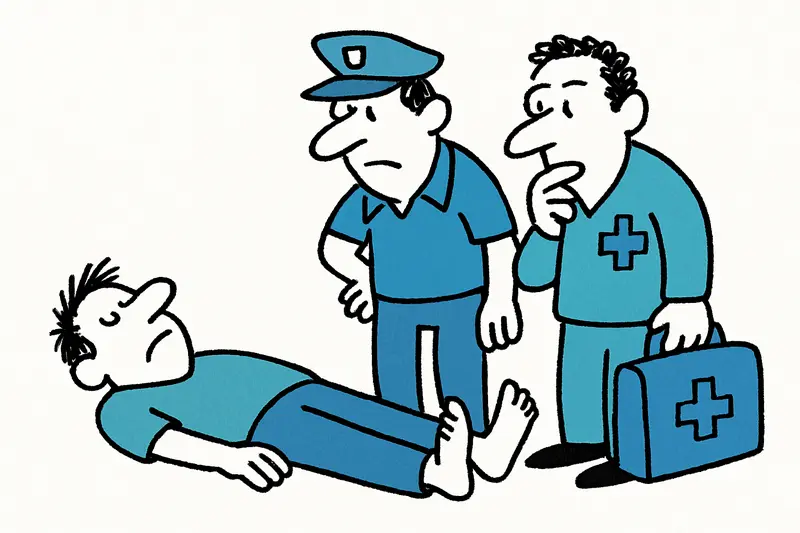
On a sunny Sunday afternoon, shortly before 1 p.m., an employee of a car rental company found the lifeless body of a 20-year-old Spanish man in the parking lot on Carrer de Can Durán. Paramedics pronounced him dead at the scene. Local police and the National Police were quickly on site; the homicide unit took over the investigation, although officers say they do not initially suspect a crime. Notably, the young man was not wearing shoes. An autopsy should clarify the cause of death; the duty court has been informed.
Critical analysis
The death of a 20-year-old in a parking lot raises several interconnected questions: Was it a sudden medical emergency? Did alcohol, drugs or an accidental injury play a role? Or is it a social emergency — for example homelessness or lack of support services? Police report no visible signs of violence, but that alone is not an explanation. Relying on an autopsy to determine the cause of death is right, but it should not be the only tool for systematically identifying causes. Local reporting has also covered other unexplained deaths, for example 15-year-old found dead in Son Oliva: How could this happen?, which highlights the wider concerns this case raises.
What is missing from the public discourse
Public discussion often focuses only on the sensational aspect of a body found: crime or no crime. Less present is the question of how urban structures can prevent such isolated cases. There is a lack of connection between criminal police work and social-medical prevention: night patrols, first-aid training for staff at hotspot locations, coordinated information between the city council, health services and police. The issue of transparent information policy is also missing: people in the neighborhood want to know whether there is any danger; relatives need reliable, prompt information without speculation. Previous reporting, such as Head between window grilles: 15-year-old in Palma died – a reality check, underscores the need for careful, factual communication to avoid harmful conjecture.
A typical everyday scene from Palma
Walking past the parking lot on Carrer de Can Durán at noon, you hear the distant honking of buses, the clatter of dishes from the cafés on the street behind and sometimes the voice of a taxi driver waiting for customers. On weekdays rental cars, tradesmen's vans and occasionally older residents park here. Such corners seem ordinary but are interfaces between tourism, business and residential areas. It is exactly here that administrative gaps meet human fates.
Concrete solutions
1) Increase visibility: better lighting and regular checks of parking areas at critical points such as Carrer de Can Durán reduce the risk of unresolved cases and make it easier to provide prompt help. 2) Strengthen cooperation: the city council, health centers, police and parking operators (e.g. car rental companies) should agree on fixed reporting and intervention pathways — including a clear contact point for reports of found persons. 3) First aid and awareness offers: employees of public institutions and companies around the stadium should have training in first aid and in dealing with people in crisis situations. 4) Improve the data basis: unexplained deaths should be systematically analyzed to identify patterns — for example seasons, locations, or affected groups. 5) Communication: authorities should provide timely, factual information to prevent rumors without jeopardizing investigations.
Concise conclusion
The discovery of the 20-year-old is primarily a human tragedy. It is also a warning sign: a single body found is not a local oddity but a test of the interaction between safety, health care and communication in Palma. The autopsy will ultimately provide answers — but we should already begin to close the gaps that can turn small fates into larger ones.
Frequently asked questions
What happens when a person is found dead in Palma and the cause is not clear?
Why are parking lots in Palma sometimes part of safety concerns?
What should you do if you find an unresponsive person in Mallorca?
Could alcohol, drugs or a medical emergency explain a sudden death in Palma?
Why is clear public information important after a death in Palma?
What support gaps can appear in cases involving vulnerable people in Mallorca?
What improvements could make Palma safer around busy urban areas?
Why can a place near Estadi Balear feel ordinary but still raise serious questions?
Similar News
Palma, Palma de Mallorca, Palma‑Mallorca: What is it really about?
The debate over the city's name is more than grammar: it concerns identity, law and branding policy. A sober reality che...
Warning to Bathers: Nipping Fish in Cala Major and Other Coves — a Reality Check
In Cala Major and several beaches around Mallorca, bathers report painful “nips”. Who are the animals, why are they gett...
Rental Car Theft in El Arenal: What This Incident Reveals About Our Gaps
A teenager steals a running rental car in El Arenal, flees on foot, climbs over walls and is caught by the Guardia Civil...
Red Rope in Palma's Library: What Helps Against Selfie Tourism — and What's Missing
Palma's city library cordoned off an area with a red rope to keep selfie tourism away from reading and working activitie...
Fort San Carlos: Museum, Harbor Dispute — and a Conflict That Demands Answers
The military museum at Fort San Carlos sits right on Palma's harbor, with unexpectedly quiet rooms filled with cannons a...
More to explore
Discover more interesting content

Can Cap de Bou

Townhouse Lleo 72
