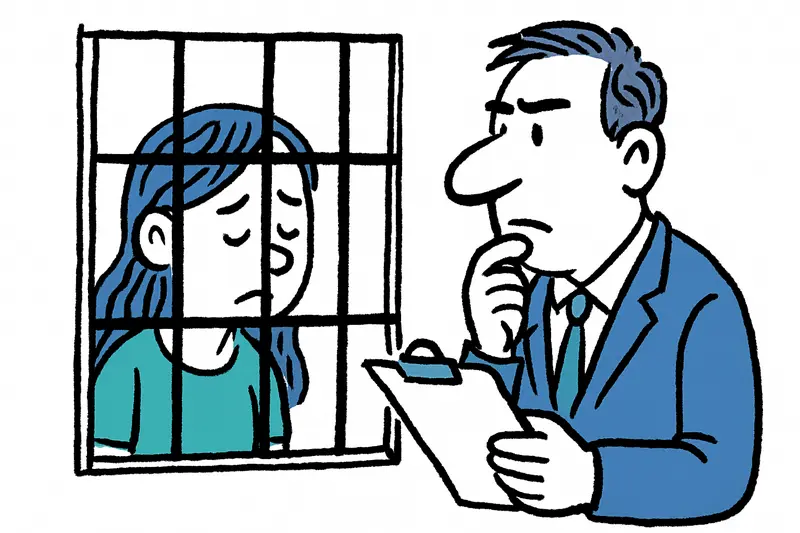
A 15-year-old girl was found lifeless in her apartment in Palma. Investigators initially rule out foul play. What do the facts say — and what is missing from the public debate?
Head between window grilles: 15-year-old in Palma died – a reality check
Guiding question: How safe are we in our own homes if simple household situations can end fatally — and what needs to change so that something like this does not happen again?
What happened (brief and strictly fact-based)
On Tuesday evening at around 9:30 p.m., relatives found a 15-year-old girl dead in an apartment in Palma de Mallorca. According to initial investigations by the Policía Nacional, the young woman is said to have become stuck with her head between the bars of a window grille and died of asphyxiation; visible injuries to the neck are currently being examined by forensic experts. The major crimes unit was on site; investigators so far emphasize that there are no indications of foul play, but the final clarification is still pending — the autopsy will provide further details.
Critical analysis
We are dealing with a scenario that appears plausible in itself: a severe accident in the home. Still, it is important to look closely — not to feed speculation, but to identify gaps in prevention and investigation. The police are examining crime scene findings, forensic traces and possible medical causes. Some of this is purely technical: bone fractures, abrasion on metal bars, respiratory diseases or pre-existing conditions can explain a fatal outcome. But there are also structural aspects: Why are windows and grilles constructed in such a way that a head can become trapped? Who installed the grilles and according to which standards?
What is mostly missing from the public discourse
Discussions often stop at assigning blame — that helps neither the family nor prevention. Important questions remain unmentioned: Which safety standards apply to window and balcony grilles in inhabited older buildings in Palma? Are there information offers for parents and young people on household risk prevention? How well known are emergency chains among first responders or laypersons? In the streets around Passeig del Born or in the older La Lonja quarter you often hear the clicking of scooters, the chatter of visitors — but hardly any posters or campaigns pointing out simple household risks.
Everyday scene from here
Imagine Calle Sant Miquel on a cold December evening: the street lamps cast yellow light on wet cobblestones, a taxi honks, a baker puts away the last baskets of bread. At times like these families sit by the window, airing the room or looking down at the street. Windows with grilles are normal here — they protect against burglaries and give children something to hold on to. That these very fixtures can in rare cases become dangerous is not present in most neighbors' minds. The quiet concern that passes through a building after such an incident is real: people exchange glances, ask questions, hear an older neighbor coughing and the footsteps of a patrol slowly walking down the street.
Concrete approaches to solutions
1) Technical retrofitting and standard control: Municipalities should review existing regulations for window and balcony grilles and prescribe clearer minimum distances between bars or additional protective devices. A free inspection for economically vulnerable households by local chambers of craftsmen would be a pragmatic first step.
2) Prevention campaigns with local relevance: Information leaflets in schools, health centers and parish houses as well as short spots on local radio stations could make simple behavioral rules and danger sources visible — without panic, but with practical tips.
3) Strengthen first aid and emergency knowledge: Parent evenings at schools, courses for young people and workshops in neighborhood centers on cardiopulmonary resuscitation and proper emergency calls (112) are low-threshold measures that can save lives.
4) Perspective of forensics and health: Autopsies almost always bring important answers. Authorities should summarize findings anonymously and make them accessible so that manufacturers, installers and municipalities can learn from them.
A pointed conclusion
It is a cold, hard-to-grasp loss: a young life abruptly ending in an apartment where we feel safe. Police and forensic medicine are working; the family now needs peace. For the rest of us, the responsibility remains to look closely — not in a moralizing way, but constructively: windows, grilles, precaution and knowledge can be reviewed, improved and communicated. If concrete prevention emerges from this tragedy, then the debate and the questions being asked aloud now have a tangible purpose.
Read, researched, and newly interpreted for you: Source
Similar News

Hail warning for the north: Are Mallorca's roads ready for a sudden black ice shock?
For Wednesday emergency services forecast local hail showers and sleet — AEMET remains silent. Anyone heading into the T...

Why Mallorca's Weather Isn't What It Used To Be: A Reality Check
Eleven severe storms in 2025, records for hail and tornadoes: a look at the numbers, what is missing in the discussion, ...

Escobar party in Son Oliveret: Why do we celebrate criminals — and how do we stop it?
In Son Oliveret police raided an illegal party of around 200 guests that used the aesthetics of a drug baron. A critical...

57 Units in Es Jonquet: Palma's New Luxury Project Puts Urban Development to the Test
A luxury development with 57 apartments, historic tunnels beneath the site and prices up to €9.5 million: what does this...

Roadworks at Cala Llombards: Three kilometres, many improvements
Almost €900,000 will be invested in a nearly three-kilometre section to Cala Llombards. A new asphalt surface, improved ...
More to explore
Discover more interesting content

Experience Mallorca's Best Beaches and Coves with SUP and Snorkeling

Spanish Cooking Workshop in Mallorca