
Deadly Apartment Fire in Vilafranca de Bonany: A Reality Check
Deadly Apartment Fire in Vilafranca de Bonany: A Reality Check
Early morning, a heater as the likely cause: an apartment fire in Vilafranca de Bonany claimed the life of an 80-year-old woman. Why do such accidents still happen and what concrete steps should be taken now?
Deadly Apartment Fire in Vilafranca de Bonany: A Reality Check
Why do people die in preventable fires in their own homes?
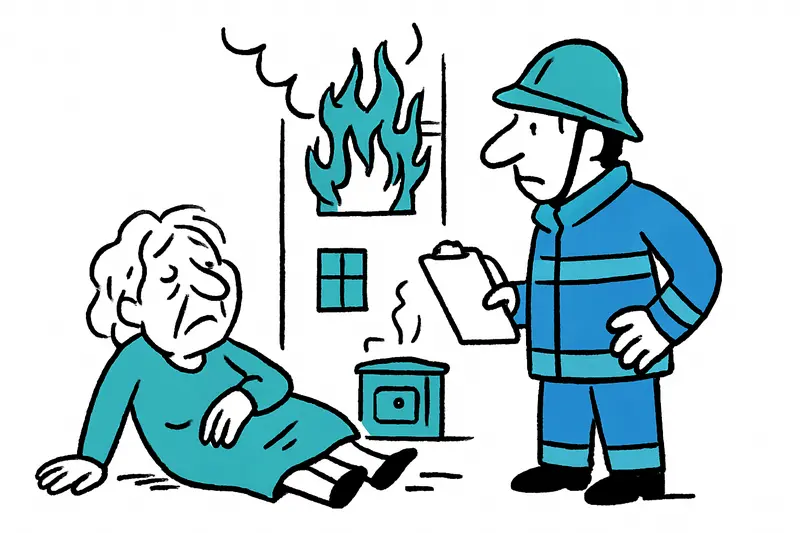
Around 5 a.m., sirens and the clatter of boots likely tore the neighborhood out of its half-sleep. A fire broke out in an apartment in Vilafranca de Bonany; an 80-year-old woman did not survive, and her caregiver suffered smoke inhalation. The fire brigade extinguished the blaze, and investigators are examining the suspicion that a portable heater may have started the flames. Those are the known facts. The real question, however, is: why do everyday heating situations end so deadly when technical solutions exist?
The short answer: because safety gaps converge on multiple levels. A small, poorly placed heater is enough to ignite flammable materials; missing or non-functioning smoke alarms prevent timely warnings; lack of information and tight household budgets mean that older people and their caregivers often have to improvise. On Mallorca, where many older people are cared for at home, this is not an abstract problem but a realistic risk that concerns us at café tables and on the weekly markets. Recent incidents such as Fire near Porto Pi: What the blaze reveals about safety in Palma underline that point.
We must clearly distinguish between an isolated incident and structural issues. A heater may be used for charm, cost reasons, or practicality in winter. But the question is whether the devices in homes meet safety standards, whether they are positioned correctly, and whether people know how to behave in the event of a fire. Current reports name a portable heater as the suspected cause, but investigations are ongoing — this is not an indictment of the fire brigade or neighbors, but of a system that too often treats safety as an individual responsibility, as similar coverage in Fire in Port d'Alcúdia: Why the big scare is also a wake-up call for fire safety showed.
What is missing from the public debate is a sober inventory: we hear accident figures, but we rarely know how many households with older residents use mobile heaters, how many apartments lack smoke detectors, or how often caregivers have received targeted fire-safety instruction. There is also a lack of focus on preventive measures that work in everyday life: simple checklists that care services can use on home visits; clear recommendations for safe heating appliances; municipal programs that systematically visit the most vulnerable households. The human cost is clear in reports like Pets Die in House Fire in Llucmajor — How Safe Are We Really?, which emphasize what can be lost.
A small everyday scene: on a cold morning in Vilafranca you see pensioners with shopping bags crossing the Plaça, cafés serve early coffee, and in many homes a heater still burns in the corner. The neighbor across the way knows the caregiver, greets briefly, may notice the smell of smoke, but is unsure whether to intervene. Such scenes are quiet harbingers of larger problems — and they show how prevention can fail in the slow routines of daily life.
Concrete proposals that would help immediately: first, mandatory, easy-to-install smoke detectors in all living spaces with subsidies for low-income households. Second, compulsory information for all registered care services: short fire-safety checks at each first home visit, including heater placement and escape routes. Third, a municipal initiative by the fire department: an annual "fire safety at the neighbor's" campaign with home visits in affected neighborhoods and practical exercises — not a theoretical leaflet, but hands-on help and exchange. Fourth, clear technical requirements for the sale of portable heaters on the island: more reliable shut-off mechanisms, explicit instructions in Spanish and Catalan, and clear warnings about use near textiles or furniture.
Beyond that, social solutions are needed: regular phone or visitation programs for older people living alone; a hotline for caregivers that provides real-time advice when they are unsure about risks; and financial support for upgrading to safer heating systems in rental apartments. Small, portable fire extinguishers could be distributed with subsidies — they are not a cure-all, but often effective.
These proposals are not revolutionary; they are practical and could have quick local impact. It's not about naming culprits but distributing responsibility: politicians, fire services, care providers, neighborhoods and retailers must work together. On Mallorca this is possible — we know our communities, our neighbors and the short line between town hall and the fire station.
Conclusion: the death of the 80-year-old in Vilafranca is a tragedy that should remind us that prevention cannot end with appeals. A portable heater is only the last link in a chain of failures that can be fixed with simple, concrete measures. If we do not act now, similar reports will reappear — and the island community must not accept that, as the wider national context shows in Spain is Burning: Fire Traces as Far as Mallorca – Is the Country Really Prepared?.
What should happen now: mandatory smoke detectors with subsidies, fire-safety checks for care services, municipal home visits by the fire department, better labeling of safe heaters and low-threshold social support for vulnerable households. These steps take time and money, but cost far less than a human life.
Frequently asked questions
Are portable heaters safe to use in Mallorca homes during winter?
Do smoke detectors really matter in Mallorca apartments?
What should caregivers in Mallorca know about fire safety at home?
Why are older people in Mallorca more vulnerable to apartment fires?
What should you do if you smell smoke in a Mallorca apartment building?
Are there fire safety checks for homes in Mallorca?
What is the safest way to use a heater in Mallorca flats?
Why are apartment fires in Mallorca often preventable?
Similar News
Magaluf: Watchtower Alarm – Lifeguards Pull Unconscious Beachgoer from the Water
After a drama in the late afternoon, two lifeguards at Magaluf beach rescued an unconscious 44-year-old man. He was stab...
Turquoise in the City: How dangerous is the color play of the Sa Riera?
The Sa Riera in Palma suddenly turned turquoise — a pretty motif, but behind the effect lies a discharge of saline waste...

Jeckliner at Sunnesching: Cologne spirit sets sail from Palma
In September 2027 the Mein Schiff 2 briefly becomes a floating carnival stage: four days with Cologne bands, comedy and ...
Finally Home: Mike and Leyla Heiter Buy Villa with Sea View in Mallorca
The reality TV couple Mike and Leyla Heiter have bought a house in Mallorca with a roof terrace and sea view. An Instagr...
Arrest after series in Palma: Who protects apartments from repeat offenders?
The National Police arrested a man in Palma who investigators say may have broken into several apartments. In one incide...
More to explore
Discover more interesting content

Can Cap de Bou

Townhouse Lleo 72
