
Deadly Fall in Felanitx: Could the Accident Have Been Prevented?
Deadly Fall in Felanitx: Could the Accident Have Been Prevented?
A 67-year-old woman in Felanitx fell during heavy rain and drowned under a parked car. Why so many risks remain on our streets — and what must be done now.
Deadly Fall in Felanitx: Could the Accident Have Been Prevented?
Key question: Could simple precautions and different behavior during the storm have saved the life of the 67-year-old woman?
What happened
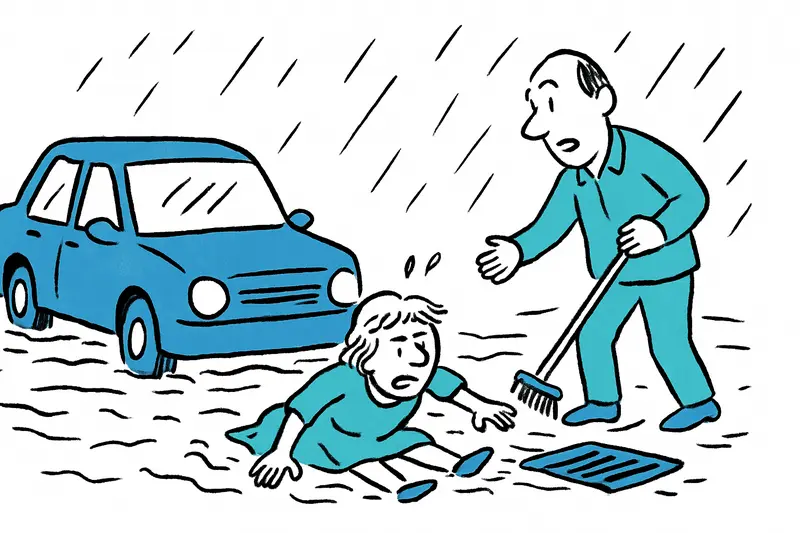
On Wednesday afternoon a tragic accident occurred in Felanitx: during heavy rainfall a 67-year-old woman fell on Carrer de Bellpuig. Apparently she was swept by the current under a parked vehicle and could not free herself; neighbors found the woman lifeless beneath the car. Police and the Guardia Civil cordoned off the area, the criminal investigation department is probing the case, a forensic pathologist was called in, and an autopsy will now clarify the exact cause of death.
Critical analysis
The scene's description is disturbing and at the same time revealing: in narrow village streets water accumulates faster than many expect. According to reports the currents in places reached about two hand-widths in height — enough to destroy the balance of an older person and make standing up almost impossible. Parked vehicles alter the flow of water, creating eddies and small backflows where people, especially those with limited mobility, can be put at risk, as other incidents have shown, notably Tragedy in Coll d’en Rabassa: Child Killed on Sidewalk — Who Protects Our Pavements?.
Important questions remain: How well were the drains cleaned? Were there short-term warnings from local authorities or advice for residents to avoid narrow streets? Was the particular vulnerability of older people in this neighborhood taken into account? And not least: why were cars parked in an area with clearly strong flow?
What is missing from the public debate
The debate usually focuses on spectacular images of flooded roads and closed highways. Too rarely do we talk about how everyday urban planning, insufficient cleaning of gutters and casual parking put small residents in acute danger, as in cases like Sudden drama on Paseo Mallorca: a death in the rain.
A scene from Felanitx
The next morning the smell of wet asphalt still hangs in the air. On the plaza the awnings are wet, children’s puddles glitter, older neighbors sit in quiet groups on benches and look toward Carrer de Bellpuig. A man sweeps a drain cover clear with a broom, while a neighbor says they had only expected rain in the afternoon, not the force of the current. These small images show: the island is prepared for sun — but in extreme weather many procedures are improvised.
Concrete solutions
1. Short term: a clear, easily enforceable parking ban during weather warnings on narrow streets. That would create free flow paths and avoid potential "traps" under parked cars. 2. Prioritize drain cleaning: municipal cleaning plans should be completed before the autumn period, with special focus on old-town alleys and low points. 3. Local alert chains: SMS or WhatsApp lists for elderly residents, managed by the town office or apartment blocks, so acute dangers can be communicated quickly. 4. Neighbourhood checks: volunteer networks that visit or call older people specifically during storms. 5. Awareness campaigns: simple notices — "Do not walk through narrow streets during red/orange warnings" — visible at municipal offices and clinics. 6. Technical: temporary mobile barriers at known problem spots and a digital map of local flood risks that the fire brigade and residents can use.
Who is responsible?
Responsibility is shared: the municipality must plan infrastructure and cleaning, security authorities must issue clear instructions and, if necessary, enforce parking bans, neighbors and families must inform especially vulnerable people. We as a community must not rely on authorities alone to catch every risk; recent reporting such as Fatal accident in Alcúdia: Who is responsible — and what needs to change? has highlighted similar questions of accountability.
Conclusion: This is a painful loss for Felanitx. This death must not be written off as simply "fate." The combination of spatial conditions, parked cars and a strong current created a deadly trap. It is too late for this woman, but not too late to learn from it — for better drainage, clearer warning mechanisms and greater awareness on our streets. For broader reminders of how quickly ordinary roads can become dangerous, see also Accident near Valldemossa — A wake-up call for the Tramuntana country roads.
Frequently asked questions
What safety tips should people consider during sudden rain in Mallorca, especially in narrow streets?
How can urban design affect flood risk in Mallorca towns like Felanitx?
What happened during the Felanitx storm on Carrer de Bellpuig?
Why do parked cars create flood hazards in Mallorca's streets?
What practical steps are suggested to reduce flood risk in Mallorca communities?
How can communities protect elderly residents during storms in Mallorca?
What role do drains and gutters play in preventing flood dangers in Felanitx and similar towns?
What lessons can Mallorca communities draw from the Felanitx incident?
Similar News
Defendant Allegedly Deceived Court with Fake Payment Receipts – Reality Check from Palma
A German real estate entrepreneur must answer in Palma: he is accused of presenting forged payment receipts to erase an ...

'We can't sell a beer for two euros' – Why rents are crushing gastronomy in Mallorca
High concession fees, speculative landlords and tourist hotspots: restaurateurs in Mallorca complain about a development...
Storm on the Radar: Why Palma's Airport and We Are Not Fully Prepared
Orange warnings, strong gusts and initial flight cancellations: anyone flying to or from Palma today should expect delay...
First flight cancelled, then told to pay for the hotel yourself? The case of a British family at Palma airport
A British family was stranded at Palma airport at the end of August: cancelled return flight, instructed to find their o...
Brabus Bodo Convertible in Palma: 1,000 HP, Yacht Stage and a Touch of Luxury on the Pier
The new Brabus Bodo Convertible was unveiled in the port of Palma: 1,000 hp, open-top driving pleasure and a spectacular...
More to explore
Discover more interesting content

Boat Tour with BBQ along Es Trenc Beach

Private transfer from Mallorca Airport (PMI) to Pollensa
