
Tragedy in Coll d’en Rabassa: Child Killed on Sidewalk — Who Protects Our Pavements?
Tragedy in Coll d’en Rabassa: Child Killed on Sidewalk — Who Protects Our Pavements?
On Can Caimari in Coll d'en Rabassa a car mounted the sidewalk; a seven-year-old girl died, mother and grandmother were injured. A guide to what is missing now and what must happen immediately.
Tragedy in Coll d’en Rabassa: A child loses life on the sidewalk
The accident on Can Caimari raises more questions than answers
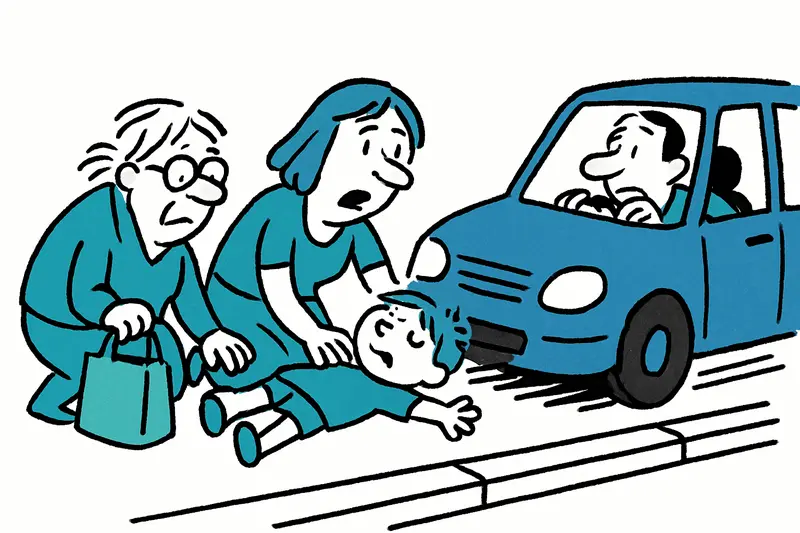
On Sunday morning a car went onto the pavement on Can Caimari in Coll d’en Rabassa in front of a well-known butcher's shop. In the collision a seven-year-old girl was so seriously injured that she later died. The mother and grandmother suffered injuries and received medical care. Police units, ambulances from service 061 and a psychological emergency team were on site. The man who was driving the car remained temporarily in custody; an alcohol test was negative. The investigation into the cause of the accident is ongoing.
Key question: How can a street used by families and children become so dangerous that such an accident is possible?
The immediate description of events leaves open what exactly pushed the vehicle onto the pavement: a health problem of the driver, a technical defect, driver error, or a combination of these. What is clear: on one side of this street there are shops, on the other there are residential houses and a popular meeting place for children – the Collerense football pitch. Especially on weekends and in the afternoons families with small children often walk there, as has been highlighted by incidents such as the Playground attack in Palma: Who protects our children from unleashed dogs?.
What has been missing so far in the public debate is a sober look at the infrastructure: residents report that Can Caimari is not a place for speed. Nevertheless, they say, vehicles often drive fast there. Small measures – bollards at the kerb, raised crossing aids or a lowered speed-limit section – would significantly reduce the risk. Instead, in the first hours after the accident the search for blame predominated, much like the reaction after the Fatal accident in Alcúdia: Who is responsible — and what needs to change?.
The psychological dimension is also often underestimated. Rescuers brought not only physical injuries but also states of shock to the ambulances. The deployed psychology team cared for the survivors; such help is important, but it is not enough if structural changes do not follow in the long term.
A very everyday scene from Palma: on a cool Sunday morning the smell of freshly roasted meat in front of the butcher's mixes with the click of football boots on the pavement. Mothers with shopping bags, children on their way to training, residents drinking coffee on their balconies – this harmony can be torn apart in seconds. It is precisely these seconds that show how close normality and tragedy lie to one another.
Concrete proposals for solutions that could be implemented immediately and in the medium term:
Short-term: Installation of temporary bollards at endangered pavement sections, mobile speed displays, additional warning signs near schools, churches and sports fields, and a visual inspection of the relevant roadway by the city traffic office within 48 hours.
Medium-term: Reorganization of traffic flow on Can Caimari with structural measures: lane narrowing, raised zebra crossings, kerb adjustments and verifiable barriers between roadway and sidewalk. Review of current speed limits through a traffic safety analysis and a program for safe routes to training grounds; these measures align with DGT road safety recommendations.
Long-term: Systematic recording of accident clusters in Palma, mandatory safety checks for streets with high pedestrian frequency and a citywide concept for senior-friendly mobility and vehicle checks – because older drivers play a role in many serious accidents, prevention should be part of the discussion without prejudgment, as warned after the Concrete stacks in Santa Margalida: When the safety chain fails.
Also missing in the public debate: transparent information from the traffic office about measures taken so far and a clear timeline for changes. Symbols of sympathy – flowers, candles, obituaries – are important. But they must not remain the only result. Authorities must now show that lessons are learned from tragedies.
The legal review is in the hands of the police and the responsible investigators. That can take time. Municipal politics, on the other hand, can react immediately and must do so: visible improvements at the accident site, talks with residents and clubs, and the promise of an inspection report within two weeks would be a realistic minimum.
Conclusion: Mourning is appropriate and necessary. Taking responsibility, however, means no longer leaving the street to chance. If visible measures do not follow soon in Coll d’en Rabassa, the feeling will remain that a life was lost in front of the butcher's for nothing. That is a promise we owe the bereaved: not only sympathy, but tangible change.
Frequently asked questions
Why can sidewalks in Mallorca still be dangerous for pedestrians?
What should drivers in Mallorca do if they feel unwell while driving?
What kind of road changes help protect pedestrians in Mallorca?
What happens after a serious traffic accident in Mallorca?
Is Coll d’en Rabassa in Mallorca a busy area for families and children?
What safety concerns have been raised about Can Caimari in Coll d’en Rabassa?
Can Mallorca councils improve dangerous streets quickly?
How can families stay safer when walking near busy streets in Mallorca?
Similar News
Eviction in El Arenal: Who protects neighbors — and who protects the homeless?
A vacant hotel on Carrer Girona was cleared and secured. The neighborhood breathes a sigh of relief. But the action trea...
'La Tapita' loses its home: Who will protect Palma's last affordable meeting places?
The bar 'La Tapita' on Simó-Ballester Street will close at the end of December. For neighbors, police officers and small...
Million Heist at Bulgari: Who Is Responsible for Palma's Security Gaps?
Three men stole jewelry worth around one million euros – the crime series began at the end of September and was likely c...
Who pays the bill? Tourists, prices and the reality in Mallorca
Rising costs are felt by travelers and locals alike. A walking observation through Palma's old town shows how tourists e...
Phone robbery at Playa de Palma: Two juveniles arrested — a reality check
On Monday morning three young women were attacked at Playa de Palma; two youths snatched a phone from one of them. The N...
More to explore
Discover more interesting content

Can Cap de Bou

Townhouse Lleo 72
