
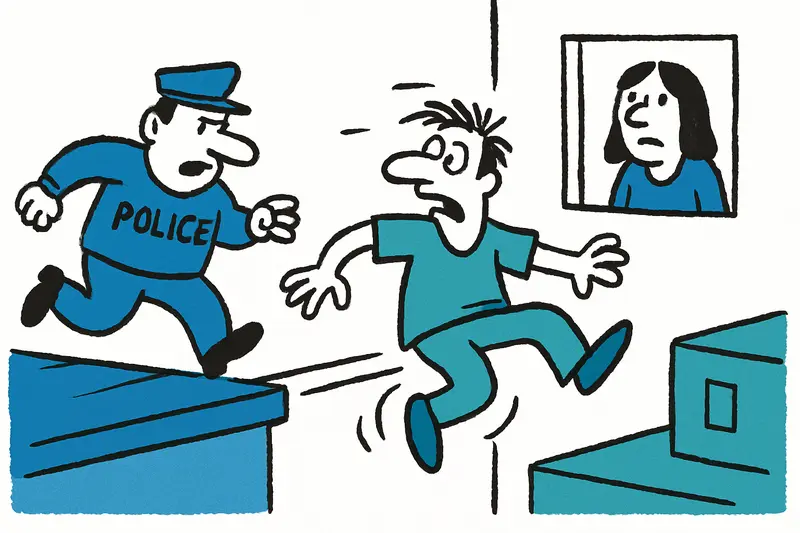
Deadly fall in s'Illot: Fleeing the police — how could it end this way?
Deadly fall in s'Illot: Fleeing the police — how could it end this way?
In s'Illot a 40-year-old man fell from a roof and died while fleeing the police. The case raises questions about domestic violence, alcohol, living conditions and prevention.
Deadly fall in s'Illot: Fleeing the police — how could it end this way?
Key question: Which gaps in prevention, assistance and structural safety contributed to this tragedy?
Late on Tuesday evening in s'Illot on Mallorca's east coast, a 40-year-old man died after falling from a residential building while fleeing police officers. The facts as they stand: the man apparently entered his ex-partner's apartment while intoxicated, where they continued to live together despite having separated. A loud argument broke out, neighbors called the emergency number, and police arrived. The man fled via the stairwell to the roof terrace, climbed over a low barrier between two buildings and fell into an inner courtyard — he died at the scene. At the time of the incident, children were present in the apartment alongside the couple. Official sources rule out third-party involvement and report no prior domestic violence incidents between the parties.
Critical analysis
Several levels interact here. First, the interpersonal: people who are formally separated but continue to live under the same roof form a known risk pattern for escalating conflicts. Alcohol can lower inhibitions and increase the potential for aggression. In this constellation a single night of loud argument is enough for the situation to spiral out of control.
Secondly, the institutional level: the police were on site and searched for the man — yet the pursuit ended tragically. Whether and how officers can assess the danger when a person moves onto roof areas is a matter of tactical judgement (See Courage from the Balcony: What Palma's Short Manhunt Reveals).
Finally, the structural side: the description of a "small barrier" between buildings suggests that architectural details played a deadly role. Many holiday apartment complexes and older residential blocks in tourist areas are not designed for escape movements across roofs — low parapets, open passages, tight inner courtyards (See Fall in Palma: An elderly man, a balcony and many unanswered questions).
What is missing in the public debate
The discussion about such incidents often gets reduced to individual fates or assigning blame. Concrete questions are missing: How can couples live apart after separation without everyday life becoming dangerous? How are nighttime operations in densely built tourist areas tactically secured? Where do responsibilities lie for structural safety deficiencies in multi-family houses and holiday apartments?
Another blind spot: children in such households are briefly mentioned here — their immediate psychological burden and long-term care needs receive little attention in rapid reporting. Nor is it discussed whether tourist areas have enough low-threshold contact points that are reachable outside regular office hours.
Everyday scene from s'Illot
On Carrer Pins, where the incident took place, winter is quieter than high season. The lights of the small bars flicker, occasionally someone walks along the promenade with a dog, and from remote fincas you can hear a dog barking. When sirens wail in the evening, neighbors stop, look toward the police and talk quietly. In such moments the island community appears as a dense network of holiday renters, long-term guests and locals — conflicts fought behind closed doors quickly attract public attention, but often only after something terrible has happened.
Concrete solutions
1) Social prevention: municipalities like Manacor should strengthen low-threshold crisis centers and anonymous hotlines, especially in tourist places with a mixed resident structure. Night shifts for social services could provide avenues before conflicts escalate.
2) Information and protection concepts for separated families: counseling services, clear temporary agreements on housing use and assistance with physical separation (emergency shelters, mediation) can help defuse explosive living situations.
3) Police tactics and training: officers need guidelines for operations on roofs and in tight courtyards, including risk assessment, communication strategies and coordination with emergency services, so that pursuits do not lead to avoidable dangers (See After head-on crash in Palma: Fleeing and many questions – 31-year-old dies).
4) Structural measures: inspections of residential complexes for dangerous passages and low parapets, education for landlords about risk points and simple safeguards (higher barriers, warning signs) are small steps with potentially large effects.
Concise conclusion
This death is not a singular, inexplicable accident but the convergence of personal conflicts, alcohol, gaps in prevention and structural weaknesses. Those who want to prevent a night like this in s'Illot from repeating must act on several fronts: socially, in policing and structurally. Otherwise the feeling will remain that only a scream or the wail of sirens makes hidden dangers visible — and that is insufficient for the children who enter that house.
Frequently asked questions
What should visitors know about safety in residential areas of Mallorca, especially at night?
Why can a separated couple living in the same home become a risk in Mallorca?
Is swimming in s'Illot safe after winter weather in Mallorca?
What should you do if you hear a loud domestic argument in Mallorca?
Are older apartment buildings in Mallorca more vulnerable to accident risks?
How are police usually expected to handle dangerous rooftop situations in Mallorca?
What support is available in Mallorca for families in a crisis at night?
Why do incidents in s'Illot often attract so much attention locally?
Similar News
Who Bears the Burden? Mallorca Between Tenant Protection and Landlord Fears
Madrid's new housing decrees strengthen tenant rights — but on Mallorca concern is growing: will the law drive small lan...
On the Edge: What Mallorca's Airport Loses If a Major Low-Cost Carrier Falters
The company that operates numerous connections from Palma to France and domestically is negotiating with creditors to re...
Ballermann star Frenzy wins 'Villa of Temptation' and donates prize money to Mallorca animal rescue
Ballermann singer Frenzy won the German reality show and donated the remaining prize money — around €14,080 — to an anim...
70 Trees Removed on Avenida Jaume I: What's Happening in Santa Ponça?
On October 1 the final redevelopment phase on Avenida Jaume I in Santa Ponça begins: 70 trees and old streetlights are t...

When a Boundary Is Crossed: The Case of Isi Glück and the Responsibility of Venue Operators
The singer from Mallorca reports an assault backstage in Halle. A clear guiding question, analysis of missing protective...
More to explore
Discover more interesting content

Can Cap de Bou

Townhouse Lleo 72
