
Deadly police operation in Coll d’en Rabassa: What we really know and what is missing
Deadly police operation in Coll d’en Rabassa: What we really know and what is missing
In Coll d’en Rabassa a 47-year-old man died after the use of a Taser. The National Police are investigating and an autopsy should clarify the cause. A reality check: which questions remain open and which measures could help?
Deadly police operation in Coll d’en Rabassa: What we really know and what is missing
Key question: How does the police justify the use of electroshock weapons when mental crises and families with young children are involved?
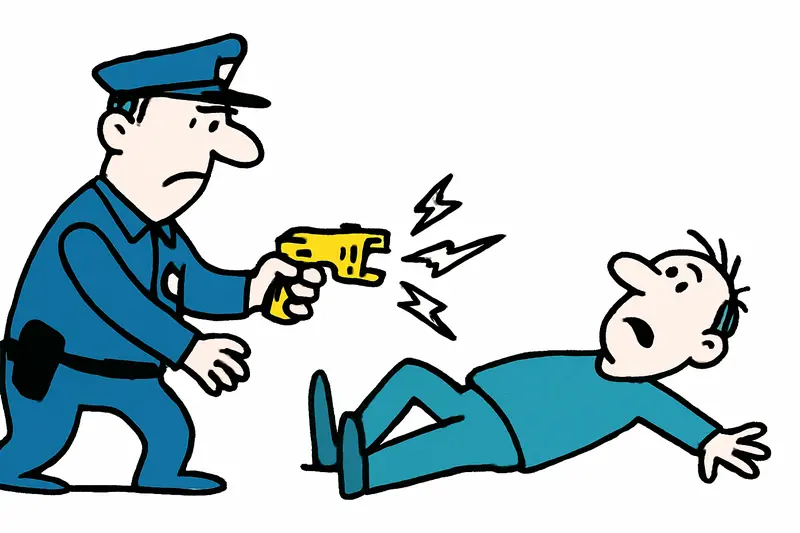
In the early morning in the Coll d’en Rabassa district, not far from the airport, officers encountered a 47-year-old man who, according to reports, was experiencing a psychotic episode. His three small children were also in the apartment; a neighbor brought the children to safety. Investigators found traces on a plate that were described as cocaine, a detail that comes amid reporting such as Drugs, Millions and Suspected Abuse of Office: What the Major Operation in Mallorca Reveals. When the situation escalated, officers used a Taser twice. Shortly afterwards the man lost consciousness and suffered a cardiac arrest. The Policía Nacional has taken over the investigation; an autopsy is to definitively clarify the cause of death.
Brief, factual — these are the points that have already been made public. But the concise situation report leaves many, sometimes crucial, questions unanswered. Was the use of the electroshock weapon justified according to current protocol? Were there alternative means of de-escalation? Who took immediate care of the three children after the incident? How quickly was medical help provided and what measures were taken between the Taser deployment and the cardiac arrest?
A sober, critical view requires: we must not stop at the dry listing of facts. Electroshock weapons act quickly, but their health effects are not always predictable, especially when substances are involved or the person is in a psychotic state. The causal chain — Taser, loss of consciousness, cardiac arrest — is on the table, but certainty can only come from the autopsy. Until then, there remains a tension between the need to protect people and children and the risk of endangering lives.
What is often missing from the public debate is the perspective of people who regularly see such deployments: paramedics, neighbors, social workers. On Mallorca many in humbler neighborhoods near the airport know the sounds of the early shift: the rattling of a delivery van, the clattering of a balcony door, distant helicopters. Here, where families live in densely built housing, a police operation can set an entire street on edge. The neighbor who rescued the three children was mentioned, but her courage was barely acknowledged.
A realistic view should also include administrative questions: How well are officers trained for mental health crises? Does the Policía Nacional in Mallorca have specialized teams that offer alternatives to Tasers, such as trained negotiators or mobile psychiatric services? Recent coverage of major actions, for example Major raid in Mallorca: Arrest of an alleged clan leader raises big questions, has highlighted such gaps. And how is the documentation of the operation regulated — bodycam recordings, fire and rescue logs, medical first-response records?
Concrete solutions must be practical and local. Some proposals that could help in Palma and neighboring areas are:
1. Specialized crisis teams: Police working in combination with social workers and psychiatrists for incidents where mental disorders are suspected. Such teams should be available day and night.
2. Use of de-escalation techniques: Regular training for officers on Mallorca, focusing on communication, non-violent resistance handling and the assessment of drug- and psychosis-related risks.
3. Medical aftercare on site: Immediate, protocolled vital monitoring after the use of a Taser and clear guidelines on when immediate hospital transfer is necessary.
4. Transparency and independent oversight: Access to bodycam and deployment data for independent investigators as well as regular reports on the frequency and consequences of Taser deployments in the Balearic Islands.
5. Protection and support for children: Standardized procedures for who cares for minor witnesses in acute incidents — immediate guardianship followed by psychosocial support.
An everyday scene from Palma: an older couple on Carrer dels Reis mutters over breakfast as sirens wail in the distance. The children on the balcony watch alarmed. Such small moments show how operations affect residential neighborhoods; they leave traces even when they do not appear in every headline.
What matters now: no premature judgments, but also no silence. The autopsy will provide facts, the investigation will examine procedures. The local community can simultaneously demand that lessons are learned from this case; similar concerns were raised after related operations like New Raid in Mallorca: More Arrests — But Are the Roots of the Problem Untouched?. It is not only about assigning blame but about concrete improvements for future operations — so that mental health crises, drug problems and the protection of children do not end in a tragic drift.
Summary: This incident is a wake-up call for better interfaces between police, health services and neighborhoods. On Mallorca, where dense living conditions and early morning hours come together, we need clearer rules, more transparency and support for those affected — not just soothing phrases, but verifiable measures that protect lives.
Frequently asked questions
What happened during the police operation in Coll d’en Rabassa, Mallorca?
Can police use a Taser in a mental health crisis in Mallorca?
What happens after a person loses consciousness during a police intervention in Mallorca?
Who looks after children during a police emergency in Mallorca?
How are police operations in Mallorca investigated after a death?
What should police do in Mallorca when someone appears to be in psychosis?
Why is Coll d’en Rabassa often mentioned in Mallorca news?
What can Mallorca residents expect from police transparency after a serious incident?
Similar News
More water than last year: Mallorca's reservoirs breathe easier
September rain refilled the Tramuntana's reserves: overall fill around 35 percent, Cúber at 40.42 percent, Gorg Blau at ...
Three Luxury Hotels in Banyalbufar: Lots of Money, Many Questions
A Danish investor plans three exclusive accommodations in Banyalbufar — including the historic Son Valentí. The announce...
2.1 tonnes of cocaine on sailing yacht off Spain's coast – a reality check for the coastguard
A 14-metre yacht was seized with 2.1 tonnes of cocaine. Who monitors the ports, how does the international hunt succeed ...

Heat Bonus in Mallorca: 100 Euros Extra for Outdoor Staff at MarSenses
MarSenses pays employees who worked outdoors in August an extra €100 as recognition. Lighter uniforms, reduced hours for...
Renovating in Mallorca: What You Really Can Do Without Neighbour Consent
Many think they can do whatever they want in their apartment. That's partly true — but only as long as structural elemen...
More to explore
Discover more interesting content

Can Cap de Bou

Townhouse Lleo 72
