
Death after Taser Use in Coll d'en Rabassa – a Reality Check
Death after Taser Use in Coll d'en Rabassa – a Reality Check
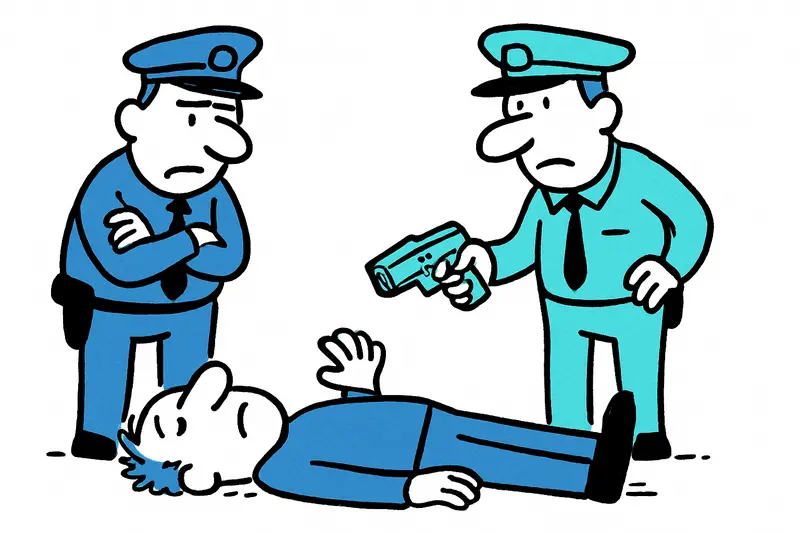
In Coll d'en Rabassa a 47-year-old man died after police used a Taser. Investigations are ongoing and an autopsy should clarify the cause. What is missing from the debate?
Death after Taser Use in Coll d'en Rabassa – a Reality Check
Key question: Should the use of a Taser on a person in an apparent acute mental crisis be the police's first option?
What happened
In the early hours of a winter morning in Coll d'en Rabassa, an operation escalated: a 47-year-old man was causing a disturbance in his flat, three small children were present and were brought to safety by a neighbor. According to officers of the Policía Nacional, the officers used a so-called Taser twice. Shortly afterwards the man lost consciousness and suffered a cardiac arrest; he died. Officers found a plate with suspected cocaine in the flat. Public debate about drug-related incidents has been fuelled by reports such as Son Castelló: Private Ambulance Under the Influence of Drugs – Motorcyclist Dies. The police are investigating and a forensic examination is to clarify the exact cause of death.
Critical analysis
This sequence raises several questions that go beyond the individual case. First: How do officers assess the level of danger in split seconds when children are also in the apartment? Second: What role do substance influence and a psychotic episode play in the decision to use a device that sends electrical impulses through the body? Third: Are there sufficient, independent controls when deaths follow an intervention? The factual record is currently sparse — we only know that a Taser was used and that a cardiac arrest occurred shortly afterwards. Whether there is a causal connection will be clarified by the autopsy. Similar questions have arisen in other local cases, for example Cardiac Arrest on Can Picafort Beach: Questions Remain and Ideas for the Future. Until then there is room for speculation, and that harms both trust and clarification.
What is often missing in the public debate
In conversations with neighbors I hear that people quickly moralize afterwards: "Was he addicted to drugs?" or "The police acted correctly." Such judgments skip two things: the perspective of the children who are carried out of a flat in the middle of the night, and the medical complexity of electrical impact on the heart, especially under the influence of drugs or during an acute psychotic state. There is also a lack of clear presentation of which alternatives the police on site might have had — for example a team with social workers or psychiatric support. And: who will care for the three children in the short and medium term?
Everyday scene — an image from the island
Imagine the street in Coll d'en Rabassa: still cold, rubbish bins clattering, the airport in the distance sending quiet take-offs and landings into the night. A neighbor, upset, children in her arms, tells of the noise in the flat and how she feared for the little ones. This is not a TV picture, this is a door slam at five in the morning, a narrow corridor full of prams, a curious dog that does not understand why blue lights suddenly color the street. Such scenes stick in the mind and show: police operations are always also neighborhood stories; this is similar to other local tragedies, notably Tragedy in Coll d’en Rabassa: Child Killed on Sidewalk — Who Protects Our Pavements?.
Concrete proposals
1) Specialized crisis teams: In other regions police and psychosocial professionals work together on operations involving people with mental health issues. A pilot project in Mallorca could maintain designated teams that can be called in quickly for mental health crises. 2) Clear operational protocols for Taser use: When may a Taser be used, which risks must be weighed and documented beforehand? A requirement for medical follow-up after deployment would be sensible. 3) Transparency and independent investigations: Independent ombuds institutions or external investigators should review deaths after police interventions; outcome reports must be published in a comprehensible way. 4) Protection and support for children: Social services should be automatically involved in such operations, with clear rules for accommodation, trauma support centers and information for families. 5) Training: Regular training on de-escalation, handling cases involving drugs and psychosis, and simulations with realistic scenarios for officers.
What the Policía Nacional and the city should do
Investigations and the forensic examination are necessary and appropriate. In addition, the police and municipal authorities should promptly provide information on protective measures for the affected children and review whether service directives on the use of electroshock weapons need to be revised. Politically, this is an opportunity to create standards that define clear lines of responsibility between police, health and social services.
Pointed conclusion
A man is dead, three children and a neighborhood are shaken, and a device is at the center of an investigation. The guiding question remains: how much risk is acceptable when it comes to controlling people in mental health crises? Mallorca does not need quick judgments, but clear answers: better cooperation between police and health services, transparent reviews and procedures that protect children. If we see the scene in Coll d'en Rabassa the next morning — with garbage trucks, birdsong and people heading to work — it should remind us that such decisions are made right next to us. We must ensure they become safer and more accountable.
Frequently asked questions
What happened in Coll d'en Rabassa when police used a Taser in a flat?
Can a Taser be dangerous for someone in a mental health crisis?
What should police do in Mallorca when someone appears psychotic or in acute distress?
Why are children a key concern in police interventions like the one in Coll d'en Rabassa?
What do we know about the cause of death in the Coll d'en Rabassa Taser case?
What changes are being suggested for Taser use by police in Mallorca?
How are neighbors affected when something like this happens in Coll d'en Rabassa?
Why does the Coll d'en Rabassa case matter beyond one police operation?
Similar News
Injured captain, big plans: Germania Mallorca before the away match in Consell
The newly founded FC Germania Mallorca travels to Consell on Saturday. Captain Bastian Müller is out injured, but coach ...
Palma, Palma de Mallorca, Palma‑Mallorca: What is it really about?
The debate over the city's name is more than grammar: it concerns identity, law and branding policy. A sober reality che...
Warning to Bathers: Nipping Fish in Cala Major and Other Coves — a Reality Check
In Cala Major and several beaches around Mallorca, bathers report painful “nips”. Who are the animals, why are they gett...
Rental Car Theft in El Arenal: What This Incident Reveals About Our Gaps
A teenager steals a running rental car in El Arenal, flees on foot, climbs over walls and is caught by the Guardia Civil...
Red Rope in Palma's Library: What Helps Against Selfie Tourism — and What's Missing
Palma's city library cordoned off an area with a red rope to keep selfie tourism away from reading and working activitie...
More to explore
Discover more interesting content

Can Cap de Bou

Townhouse Lleo 72
