
Decline off Cabrera: Who owns the sea — and who pays the price?
Decline off Cabrera: Who owns the sea — and who pays the price?
A long-term study shows that even protected areas like Cabrera are losing species. What does this mean for Mallorca — and which questions are missing from the debate?
Decline off Cabrera: Who owns the sea — and who pays the price?
Key question: Why is biodiversity shrinking in one of Spain's most protected marine areas?
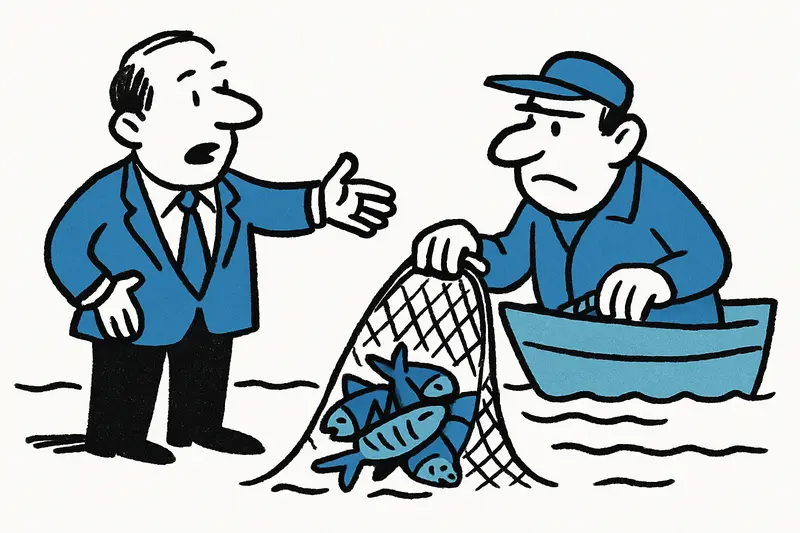
On a clear January morning standing in the harbour of Colònia de Sant Jordi, you smell diesel, hear the clatter of nets and see fishers preparing their small boat for the day's catch. A few gulls circle, the sea glitters leaden. Barely two miles out lies the island of Cabrera, a marine national park we regard as an intact refuge. Still, researchers have reported a marked decline in recent years: on average around 40 percent fewer species equivalents compared with the start of the monitoring series.
The figures come from a long-term investigation with sampling between 2014 and 2022, carried out by the Centre d'Estudis Avançats de Blanes and the University of Barcelona; the results were published in the journal Diversity and Distributions. The same habitats were repeatedly sampled, from the shallow, sunlit seabed to deeper, darker zones. Modern genetic analyses made it possible to detect thousands of signals — roughly 5,500 species equivalents and almost 27,000 genetic variants — and showed: the decline is real and widespread.
Critical analysis: Why does it hit protected areas in particular?
Protection is not a vacuum. Cabrera is better protected against local overfishing and constant construction than many stretches of coast, yet the sea is connected. Currents bring heat, along with nutrient shifts and new species. Climate change raises water temperatures and alters habitats even in places with little local disturbance. Added to this are less visible factors: microplastics, pollutants from river mouths, shipping traffic and invasive species, issues reflected in When the Catamaran Came in Too Far: Banyalbufar and the Question of Who Shares Mallorca's Coasts. The study suggests causes go beyond local pressures; protected areas respond to global changes.
What is missing in the public debate
We often talk about more fences, stricter boat rules or tourism limits — important, no question — but rarely about the connection to larger drivers. There is a lack of a realistic picture of how climate change, nutrient run-off from distant catchments and increasing shipping interact. Also underdiscussed is how monitoring data are turned into political decisions: who funds long-term observation? Who translates genetic signals into concrete conservation measures? And how are local fishers, residents and tourism providers involved in adaptive strategies?
Local scene: A morning in Porto Petro
Recently at the market in Porto Petro: a fisherman says he finds far fewer sea urchins and smaller populations of goby species. On Palma's Passeig Marítim, sailors discuss warmer winters and strange jellyfish over a café con leche, a theme explored in Sea off Mallorca: When the Underwater Meadow Disappears. Such everyday impressions add to the scientific data — they are no substitute for samples, but they are indicators that should be taken seriously.
Concrete solutions
1. Expand and network monitoring: more repeat sampling with gene-based methods, coordinated along the entire western Mediterranean coast. Data must be public and available in a timely manner. 2. Make protection plans dynamic: zones can be temporarily expanded or shifted when biological hotspots move. 3. Consider land-sea linkages: reduce nutrient inputs and identify point sources in nearby catchments; see pressures from land degradation in Mallorca Running Dry: Who Pays the Price of Desertification?. 4. Regulate traffic and noise: review shipping routes, enforce anchoring bans more consistently, create quiet corridors. 5. Involve fisheries and the coastal economy: integrate local fishing communities into citizen-science projects and management decisions, with compensatory measures for income losses. 6. Climate policy: short-term local adaptation measures and long-term emissions reductions — both need clear timelines and funding.
What could be done immediately
Some measures would take hardly any years to implement: public platforms for monitoring data, additional patrol boats at key times, targeted subsidies for low-pollution agriculture in tributary areas and pilot projects for quiet shipping corridors. Technically possible, politically often difficult — but relatively quick to realise.
Why we must be concerned
Loss of biodiversity alters ecosystem functions: nutrient cycles, fish production and the presence of indicators like seagrass meadows. For Mallorca this means less resilience to extreme temperatures and, in the long term, economic consequences for fisheries and tourism sectors that depend on a healthy sea.
Concise conclusion
The study makes one thing clear: protection is necessary but not sufficient if we only stick to local regulations. Cabrera offers an early view of broader processes. The key question remains: do we want to dampen symptoms or address causes? The sea off Mallorca demands a policy that takes long-term scientific data seriously and binds local everyday realities — the fishers, the market stalls, the harbour walks — into decisions. Otherwise we will all pay the price: smaller catches, empty reefs and a sea that tells fewer stories than before.
Frequently asked questions
Why is biodiversity in the sea off Mallorca declining even in protected areas like Cabrera?
What does warming sea water around Mallorca do to marine life?
Can you still swim safely near Cabrera and the south coast of Mallorca?
What should you know before visiting Cabrera from Mallorca?
Why are fishers in places like Colònia de Sant Jordi and Porto Petro worried?
Does microplastic pollution affect the sea around Mallorca?
What can Mallorca do to protect marine biodiversity more effectively?
How does marine decline off Cabrera affect Mallorca’s tourism and economy?
Similar News

Are the Balearic Islands the Southern Border of Europe? A Reality Check on Immigration
The Balearic Islands are again calling for EU aid after a sharp rise in arrivals by sea. Conflicting priorities between ...

"Expensive chaos" and many open questions: What clients can do when a lawyer suddenly stops responding
Several clients complain that a well-known German lawyer in Mallorca has been unreachable for months. Key question: What...

TV tip: 'The Last Problem' — Mallorca as the setting of a classic crime
A classic whodunit on Mallorca: A new miniseries set in spring 1959 brings storm, an isolated hotel and a dense web of s...
Nipping Sea Creatures: Why Bathers in Cala Major and Elsewhere Should Be Cautious
In Cala Major, bathers have reported being nipped by small fish. What is behind it, how can problems be avoided — and wh...
Forced eviction in Santa Catalina: When a 65-year-old slept in her car and showered on the beach — a question of responsibility
The story of Pilar López from Santa Catalina represents a problem affecting many Mallorcans: How can an island with a bo...
More to explore
Discover more interesting content

Can Cap de Bou

Townhouse Lleo 72
