
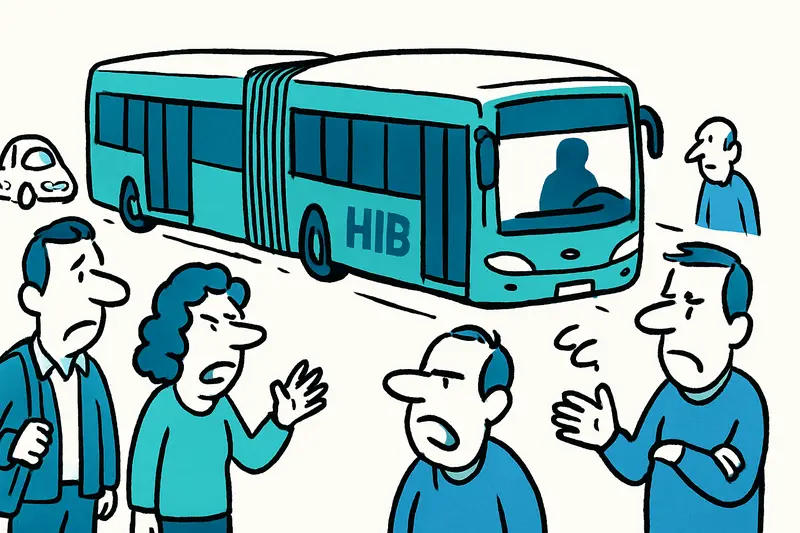
When the Articulated Bus Broke Down: Hours of Chaos at the Estación Intermodal
A TIB articulated bus got stuck yesterday at the exit of the Estación Intermodal — smoke, honking and hours of delays. Why a single incident can paralyze the whole station and what needs to happen now.
When the Articulated Bus Broke Down: Hours of Chaos at the Estación Intermodal
Anyone standing at the Estación Intermodal in Palma yesterday around 3:00 p.m. first heard only honking, then the monotonous rumble of a coughing diesel engine and finally the soft hiss of brakes that would not go on. A TIB articulated bus stopped right at the start of the exit, lights flickered, and some passengers smelled smoke. Within minutes the main exit was blocked and the city's bus traffic came to a standstill, as detailed in Cuando el autobús articulado se averió: horas de caos en la Estación Intermodal.
Central question: Why is one failure enough to paralyze an entire station?
This is more than a technical malfunction. The Estación Intermodal is a bottleneck: exits are narrow, and line coordination is tight. When an articulated bus gets stuck, reserve capacity and alternative routes cannot close the gap quickly enough. The result is a chain reaction of delays, detours and overcrowded stops — accompanied by everyday sounds: the murmuring of waiting people, the beeping of ticket machines, and announcements that sounded more hurried than usual.
What happened yesterday — briefly and concretely
The bus stalled in the exit; TIB technicians and police personnel arrived quickly, but it took hours until the tow truck came. Lines that usually run every ten minutes were cancelled or backed up into long queues. Children returned late from school, commuters missed connections, and improvised lines formed at stops. A taxi rank filled up fast; some passengers took a thermos flask from their backpack and waited patiently in the cold November air.
Aspects that are often overlooked
Seemingly small disruptions have larger consequences because several weaknesses coincide: an aging fleet, tight staffing reserves, long tow times and a station layout that allows little redundancy. Also rarely discussed is the information chain: live updates via apps helped many, but not everyone. Older passengers or people without smartphones were often left without reliable information. Equally underestimated is the safety issue when reports of smoke cause panic or people with reduced mobility have trouble transferring.
Analysis: Where the engine gets stuck — and what could be done
Technical defects happen. What matters is how robust the system is in dealing with them. In the short term, clear priorities could help: faster alignment of towing and emergency resources with intermodal operations, better coordinated alternative stops and a reserve of spare buses at strategic points. In the medium term, better fleet monitoring with remote diagnostics, regular stress tests for critical nodes and contracts that minimize towing times are needed. In the long term, planners should review the physical arrangement of exits: a second exit or separate lanes for tow and emergency vehicles would significantly reduce vulnerability, as discussed in La Estación Intermodal recibe nuevas escaleras mecánicas: ruido hoy, tranquilidad mañana.
What TIB and the city should do now
TIB has already announced an investigation. Beyond that, it would make sense to make short-term reserves more visible: additional backup buses during peak times, well-communicated diversion plans and better information boards at the station that do not rely on smartphones. The Palma city administration could review tow contracts, parking rules in the surrounding area and the access infrastructure. Finally: a drill for emergency scenarios — a bit like a fire alarm, but for bus operations — would show whether theory and practice match up.
Outlook and a local tip
TIB's investigation will clarify what exactly failed. Regardless of the outcome, regular travelers should allow a bit more time in the coming days or choose earlier connections. A simple consolation for everyday life in Mallorca: anyone with a thermos, a warm jacket and a little patience often gets through such days better. And perhaps it is time to take the question that stood between honking buses and worried faces more seriously: how resilient do we want our public transport network to be — and what are we willing to change to achieve it? For broader context see International Association of Public Transport (UITP).
Frequently asked questions
What happens when a bus breaks down at Palma's Estació Intermodal?
Why do bus delays in Mallorca sometimes last so long after a breakdown?
How can I check TIB bus updates in Mallorca during disruptions?
Is Palma's Estació Intermodal easy to get around if buses are disrupted?
What should I do if my TIB bus in Mallorca is cancelled or delayed?
Why does a bus breakdown cause crowding at Palma bus stops?
What makes Palma's Estació Intermodal vulnerable to traffic disruptions?
What should Mallorca bus passengers bring if they expect delays?
Similar News
The End of the Cheap Ride? Why Mallorca Is Hit Harder by the Fuel-Price Shock
Gasoline and diesel average close to two euros per liter. What this means for commuters, supply chains and renters in Ma...
Relaxed liquid rules in Munich: What Mallorca travelers will notice
At Munich Airport the 100-milliliter rule will be lifted at all checkpoint lanes — thanks to new CT scanners passengers ...
For 45 Years on Mallorca — and Then This: How a Market Visit in Santa Ponsa Became a Lesson
A woman who has lived on the island for decades lost money and important documents at the Mercat Setmanal in Santa Ponsa...
10 percent surcharge on the beach: How legal and transparent is the extra charge at Playa de Muro?
A German part-time resident noticed days after a restaurant visit in Playa de Muro that the bill included a flat ten per...

Body near the Llevant Market: What this death says about our city
A man was found dead on Sunday afternoon near the Llevant Market. Police say the death appears natural. The scene raises...
More to explore
Discover more interesting content

Can Cap de Bou

Townhouse Lleo 72
