

Defendant Allegedly Deceived Court with Fake Payment Receipts – Reality Check from Palma
A German real estate entrepreneur must answer in Palma: he is accused of presenting forged payment receipts to erase an outstanding invoice of around €15,000. The public prosecutor seeks prison time and fines. What does this mean for tradespeople and the courts in Mallorca?
Defendant Allegedly Deceived Court with Fake Payment Receipts – a Reality Check from Palma
Can a few forged receipts overturn a court case — and who pays the price?
A man working in the construction sector recently appeared before the court in Palma, facing a dispute of roughly €15,000. The core of the accusation: he presented several payment receipts to the court intended to give the impression that the invoice for electrical work from 2024 had at least been partially paid. According to the investigations, the three receipts did not come from the claimant; a handwriting expert's report reportedly concluded that the documents were deliberately created to mislead.
The public prosecutor has since pressed charges and is demanding a total prison sentence of two years and eight months as well as fines — two years for forgery of invoices in Palma and eight months for attempted fraud in proceedings. No settlement was reached at the last preliminary hearing, and the main trial is now pending.
Key question: was this a desperate attempt to avoid an unpaid bill, or systematic abuse of procedural rules? Both scenarios have consequences for everyday life on the island — for small craft businesses, for delayed court proceedings, and for trust in written receipts.
Critical analysis: at first glance, three manipulated receipts and a handwriting expert weigh against the defendant. But the case also reveals weaknesses. That a court relies on paper documents is outdated in an era of bank statements. An invoice printed as a receipt without accompanying bank proof is easy to manipulate. At the same time, assessment by handwriting experts is costly and prolongs proceedings — time that plaintiffs and defendants often do not have.
Often missing from public discourse is the perspective of those left empty-handed — smaller electrical firms that typically do not have large legal budgets. When a contractor waits weeks or months for €15,000, it puts real pressure on the business: wages, material costs, ongoing bills. The debate quickly focuses on blame and fraud, and rarely on preventive safeguards for tradespeople.
A small everyday scene: in front of the Palace of Justice in Palma, tourist voices and delivery van horns mingle, a mechanic grabs an espresso from a kiosk in the midday heat. The proceedings seem abstract, but the worries are real and audible — conversations about unpaid invoices, lost contracts, and how to protect oneself from such risks in Mallorca.
Concrete solutions that are too rarely mentioned in discussions: first, more standardization for payment proof — submitting digital transfer confirmations or SEPA mandates as primary evidence. Second, contracts with clearly agreed interim payments and acceptance stages so that neither customer nor tradesperson bears all the risk alone. Third, low-threshold advisory services for small businesses on evidence preservation and handling late payers. Fourth, courts should more strongly promote electronic submission of payment proof to make paper forgeries less effective.
Another point: the speed of proceedings. If courts decide more quickly, attempts to manipulate proceedings as a tactical device become less attractive. This requires sufficient resources for forensic checks, but also clearer guidelines on which types of payment proof suffice.
Conclusion: the case in Palma is more than an isolated incident. It exposes how vulnerable the system is when paper receipts still carry significant weight and smaller businesses lack easy access to effective legal protection. If the court upholds the charges, it would be a clear warning: those who present false documents risk severe penalties. It would be better, however, to create structures that make manipulation harder from the outset and protect both tradespeople and clients alike.
The island is small and the community closer than on the mainland: people quickly hear who isn't getting paid. Therefore it would be in everyone's interest if courts, companies, and businesses jointly found practical standards — so that a dispute over €15,000 doesn't become a model case of lost trust.
Frequently asked questions
What is the best time of year to visit Mallorca for warm weather?
Can you swim in Mallorca year-round?
What should I pack for a Mallorca trip?
What are the weather patterns I should know in Mallorca?
What are popular outdoor activities in Mallorca?
Is Mallorca easy to reach from the mainland?
How do tourist crowds vary by season in Mallorca?
What family-friendly activities are good in Mallorca?
Similar News

When a Taxi Fare Dispute Turns Violent: What the Magaluf Case Reveals About Safety and Prevention
In Magaluf a 2023 dispute over a taxi fare escalated: an 18‑year‑old British man is accused of seriously injuring a taxi...

Bloody clash in Canòdrom Park: What is missing in addressing violence on Mallorca's streets?
At midday on October 23, an 18-year-old man was critically injured in Canòdrom Park in Palma. The attack raises question...

Palma raises bus fares: Who pays the bill for public transport?
Single tickets rise from €2 to €3, airport trips have a reference price of €4.50. It remains unclear whether residents w...

Palma's New Indoor Pool: Sea View, Sunbeds and Space for Everyone
At Aigua Dolça, near the Paseo Marítimo, Palma has a new municipal indoor pool. For a small fee people can now train, re...
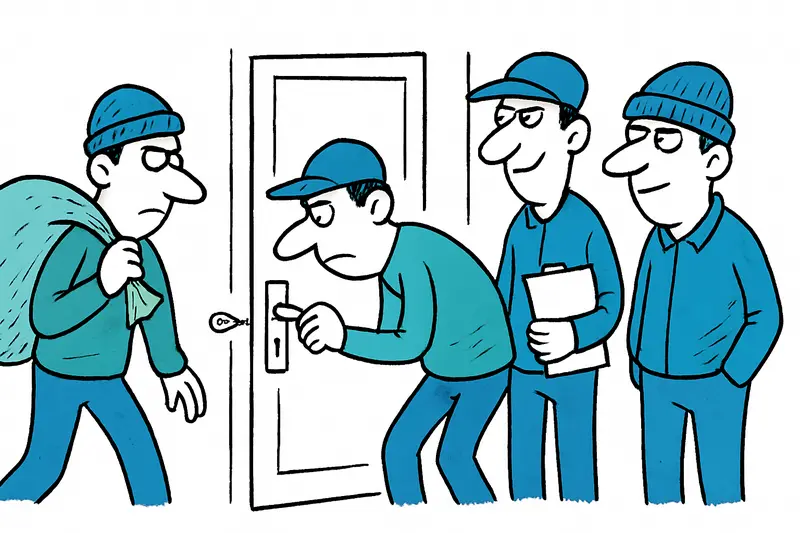
How Four Burglars Emptied Ten Houses with a Simple Trick — and What It Means for Mallorca
Four men used the impressioning technique, posed as delivery workers and accepted two years in prison. A reality check f...
More to explore
Discover more interesting content

Can Cap de Bou

Townhouse Lleo 72
