
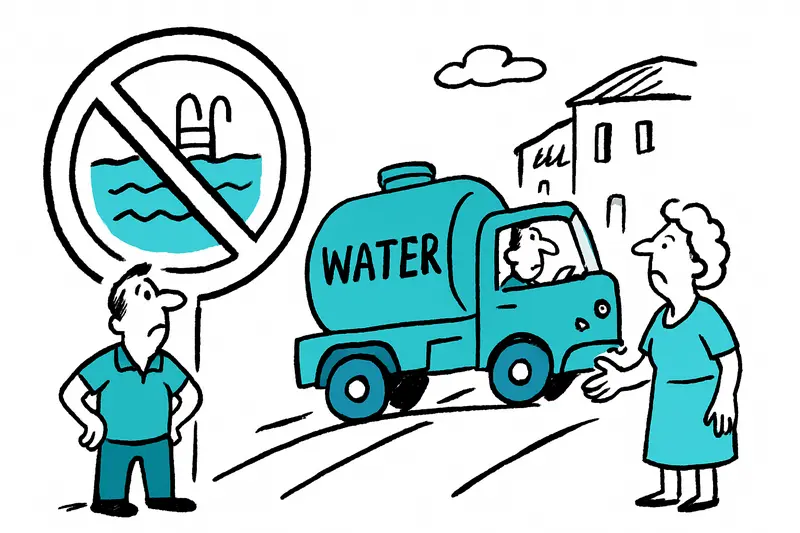
Pools banned, tankers supplying: Deià tightens water rules — a reality check
Pools banned, tankers supplying: Deià tightens water rules — a reality check
Deià tightens the rules: a year-round ban on filling pools, no terrace or car washing — the small mountain community responds to persistent drought. What is missing from the debate, and which solutions are realistic?
Pools banned, tankers supplying: Deià tightens water rules — a reality check
The municipality reiterates year-round prohibitions and asks residents and visitors to use water more sparingly. Are appeals and delivery trucks sufficient?
Late morning in Deià: heat lies heavy over the steep alleys, the soft clink of espresso cups drifts from a café on the plaça, and a delivery van rumbles up the Carrer de Sa Mar. Where swifts circle, a rueful smile has hung over conversations for days — water has become scarcer.
Key question: How much longer can a place like Deià bridge the gap with provisional measures before permanent interventions in the water supply become necessary? The administration has announced it will remind the population of existing restrictions and emphasize year-round bans — among them filling private swimming pools and pressure-washing terraces or cars.
The sober fact: the municipality regularly depends on deliveries by tanker trucks during the summer months. In 2025 there were already water outages, as reported in Drought Alert in Deià: Luxury Without Water — A Village Between Tourism and Drought. This is not a fair-weather problem but a structural one: limited local storage capacity, restricted sources and consumption that rises sharply during the holiday months. Deià is not unique on Mallorca — similar measures are described in When the Tap Becomes a Luxury: Seven Municipalities Tighten Water Rules in Mallorca, but its topography and settlement pattern make management particularly difficult.
Critical analysis: appeals to common sense alone are not enough. In the short term, rules and prohibitions reduce consumption, but without enforcement they remain piecemeal. The costs of tankers are high and the transport logistics vulnerable; they shift the risk rather than solve it. There is also a lack of transparent, publicly accessible data on reserves, consumption peaks and water quality — facts that would be needed for residents and hosts to adjust their behaviour in a targeted way.
What has been missing in the public debate so far is the role of tourist accommodations and private pools in the overall balance. Data on pool usage, irrigation of holiday villas or the distribution between residents and guests is rarely disclosed. There is also little discussion on how equipment such as cisterns, rainwater harvesting or greywater systems could be promoted on a broad scale.
An everyday scene: on the road to Son Coll early in the evening, locals see the automatic sprinkler system in a finca start up, even though the municipality has imposed restrictions. Such observations frustrate people: for the small shop in town, for older homeowners and for restaurants it feels unfair when rules are inconsistently enforced.
Concrete, pragmatic solutions: first, a public consumption register with anonymized weekly figures on water tanks, reserves and deliveries. That would build trust and enable targeted action. Second, financial incentives for homeowners to install rainwater cisterns and greywater recycling systems; grants or low-interest loans could have quick effect.
Third, a staggered allocation system for private pools during peak season and clearly signposted fines for violations — not just appeals. Fourth, cooperation with neighbouring municipalities — measures such as those in Sóller turns off the tap: Showers off, pools forbidden — how the town is dealing with drought — for better network connections or joint investments in decentralized desalination or storage projects tailored to the needs of mountain villages.
Another point: tourism providers must be held accountable. Mandatory water consumption metrics per accommodation and transparency requirements on booking platforms would help distribute consumption fairly. It is uncomfortable — but realistic and fair to those who live here permanently.
What can be done quickly: local campaigns. Not moralising, but concrete: "Shower, don't bathe", "water in the evening", workshops at the cultural centre where simple rainwater collectors are built. Local engagement works when coupled with clear rules and measurable targets.
Conclusion: Deià shows how reckless the combination of heat, tourism and old infrastructure can be. Tanker trucks are a lifeline, not a solution. More transparency is needed, binding measures for temporary users and targeted investments in storage capacity and reuse. Otherwise next summer will be harder than this one.
At the end of the day, when the sounds of construction fade and the smell of fried fish hangs over the bay, the question remains: do we want to impress briefly or provide sustainably? Deià must decide — and soon.
Frequently asked questions
When is the best time to visit Mallorca for good weather and beach days?
What should I pack for a Mallorca trip in spring or early summer?
Are there family-friendly beaches in Mallorca?
How can I explore the Serra de Tramuntana without a car?
What are the must-see towns for a first visit to Mallorca?
Why is Palma a good base for exploring Mallorca?
Which Mallorca beaches are best for swimming and sunbathing?
What hiking options are available in Mallorca?
Similar News

When Palma Becomes a Zombie Zone: 'Mallorca Z', AI and the Thought Experiment with Side Effects
A Mallorcan lawyer built a strategy game over a weekend using AI that treats the island as the scene of a zombie crisis....

Learning to Wait: How Leisure Is Making Space Again on Mallorca
Waiting doesn't have to be lost time. A mild October day in Palma shows how small pauses slow down our lives — and what ...
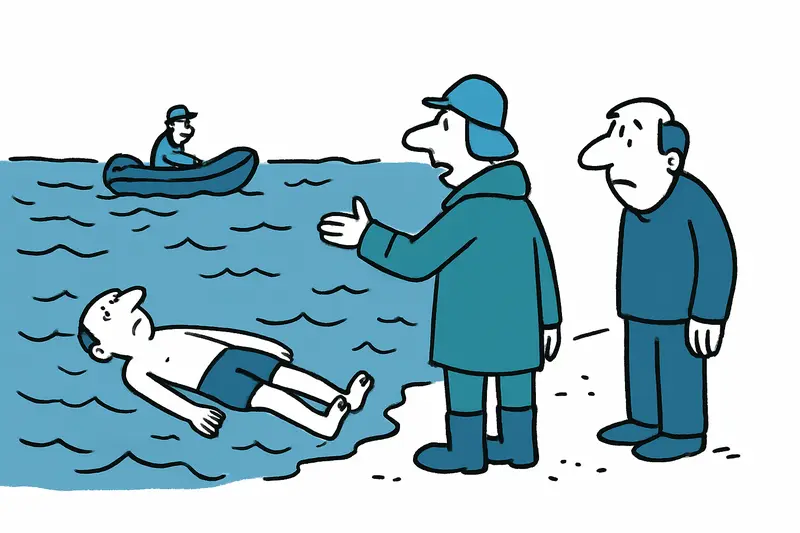
Cala en Brut: Body in the Sea — a Fatal Autumn Day and What’s Missing
In Cala en Brut (Ciutadella) a man's body was recovered during storm Dana "Adam". Why do autumn storms in the Balearics ...
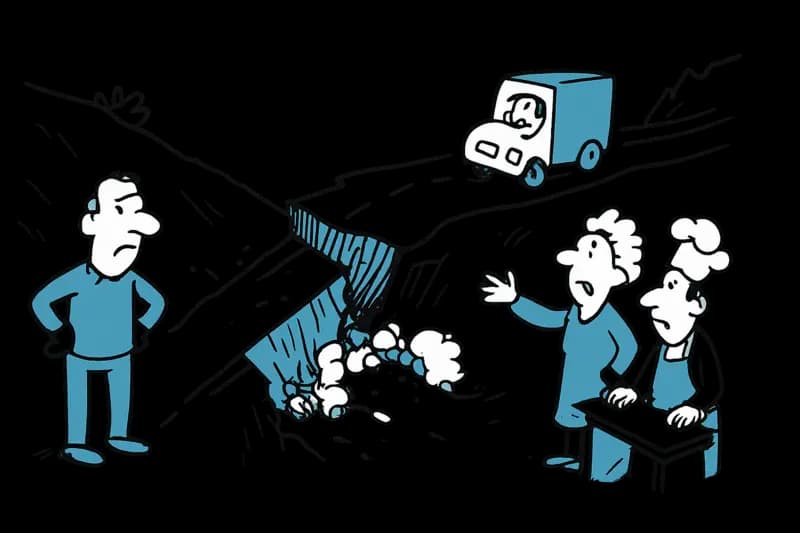
When the road is gone: Port de Valldemossa cut off after storm 'Adam'
After heavy rains a retaining wall gave way and two sections of mountain road MA-1131 became impassable. Why are rural p...

Crypto Promises, Ferry, Arrest: How Investors in Mallorca and the Neighboring Islands Fall into the Trap
A Swiss man wanted under a German arrest warrant was captured in Ciutadella. The case raises questions about cross-borde...
More to explore
Discover more interesting content

Can Cap de Bou

Townhouse Lleo 72
