
Deià Rations Water: Who Pays the Price for Luxury?
Deià Rations Water: Who Pays the Price for Luxury?
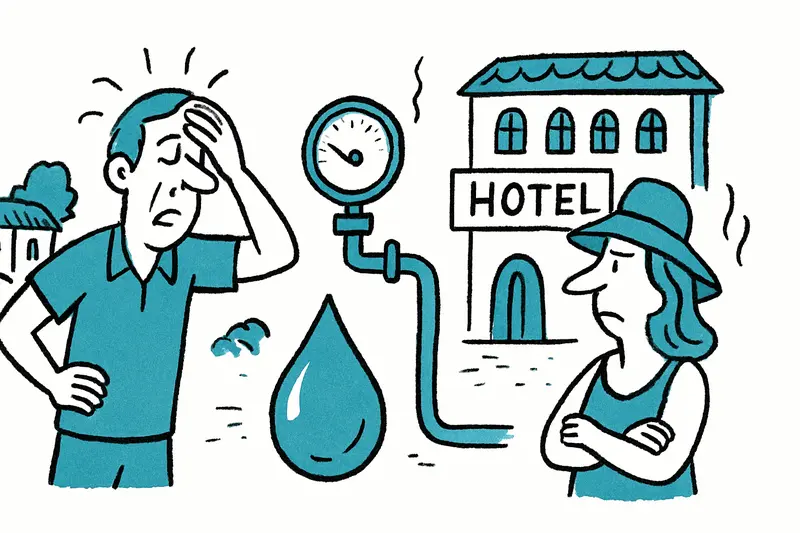
Due to extreme drought, Deià will impose water shutdowns three times a week from August 14. The Hotel La Residencia and several districts are affected. How fair is the distribution, and which solutions are missing?
Deià Rations Water: Who Pays the Price for Luxury?
Shutdowns three days a week affect hotel and residents – the question of distribution and responsibility
From Friday, August 14, the municipality of Deià will scale back the water supply: on Mondays, Wednesdays and Fridays the network will be switched off in parts of the village. Affected are the famous Hotel La Residencia as well as the areas s’Empeltada, ses Coves de can Puigserver, la Cala, Llucalcari and the road towards Sóller. The municipal council officially ordered the measure because the reserves are no longer sufficient to cover all previous needs.
The raw numbers the municipality cites are clear and not negligible: on average the municipality consumes about 3,500 cubic metres of water per week, 35 percent of which is delivered by truck. The sector affected by the current supply intervention requires around 250 cubic metres daily; the hotel La Residencia is said to need about 20 cubic metres per day.
Key question
Is it justifiable during a drought to impose supply restrictions on entire districts including a high-end hotel, without transparent prioritisation rules or short-term compensatory measures being visible at the same time?
Critical analysis
At first glance the decision seems pragmatic: less water consumption, easier to plan delivery trips. At second glance a lack of clarity becomes apparent. Why were consumption data not published so that residents, businesses and hoteliers can understand how the distribution was decided? Why is it not defined which uses remain permitted during shutdown times (e.g. fire-fighting water, medical facilities, drinking water for households with small children)? The note that 35 percent of the weekly supply is delivered by truck suggests the infrastructure is operating at its limit – but who decides which burden counts?
What is missing from the public discourse
The debate remains too superficial. There is a lack of transparent consumption figures, a clear ranking of critical needs and a plan to cushion short-term hardships. Hardly discussed is the role of permanently high hotel consumption and private garden irrigation during hot summers. Equally invisible are local technical options such as leak detection, the use of cisterns, greywater reuse or temporary tariffs that could reduce demand in a targeted way.
Everyday scene from Deià
On a morning at the Plaça, the church bell strikes half past nine, the café next to the little bakery fills the air with the smell of fresh bread. Tourists sit on the steps, wiping sweat from their brows and photographing stone walls and olive trees. In the evenings, when showers become scarce, you hear quiet grumbling: the garden hose no longer runs, the hotel's staff pump supplies. The road to the Mirador seems dustier than usual, cars with licence plates from all over Europe chug up and down – you sense who is moving through this village, and you realise that water scarcity exposes the fine cracks in everyday life.
Concrete, immediately implementable proposals
1. Disclosure of consumption: The municipality should publish current, itemised consumption figures (households, businesses, hotels) so decisions are comprehensible. 2. Prioritisation catalogue: A simple code of conduct for shutdown times that exempts medical services, drinking water for households with infants and fire-fighting reserves. 3. Short-term savings measures: Ban on garden irrigation, refrain from filling pools, mandatory repair of leaks for major consumers. 4. Incentives and sanctions: Temporary consumption caps for hotels with bonuses for demonstrable savings, fines for repeated abuse. 5. Technical immediate aid: Mobile tanks at central points, support for small household cisterns, assessment of grey- and rainwater systems. 6. Medium-term infrastructure: Talks with island and regional authorities about storage, connections to more stable networks and possible support for small desalination projects where ecologically and financially viable.
Why this matters
When water is rationed in a mountain municipality like Deià, it is no longer just a local problem but a symptom of the adaptation gap to a hotter, drier future. Despite the urgency, the burden must not be distributed unfairly. A place where luxury and everyday life sit so close together needs rules that protect both.
Conclusion: The shutdowns may be necessary in the short term, but without comprehensible priorities, transparent data and concrete compensatory measures there is a risk that resentment and inequality will grow. Deià now needs clear rules and quickly implementable aid – and an honest conversation about how much water an island community can still sustain in the future.
Frequently asked questions
When is Mallorca's weather most comfortable for outdoor activities?
Is it possible to swim in Mallorca outside the peak summer months?
What should I pack for a trip to Mallorca?
What activities work well for families visiting Mallorca?
How easy is it to get around Mallorca without a car?
What should I know about sun safety and packing for Mallorca’s beaches?
Should I expect crowds in Mallorca, and when is the best time to visit to avoid them?
Is Mallorca suitable for a short city break or a longer stay?
Similar News

Magaluf: Tourist slaps police officer — officer draws service weapon
An incident in Magaluf escalated: a 27-year-old Brit slapped a local police officer in the face and shouted insults — a ...
Eclipse on the Plate: Palma's Pastry Shop Releases 'Pastel de Eclipse'
A small pastry shop on Calle Pascual Ribot baked a limited cake for the sky spectacle: a biscuit base, caramel cream and...
Nights Like an Oven: Mallorca Between Heat Trap and Eclipse
Portocolom reported a minimum temperature of 29 °C. AEMET expects an almost cloudless sky for the solar eclipse, but 30–...

Passport bought via TikTok stopped at Palma airport: How big is the problem really?
A young man tried to fly to Ireland with a passport purchased on TikTok — the deception was uncovered at Palma airport. ...
Cocaine bundle in Cala Beltrán: What the find reveals about smuggling routes and our coasts
Young people discovered a large bundle with dozens of cocaine packets in Cala Beltrán. The Guardia Civil secured the fin...
More to explore
Discover more interesting content

Boat Tour with BBQ along Es Trenc Beach

Private transfer from Mallorca Airport (PMI) to Pollensa
