
Nights Like an Oven: Mallorca Between Heat Trap and Eclipse
Nights Like an Oven: Mallorca Between Heat Trap and Eclipse
Portocolom reported a minimum temperature of 29 °C. AEMET expects an almost cloudless sky for the solar eclipse, but 30–32 °C and high humidity will remain. A reality check: how do we protect people, infrastructure and tourism from such nights?
Nights Like an Oven: Mallorca Between Heat Trap and Eclipse
Guiding question: How long can island residents and visitors tolerate nights when the temperature hardly falls — and who will finally propose practical solutions?
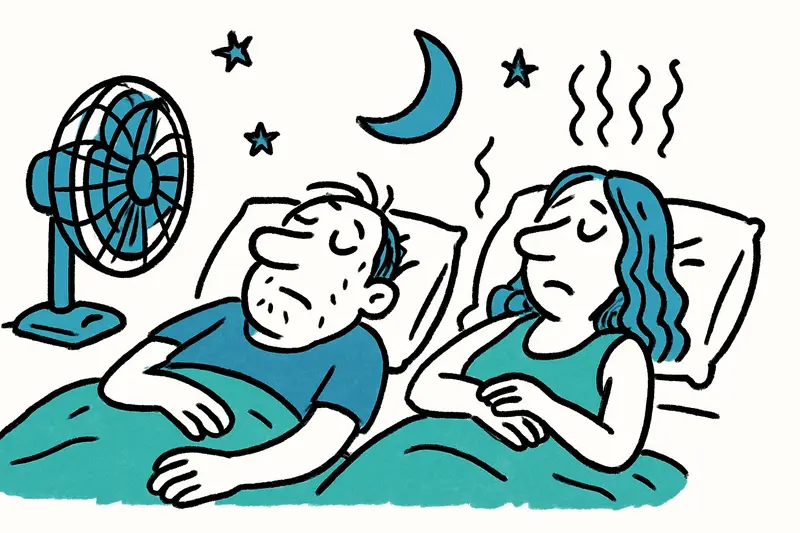
The past hours felt on the island like an oven that won’t cool down. According to AEMET, nights did not fall as usual everywhere: in Portocolom the temperature stayed at a minimum of 29 °C; places like Puerto de Sóller, Palma's Portopi harbour, Banyalbufar, the Capdepera lighthouse and Santanyí recorded lows around 28 °C. Colònia de Sant Pere and the island of Cabrera reported no less than 27 °C.
During the day the thermometer climbed to 38 °C at many measuring points; the mountains of the Serra de Tramuntana still reached 36 °C. This means heat paired with little nocturnal recovery, which makes it hard for people in both neighbourhoods and villages to sleep well.
Critical analysis
Such nights are not just a nuisance. Sleep deprivation accumulates, chronic conditions like cardiovascular problems worsen, and the ability to work decreases. The island is oriented toward tourism: service staff, emergency personnel and construction workers must function even though their bodies and minds do not recover. In addition, persistently warm night air raises the energy question. Air conditioners run around the clock, grids are strained, and the bill falls on households and small businesses.
The outlook from the regional AEMET leadership is twofold: meteorologically there is nothing against observing the solar eclipse — the sky should be almost cloudless. At the same time AEMET expects temperatures of 30–32 °C with 60–70 percent humidity for the time of the eclipse (around 19:00–21:00). That means: a clear spectacle in the sky, but a muggy evening in which observers are more likely to sweat than to shiver.
What is missing in the public discourse
We talk a lot about short-term warning levels and record figures. Rarely is the conversation about everyday adaptations: adjusted shop opening hours, night bus connections to cooler beach areas, coordinated rest hotspots for shift workers or targeted assistance for elderly residents without air conditioning. The discussion about passive cooling — such as facade colours, night ventilation or planting in courtyards — is also insufficient. On islands like Mallorca, heat adaptation must be thought of locally and implemented practically, not just shown on coloured maps.
Everyday scene
Anyone who drove through Palma yesterday knows the picture: an old fan clatters in an open window on the Passeig Marítim, vendors at the Mercat de l'Olivar flee into the shade of a delivery zone at 3 a.m., and in Cala d'Or families still sit on park benches at 0:30 because bedrooms are too warm. The streetlights emit a dull yellow that hardly alleviates the heat. In small towns like Portocolom you can hear the hum of air conditioners all night; even the boats in the harbour seem slower, engines running on low power.
Concrete solution approaches
A few proposals that could be implemented on Mallorca immediately: first, keep cool municipal spaces open — libraries, community halls, town libraries — with extended evening hours for people without air conditioning. Second, mobile drinking water stations and equipped "cool units" for emergency services so that older people and those with health problems can be reached more quickly. Third, expand night bus lines to popular beach sections or green parks so people can reach cooler places on short notice. Fourth, short-term information campaigns on proper night ventilation — keep windows closed at night, ventilate in the morning — and on the correct use of fans versus air conditioning.
In the medium term plans should include municipal subsidy programs for insulation and sun protection on facades, planting shade-providing trees in public squares, mandatory quiet hours for construction work in the middle of the night, and integrated crisis management that treats heat as a persistent phenomenon, not an exception. Hoteliers and landlords should also be more accountable: simple measures like additional fans, heat-resistant bedding and guidance for guests are inexpensive and effective.
The eclipse — prospects and warning
The announced almost cloudless night for the solar eclipse sounds tempting. But conditions will be muggy; those who want to watch the spectacle should protect themselves: targeted hydration, shade breaks, light clothing and proper eye protection against direct sunlight. Special caution applies to children and the elderly. A clear sky is not a free pass to be careless about the heat.
Pithy conclusion
Mallorca is experiencing nights that no longer restore. This is not a footnote but part of a changed island daily life. Warning colours on maps help to inform in the short term. Truly effective responses, however, require concrete, locally coordinated measures — from water stations to facade subsidy programs. Otherwise the question posed above remains open: how long do we want and can we accept nights in oven mode?
Frequently asked questions
How hot are Mallorca nights and how does it affect sleep?
What practical steps could Mallorca take to cope with hot nights?
Which Mallorca towns recorded the warmest nights recently?
What should visitors know about the solar eclipse in Mallorca during muggy conditions?
Why is everyday heat adaptation in Mallorca still limited, and what would help?
What medium-term plans could Mallorca implement to reduce heat stress?
What should travelers pack and plan when visiting Mallorca for warm nights?
How is Palma dealing with hot nights, and what changes are being considered there?
Similar News

Passport bought via TikTok stopped at Palma airport: How big is the problem really?
A young man tried to fly to Ireland with a passport purchased on TikTok — the deception was uncovered at Palma airport. ...
Cocaine bundle in Cala Beltrán: What the find reveals about smuggling routes and our coasts
Young people discovered a large bundle with dozens of cocaine packets in Cala Beltrán. The Guardia Civil secured the fin...
Balearic Islands tighten sale of energy drinks to minors: protection or sham regulation?
The Balearic government has proposed a bill that would ban the sale of caffeinated energy drinks to minors and tighten r...
Deutsches Eck expands: New venue in the second row by the sea at Playa de Palma
The cult venue 'Deutsches Eck' is getting a second restaurant at Playa de Palma. Michael and Feli Bohrmann are taking ov...
Up Close with Engine Noise at the Copa: What the Regatta in Palma's Bay Feels Like
Seen from a press inflatable: sail hulls, terse commands and the steady image of the "Hispania". Why the Copa del Rey is...
More to explore
Discover more interesting content

Boat Tour with BBQ along Es Trenc Beach
Private transfer from Mallorca Airport (PMI) to Pollensa
