
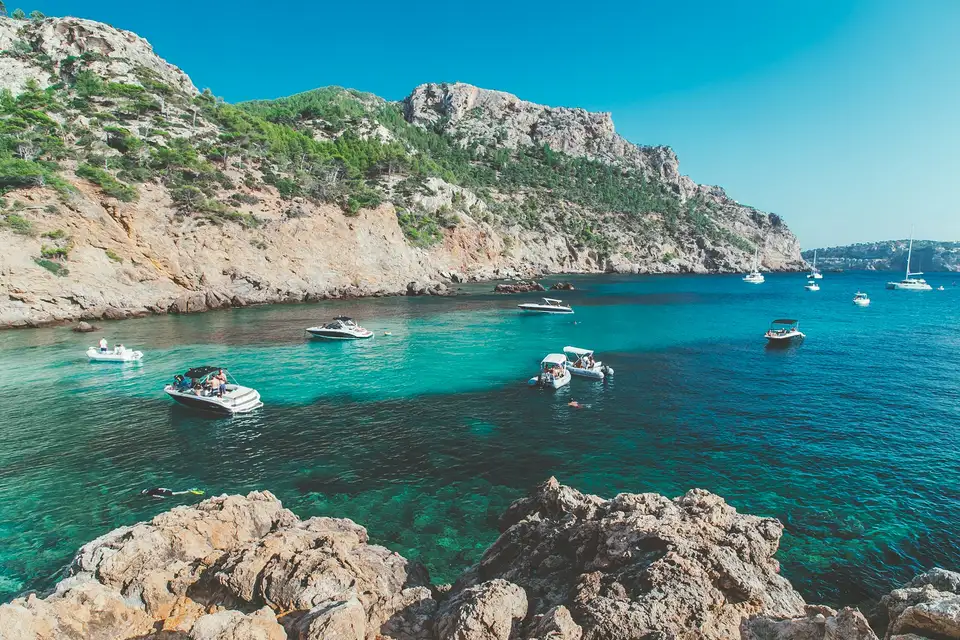
Cocaine bundle in Cala Beltrán: What the find reveals about smuggling routes and our coasts
Young people discovered a large bundle with dozens of cocaine packets in Cala Beltrán. The Guardia Civil secured the finds, but the origin remains unclear. A reality check: how do drugs end up on Mallorca's beaches and what is missing in the investigation?
Cocaine bundle in Cala Beltrán: What the find reveals about smuggling routes and our coasts
Main question: How could a package containing dozens of cocaine packets drift unattended into a hard-to-reach cove — and what does that say about drug trafficking along our coast?
Early on Sunday morning young people found an unusual bundle in Cala Beltrán near Llucmajor protruding from the water: several dozen small, tightly wrapped sachets. They alerted the emergency number 112; the Guardia Civil responded and seized the cargo. The officers reported a difficult removal because the cove is accessible only via steep, slippery paths and vehicles could not reach the site.
In short: this is a classic case of drifting cargo, as coastal guards across Europe occasionally encounter in incidents such as Half a Tonne of Cocaine at Playa d'en Bossa: Who Benefits — and What Must Change?.
Critical analysis: Not every found sachet on Mallorca is automatically part of a large criminal ring, but the island lies on routes exploited by drug suppliers (see 675 Kilos of Cocaine: What the Find Means for Palma, Inca and Binissalem). The difficulty of recovering the bundle highlights two problems: first, the geographic hurdles for rapid checks in small coves; second, limited resources for maritime surveillance off the main routes. If a package washes ashore unnoticed, it quickly becomes a security and environmental issue.
What is missing in the public discourse: reporting often focuses only on discoveries and rarely on the logistical side — how drugs end up in the sea, what intermediate stations exist and how local structures react. Also underexamined is how seized goods are disposed of in an environmentally responsible manner. Plastic and adhesive packaging can drift for kilometers and endanger marine life; that must not be an afterthought.
Everyday scene: Anyone who walks along the port of Llucmajor in the morning knows the murmured life of the island. Fishermen clean nets, an elderly woman from the market carries oranges, seagulls cry above the quay. In such routines it becomes clear that the coast is at once workplace, leisure area and borderline. When young people suddenly find a drug bundle in the middle of daily life, it disrupts the routine — and reminds us that the line between everyday life and illegal logistics here is thin.
Concrete solutions: First, stronger coordination between the Guardia Civil Marítima, the coast guard and municipal patrols; targeted, temporary naval and drone flights in high-risk areas could enable early sightings. Second, local reporting channels for citizens: a simple app or hotline to register and georeference beach finds immediately would shorten response times and secure documented traces. Third, better equipment for recoveries in hard-to-reach coves — portable crates, winches or mobile platforms — would avoid dangerous improvisations.
Further concrete steps: formalize protocols for the environmentally sound handling of seized drugs so that microplastics and chemicals do not enter nature uncontrolled; accelerate joint investigations with forensic laboratories so that origin and possible routes can be checked quickly, as illustrated by Drugs, Millions and Suspected Abuse of Office: What the Major Operation in Mallorca Reveals; and expand information work in schools and community centers so that finds are reported correctly and not touched or scattered on site.
What investigations need now: transparent communication about quantity and composition to prevent speculation on social networks from disrupting inquiries; cross-border cooperation, because such packages are often part of international logistics chains; and attention to accompanying evidence — such as GPS traces, ship movements or similar finds along neighboring coasts.
Pointed conclusion: The find in Cala Beltrán is not an isolated case in the European coastal landscape, but it exposes where our weaknesses lie — in infrastructure, communication and environmental preparedness. It is not enough to simply seize items. Those who want to make the beaches safer must understand the logistics behind the finds and improve local procedures so that rescuers, the environment and residents do not suffer additional harm. For an island like Mallorca that depends on the sea, this is not a luxury but a duty.
Frequently asked questions
What happened when a cocaine bundle was found in Cala Beltrán on Mallorca?
Why do drug bundles drift to Mallorca’s shores?
What safety improvements could help Mallorca cope with drifting drug finds?
How should residents report unusual finds on Mallorca beaches?
What environmental risks come from seized drug parcels on Mallorca's coast?
Why is transparency about quantities and composition important in drug seizure reports?
What does the Cala Beltrán find tell us about Mallorca's vulnerability and infrastructure?
What practical steps could be taken to improve handling of future finds on Mallorca’s coves?
Similar News

Rental Car Theft in El Arenal: What This Incident Reveals About Our Gaps
A teenager steals a running rental car in El Arenal, flees on foot, climbs over walls and is caught by the Guardia Civil...

Red Rope in Palma's Library: What Helps Against Selfie Tourism — and What's Missing
Palma's city library cordoned off an area with a red rope to keep selfie tourism away from reading and working activitie...
Fort San Carlos: Museum, Harbor Dispute — and a Conflict That Demands Answers
The military museum at Fort San Carlos sits right on Palma's harbor, with unexpectedly quiet rooms filled with cannons a...
Old Town Under Pressure: When a Doorway Becomes a Sleeping and Shower Place
For months a woman has been living with a parasol, a clothes rack and personal belongings next to the social welfare off...
When Shopping Weighs Heavier: Mallorca Demands a Tax Pause on Food and Fuel
Rising prices are putting pressure on households and agriculture. The Balearic Islands are calling for temporary tax rel...
More to explore
Discover more interesting content

Can Cap de Bou

Townhouse Lleo 72
