
Magaluf: Tourist slaps police officer — officer draws service weapon
Magaluf: Tourist slaps police officer — officer draws service weapon
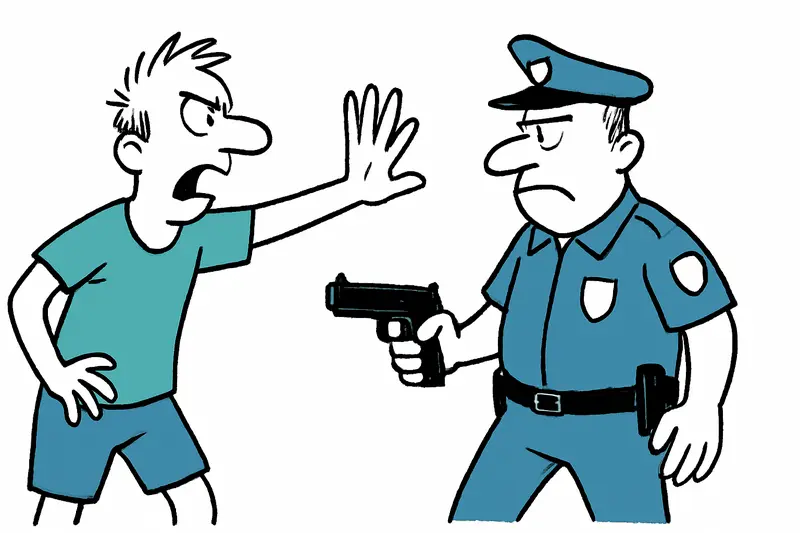
An incident in Magaluf escalated: a 27-year-old Brit slapped a local police officer in the face and shouted insults — a colleague then drew his service weapon. What does this say about safety and the handling of violence in Mallorca?
Magaluf: Tourist slaps police officer — officer draws service weapon
Which safety questions do we really need to discuss in Calvià?
Key question: How do we deal with aggressive situations in Mallorca before an insult turns into a potentially deadly escalation?
On August 8, a patrol in the holiday zone between Magaluf and the Vía Alemania in Palma escalated into a situation one tries to avoid on hot summer evenings: a group of young people — reportedly about six to seven persons — approached officers, shouted insults like “Fuck the Police” and behaved provocatively. Then it escalated: a 27-year-old British tourist slapped an officer, striking him on the right cheek. A second officer then drew his service weapon. The alleged perpetrator was arrested, brought before a court and released.
These are the established facts. No party statements, no dramatic attributions. What remains is the question of how to handle violence on Mallorca’s streets — especially in places like Magaluf, which are full of young holidaymakers in high season who are loud at night and sometimes cross boundaries.
Critical analysis: On one side is the self-defence of the individual officer who feels attacked and wants to neutralize the situation quickly. On the other side are the risks that drawing a firearm poses even in a tense situation: panic, misinterpretation by bystanders, and possible consequences if a shot is fired. From the incident we only know that the weapon was drawn — whether its safety was off or whether it was aimed at someone's body is not part of the available facts. The silence on these points quickly fuels rumor mills.
Important: public debate often revolves around assigning blame. What we lack is a sober look at procedures and institutional responses: When is drawing a service weapon justified under current rules? What alternatives do officers have in a crowd? How well are language barrier measures, de-escalation training and first-aid coordination aligned?
What is often missing in public discourse I briefly outline in five points: First, the perspective of the officers on site — not as heroes or villains, but as people under stress. Second, the question of equipment: do local police in tourist hotspots carry sufficient non-lethal options (tasers, pepper spray, protective gear) and are these clearly regulated legally? Third, standards for de-escalation training — how often are officers trained, especially for dealing with intoxicated and provocative groups? Fourth, prevention: why do the same scenes keep recurring in some areas? Is there a lack of consistent presence, night-time planning or work with event organizers? Fifth, transparency: citizens, victims and defendants have a right to comprehensible procedures so speculation does not further inflame the situation.
An everyday scene from Palma: on the Vía Alemania, five minutes after midnight, couples and groups stream out of bars, taxis honk, music blares from balconies, and occasionally loud English chants mix with Mallorcan conversations. Officers patrol on foot, the heat clings to clothing, and you feel how little room for error remains. Such nights show how quickly a short, stupid conflict can have major consequences — for perpetrators as well as for officers.
Concrete approaches to solutions, without selling utopias:
1. More de-escalation training and simulations: Regular exercises, including scenarios with language problems and alcohol, can help officers act calmer and more safely.
2. Clear guidelines for the use of non-lethal tools: If pepper spray, tasers or special shields are available, their use must be legally and practically well defined — this reduces resorting to the last option of drawing a firearm.
3. Bodycams and transparent documentation: Recordings create facts, prevent contradictory accounts and protect both officers and civilians.
4. Prevention work in nightlife districts: Cooperation with venues, event organizers and tour operators to ensure more accountability on noise, alcohol service and bans from premises.
5. Language and mediation services: Use of multilingual information materials and mediators in tourist hotspots so misunderstandings do not escalate in the first place.
Concise conclusion: the incident in Magaluf clearly shows two things: provocation and physical violence against officers must not be tolerated. At the same time, the state's response must not be reduced to the quickest physical option — drawing a firearm immediately changes the dynamic in a lasting way. We need more preparation, more transparency and above all more prevention so that loud nights in Mallorca do not end up in court files and mistrust.
On the island, between bars and beach taxis, the solutions are often banal: clear rules, better training, shared responsibility. The next summer night in Magaluf will show whether we have learned from this — or whether the next incident will again leave only words and wild speculation.
Frequently asked questions
What is the best time of year to visit Mallorca for sunny weather?
Is Mallorca good for swimming year round, and what should I know about the sea?
What should I pack for a Mallorca trip?
What are practical tips for getting around Mallorca?
What are must-do activities in Mallorca for a first-time visitor?
What should I know about Mallorca’s beaches, safety, and etiquette?
Are there seasonal events or cultural tips to consider when visiting Mallorca?
Is Mallorca safe for solo travelers and families?
Similar News
Deià Rations Water: Who Pays the Price for Luxury?
Due to extreme drought, Deià will impose water shutdowns three times a week from August 14. The Hotel La Residencia and ...
Eclipse on the Plate: Palma's Pastry Shop Releases 'Pastel de Eclipse'
A small pastry shop on Calle Pascual Ribot baked a limited cake for the sky spectacle: a biscuit base, caramel cream and...
Nights Like an Oven: Mallorca Between Heat Trap and Eclipse
Portocolom reported a minimum temperature of 29 °C. AEMET expects an almost cloudless sky for the solar eclipse, but 30–...
Passport bought via TikTok stopped at Palma airport: How big is the problem really?
A young man tried to fly to Ireland with a passport purchased on TikTok — the deception was uncovered at Palma airport. ...
Cocaine bundle in Cala Beltrán: What the find reveals about smuggling routes and our coasts
Young people discovered a large bundle with dozens of cocaine packets in Cala Beltrán. The Guardia Civil secured the fin...
More to explore
Discover more interesting content

Boat Tour with BBQ along Es Trenc Beach

Private transfer from Mallorca Airport (PMI) to Pollensa
