
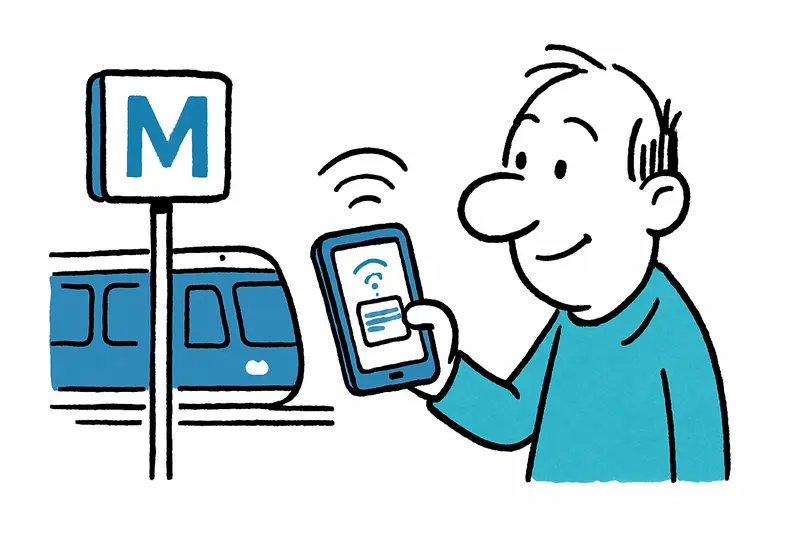
Pilot Project: Digital Unified Card Launches on Metro M1
Pilot Project: Digital Unified Card Launches on Metro M1
Mallorca is testing a unified digital ticket on smartphones: a pilot is initially running on Metro line M1 (Palma–UIB–ParcBit). Requirements are an app and an NFC-enabled phone. Those who want to participate can register online.
Pilot Project: Digital Transit Ticket on Mobile Phones Rolls Out on the M1
On May 14, 2026, a trial began on Mallorca that could be a relief for many commuters in Palma: the so-called Tarjeta Única is coming to smartphones – initially as a pilot on Metro line M1 between Palma, the UIB and the ParcBit technology park.
Anyone who hurries to the stop on the Palma waterfront in the morning knows the little drama: coffee in hand, bike beside you, about fifty seconds left until the gate. If the change or the plastic card is missing, things get hectic. With the digital card, that rummaging would be over. The basic idea is simple: an app manages the ticket, and the smartphone communicates via Near Field Communication (NFC) with the turnstiles or readers – no paper, no loose change, no plastic card from the wallet.
Two things are important for the pilot: the app and an NFC-capable phone. Those who want to participate can apply for the unified ticket. In this way, the administration wants to find out how stable the system is in everyday use: rush hours at the UIB, student changeovers, conferences at ParcBit – all scenarios that will test acceptance and technology thoroughly.
What this could mean concretely for Mallorca is easy to imagine. On short routes through Palma, boarding would be smoother and morning queues smaller. Commuters who travel daily between the university and the city could have their subscription on their smartphone and would no longer need to top up a card. For tourists, the search for machines or sales points would be unnecessary – provided the app also offers single tickets or day passes for visitors.
Of course, not everything is automatically solved. Not every phone has NFC, and some people will continue to prefer a physical ticket. At stops like Estació Intermodal or at particularly busy hubs, staff and machines will still be needed. And in the event of technical faults, clear fallback rules are required so that no one suddenly finds themselves without a way to travel.
The trial phase on the M1 has been deliberately limited. The route connects residential areas, the university and a large business park – a good test mix of commuters, students and professionals. If the trial is satisfactory, the plan is to extend the system to regional trains, TIB lines and EMT city buses. The goal: a unified ticket that works multimodally across the island.
A practical everyday tip: those who want to participate should check in advance whether their phone supports NFC and has the latest software version installed. A quick look in the settings takes little time and saves later hassle. It is also wise to have an alternative payment method ready in case the app misbehaves – typically a bank card or cash.
I observed the project on Monday morning: the sun was low over Avinguda Gabriel Roca, taxi engines hummed, and the stop was a mix of e-scooters, students with backpacks and older residents. A young man typed concentratedly on his phone, apparently completing the registration process. It felt familiar – these small digitalizations slip into everyday life, first unobtrusively, then inevitably.
Outlook: a functioning digital Tarjeta Única could, in the long run, make public transport use in Mallorca more attractive. Fewer barriers when boarding, less paperwork, more speed when transferring. If the administration and transport companies cooperate well, the system can be adapted to future needs: better fare integration, combined offers for commuters and visitors, perhaps even integration with bike-sharing or park-and-ride options.
No technical magic, more pragmatic modernization – and for many passengers above all one thing: less rush when boarding. Those who want to test should check online and have the appropriate phone ready. The signs at the metro stations and the announcements will point this out more often in the coming weeks – if you want to avoid the hassle during the trial, have your coffee a little later.
Quick infoStart: May 14, 2026; Route: M1 Palma–UIB–ParcBit; Requirements: app and an NFC-enabled smartphone; Registration: online possible; Possible expansion: trains, TIB and EMT buses.
Frequently asked questions
What is the weather usually like in Mallorca in spring?
Can you swim in Mallorca outside summer?
When is the best time to visit Mallorca for pleasant weather?
What should I pack for Mallorca in spring or autumn?
Is Palma de Mallorca worth visiting for a short stay?
What is Sóller like for visitors in Mallorca?
Is Alcúdia a good place for a beach holiday in Mallorca?
Can you hike in Mallorca when the weather is mild?
Similar News
German tourist dies in Sa Calobra – a reality check for emergencies on Mallorca's beaches
A 40-year-old tourist died at the Torrent de Pareis. The emergency call, a doctor who happened to be present, a defibril...
Deadly Tractor Accident in Bunyola: What Needs to Be Done Now
In a work accident on an estate near Bunyola, a roughly 40-year-old man lost his life. His wife and a small child were o...
Head-first dive into the shallow part of Cala Fonoll: An accident and the unresolved question of responsibility
A young tourist dove into Cala Fonoll and was seriously injured. Key question: Why are clear warning signs missing at da...
Mistaken identity with fatal consequences: Brutal assault in S'Aranjassa — what's missing in the follow-up?
At S'Aranjassa a visitor to a finca was tied up, beaten and thrown out of a van. Three men have been arrested, including...
High heel slips, car accelerates: accident on Camí de Son Hugo
A woman lost a high-heeled shoe on the forecourt of the sports facility at Camí de Son Hugo. The car accelerated, mounte...
More to explore
Discover more interesting content

Can Cap de Bou

Townhouse Lleo 72
