
Fira de la Sardina: Four Days of Sardines, Music and Crafts at Palma's Harbour
Fira de la Sardina: Four Days of Sardines, Music and Crafts at Palma's Harbour
At Palma's old mole opposite the Lonja, the Sardine Fair gets underway: grilled fish, crafts, a children's program and music – a small harbour festival with strong local flavour.
Fira de la Sardina: Four Days of Sardines, Music and Crafts at Palma's Harbour
A festival for taste and togetherness
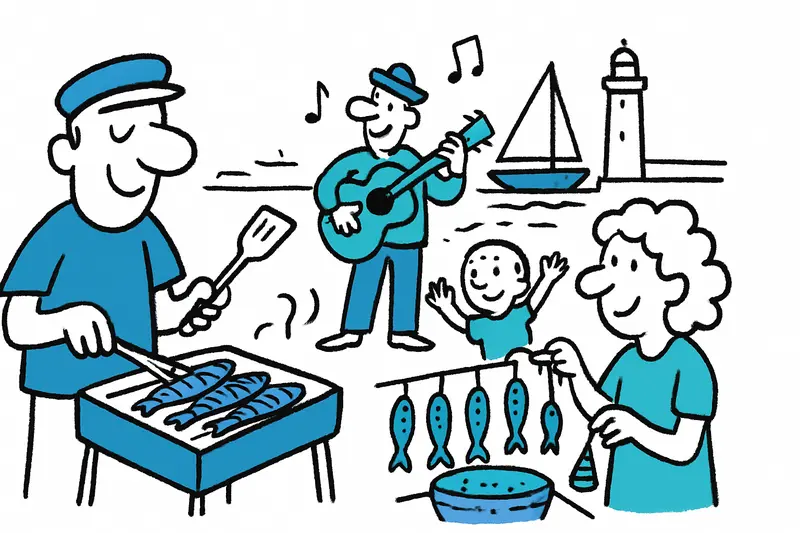
The smell of wood smoke mixes today with sea air and the roar of engines: the Fira de la Sardina has begun at the mole opposite the Lonja. At several grill stations, sardines are being browned over open flames, bread and small side dishes sizzle nearby, and people sit at tables chatting, laughing and often getting up to collect another plate. This is what a market day looks like when Palma pauses briefly and puts the sea at the centre.
The atmosphere is smoky and friendly at once. Fishermen, older neighbours from El Born and young people with backpacks mingle among the market stalls; children run barefoot along the edge of the pier, waving homemade flags and watching the cooks at the grill with rapt attention. From a distance you can hear habaneras, then a DJ drops familiar beats – a loud, improvised soundscape that fits well with the rocking of the boats.
Alongside the food there is a craft market where ceramists, jewellers and textile artists display their pieces. Anyone looking for a handmade memento will find small ceramic bowls, hand-knotted bands and simple wooden spoons to use at the next dinner. Several family activities are announced: craft stands, kid-friendly cooking demonstrations and small street theatre pieces that open children's eyes and give parents time to chat. Similar craft scenes also appear at events such as the Medieval Market in Santa Ponça.
Festivals like this are not only entertainment for Palma; they bring fresh income to local producers and restaurants, give young artisans a stage and allow visitors to feel the everyday life of the island without heavy staging. People sit on the harbour edge and don't hesitate: they take the menu of the day, share plates and talk about what life is like here. You can see how net menders and small vendors benefit from the visits – it's solid neighbourhood economy, and other island events such as the Fira de Sant Tómas in Sineu show similar local benefits.
Practical tip: arriving on foot avoids stress and the hunt for parking. Many locals use the afternoon walk along Passeig del Born, others combine the visit with a detour to the market hall or to evening markets like Sineu at Night. For families, sturdy shoes for the children and a sun hat are worthwhile: evenings often cool noticeably when the Tramuntana blows and the light over the harbour grows flatter.
A personal note: today I found a stall where an older man was gutting fresh sardines with a knife, laughing as he explained how little seasoning is needed. Opposite, a group played habaneras and a mother wrapped her baby while the scent of freshly grilled fish filled the air. These small scenes are the reason why the Fira de la Sardina is more than a food stall – it's a moment when city and sea briefly touch.
For the coming days: arrive hungry, be open to new acquaintances and bring reusable cutlery if possible. Take time to stroll between the stalls – the fair's programme offers surprises, from live music to workshops. Those seeking a quiet moment can sit on the quay wall and watch the harbour workers; those wanting more noise will quickly find company at the grill stations.
This kind of festival shows how local traditions can be kept fresh: little fuss, lots of conversation and good food. For Palma it's a small but tangible confirmation: culture and community are not only born in museums or theatres, they can happen on a mole, between anglers, craft makers and visitors who happened to arrive in town.
If you drop by today: enjoy the sea breeze, let the sounds in and don't hesitate to ask for recipes. The people behind the stalls are happy to share how they prepare their sardines. And if you take a souvenir home, think of the small handmade items – they tell the longest stories of a Mallorca you can explore on foot.
Frequently asked questions
What is the weather usually like in Mallorca in late spring?
Is Mallorca warm enough to swim in spring?
What should I pack for Mallorca in the shoulder season?
Is Mallorca a good place for a quiet beach trip outside peak summer?
What is Dalt Vila in Ibiza like compared with old towns in Mallorca?
Is walking around Sóller a good idea in warmer months?
What is Pollença like for a day trip in spring?
When is the best time to visit Mallorca for outdoor activities?
Similar News
When the Wallet Becomes a Danger: Attack in Peguera and Lessons for Mallorca
In Peguera, two women are said to have stolen the wallet from a 75-year-old German couple. When the victim intervened, t...
Plata stays Plata: Young people take over, Llonguets remain
A small bar on Carrer de l'Argenteria will continue: Tolo Serra hands the place over to young Mallorcans at the end of t...
Unnoticed in the Luggage Compartment: How a Boy Traveled More Than 100 Kilometers in a Team Bus
A minor traveled in the undercarriage of a team bus for more than 100 kilometers until his cries for help were heard. A ...

Cap Vermell Grand: Second Michelin Key – a Gift for the East
The Cap Vermell Grand in Capdepera has been awarded its second Michelin key. For the region this elevates the luxury off...
Eurowings lets four aircraft carry names – a friendly idea that also reaches Mallorca
Eurowings is launching a campaign: four Airbus A320s are to carry the first names of people who help others in everyday ...
More to explore
Discover more interesting content

Can Cap de Bou

Townhouse Lleo 72
