
He disappeared after a bike tour near Campos: A reality check on the case of Hans Peter Harke
Since 31 July there has been no trace of 72‑year‑old Hans Peter Harke. Drones and a helicopter searched unsuccessfully and the active search was discontinued. A critical assessment and concrete proposals for how such cases could be handled better in Mallorca.
He disappeared after a bike tour near Campos: A reality check on the case of Hans Peter Harke
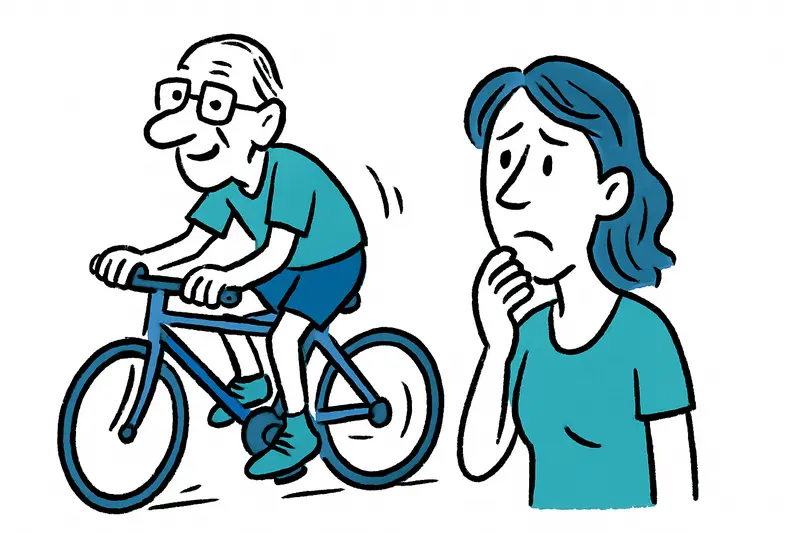
The bare facts are brief: 72‑year‑old Hans Peter Harke left the family finca in the municipality of Campos on the morning of 31 July for a bicycle ride. He was wearing short sports clothes, trainers and glasses. According to his daughter Eve W., he had neither a wallet nor water or a mobile phone with him. The Guardia Civil searched with drones and a helicopter but stopped the active search a few days later. Forensic investigators in Manacor took DNA samples from the daughter and the missing person. The family is asking for information — WhatsApp number: +34 673 116 914.
Key question
What goes wrong when an experienced but solitary elderly person disappears on a short test ride from a finca and the search is called off after only a few days?
Critical analysis
The rapid discontinuation of a large-scale search is hard for outsiders to understand. Drones and helicopters are visible tools, but they have limited reach: they cover large areas during the day, are of little use in dense scrub or in narrow rambla gullies, and are restricted at night. That Harke was out without a phone and apparently carried no identification complicates identification in the event of a sighting. Added to this is the concern about heat exposure — at the end of July the sun can be merciless in the island's interior — and the family's assessment that there were occasional signs of emerging forgetfulness, similar to reporting in Missing at Playa de Palma: A Dementia Case and the Lessons for the Island. Without a medical diagnosis this remains a private impression that authorities cannot easily qualify as grounds for an extended search.
What is missing from the public debate
Public reporting usually focuses on the actions of the Guardia Civil or the family's personal fate; too rarely do we discuss the practical gaps, as highlighted by the episode Baby disappears from bar – happy ending, but many questions for Mallorca. How long do official bodies adhere to standardized time windows for search operations? Who coordinates volunteers with official teams so that search corridors are not duplicated or accidentally secured? How are agricultural plots, cisterns, abandoned buildings and other risk spots systematically checked? And: do municipalities like Campos maintain lists of particularly vulnerable residents who should be prioritized in an emergency?
A small everyday scene from Campos
Morning at the plaza in Campos: market traders are clearing tables, somewhere from a finca you can hear the clatter of a bicycle wrench, cicadas chirp in the dry stone walls, dogs bark in the distance. Here people know their neighbors, the paths to the olive groves are familiar. Yet that very familiarity can be deceptive — a bike path quickly leads into smaller tracks, a rambla can hide itself along a finca fence. In this everyday setting it becomes clear how easily a person can remain invisible among fields and confusing terrain features.
Concrete solutions
- Short term: authorities should make search operations more flexible. That does not mean endless cost escalation, but clear prioritization: thermal imaging drones after sunset, targeted checks of cisterns, wells and parked agricultural vehicles, and queries at nearby hospitals and clinics in Palma and Manacor without delay. A single clear point of contact for the family would make procedures more transparent.
- Volunteer coordination: many villages have willing helpers. A binding register of volunteer rapid response teams, standing by under certain criteria (insurance, training, leadership), would help. These teams should be coordinated with the Guardia Civil so that search corridors are covered effectively.
- Prevention for at‑risk groups: local administrations could keep lists (voluntary, data‑protection compliant) of older people who live alone or are at risk of getting lost. Emergency bracelets with contact information and medical notes could be issued free of charge. Short neighborhood awareness rounds — asking who checks on elderly neighbors during heat — would also be effective.
- Communication: sightings are often reported late because witnesses are unsure. A simple hotline, a WhatsApp channel (like the number currently given), and targeted notices in supermarkets, bars and marketplaces in several languages could increase willingness to report.
Conclusion
The case of Hans Peter Harke shows how many small cracks in our safety net can come together: lost phone, missing ID, heat, terrain and bureaucratic limits. It is understandable that the family desperately asks for every hint — and it would be good if neighbors, hikers and farmers stayed alert and used the provided WhatsApp number. In the longer term, Mallorca needs a clearer concept for searching for vulnerable people outside urban areas: better coordination of volunteers, targeted prevention and flexible search strategies, a need also stressed after 18 People Missing off Mallorca — A Call to Politics and Society. The island is small enough to cooperate more closely — and that could save lives.
Frequently asked questions
What is the best time to visit Mallorca for warm, sunny weather?
Can I swim in Mallorca year-round, or is it only in summer?
What should I pack for a trip to Mallorca?
How can I get around Mallorca without renting a car?
What outdoor activities are popular in Mallorca?
Are Mallorca’s beaches family-friendly?
What should I know about weather and sea conditions for swimming and water sports?
Which towns are good starting points for a first Mallorca visit?
Similar News
Demolition or Opportunity? The Casetas on the Costa des Teatre — What Palma Really Must Decide
The city plans to redesign Plaça Major — but the small wooden huts on the Costa des Teatre are at stake. An inventory wi...

Douglas scion shakes up Deià's short film festival — behind the camera
Dylan Douglas worked in Deià on a one-minute short film about the solar eclipse and handled the editing. For the island ...

Morning Light and Half-Shadow: Partial Lunar Eclipse over Mallorca on 28 August
In the early hours of 28 August the Earth moves in front of the full moon: a partial lunar eclipse will be visible from ...
Stones from the wall: Tourists damage dry-stone wall at Es Colomer — a reality check
A viral video shows a family at the Es Colomer viewpoint prising stones out of a dry-stone wall and throwing them into t...

Behind the Camera: Dylan Douglas Edits at the One-Minute Festival in Deia
At the small but refined One-Minute Festival in Deia, Dylan Douglas mixed with the audience — and this time he wasn't in...
More to explore
Discover more interesting content

Boat Tour with BBQ along Es Trenc Beach

Private transfer from Mallorca Airport (PMI) to Pollensa
