
Dispute over Camí de sa Roca: Who may walk Mallorca's paths?
Dispute over Camí de sa Roca: Who may walk Mallorca's paths?
The Camí de sa Roca near Manacor is once again at the center of a dispute: a new barrier divides residents, walkers and the town hall. Why does the issue anger so many people — and how can a solution be found?
Dispute over Camí de sa Roca: Who may walk Mallorca's paths?
Key question: Is this about property rights or the right to be outdoors?
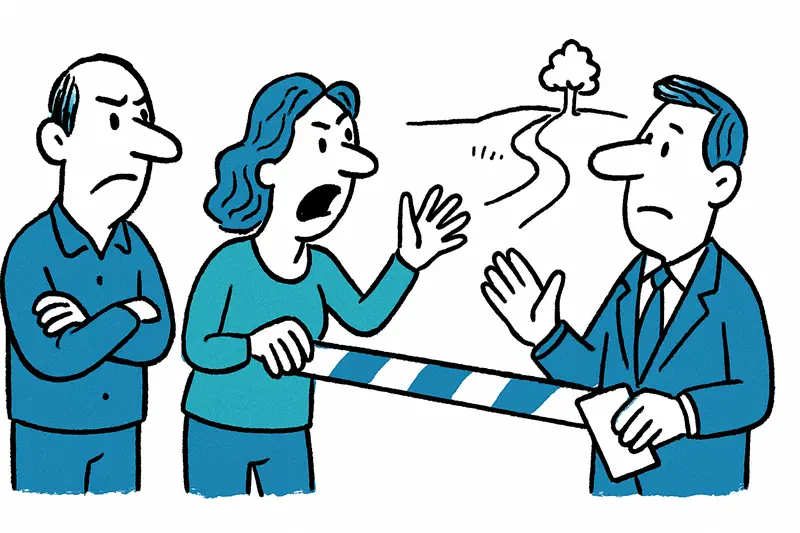
On the outskirts of Manacor, where the June heat presses early onto the stony ground and cicadas shrill above the dry maquis scrub, lies the Camí de sa Roca. The path is more than a beaten track between stone walls: for many residents it is access to nature, a reminder of old routes and a litmus test for how the municipality handles public space. In April about 800 people set off on a protest walk to demand its reopening. Now a planned further barrier is causing anger — and raising the question of who really has authority here.
The situation can be summarized briefly: resident initiatives and environmental groups see the new barrier as another step restricting access to the path. Critics accuse the Manacor town hall of not having implemented promised steps toward opening it. Legally and emotionally, different interests collide here: private access protection, conservation concerns, tradition and the public interest in paths that have been used for generations.
Critical analysis
The discussion has two hard-to-reconcile levels. First: legal clarity is often lacking. Old paths in Mallorca are historically grown structures; some are officially registered, many are not, as debates over whether to reopen a closed GR‑221 section in Sóller show. Second: administrative action appears inconsistent. When a town hall makes promises that are then not visibly implemented, that fuels mistrust. On the other hand, blanket protests against every barrier sometimes appear blind to safety or property issues.
What is also noticeable: the debate often runs in political and symbolic categories. When people talk about "access to nature" or "protection of property", concrete everyday problems remain underexposed — for example litter, vandalism or parking pressure at lay-bys near the path. Similar infrastructure discussions are reflected in proposals such as Mallorca's plan for 60 km of safe routes.
What is missing in the public discourse
Four elements are underrepresented: a transparent survey of the paths, an openly accessible record of past decisions, a neutrally moderated mediation process and practical rules on use and maintenance. Instead, debates often revolve around blame: the town hall did not act in time; residents are overbearing. It would be more helpful to lay concrete facts on the table: Which sections are historically public? Where are there legitimate safety concerns? Where does a barrier help, and where does it block daily life?
Everyday scene from Manacor
A typical Saturday on the Camí: a woman with shopping bags steps out of the avenue behind the village, a pensioner walks his dog on a leash, young parents push a pram over the uneven ground. From nearby comes the clatter of market trade on the plaza, and occasionally the church tower bell tolls. When a new barrier suddenly blocks the path, it is not an abstract measure — it changes the way to the supermarket, the short dog walk, the Sunday outing with the grandchild. These small inconveniences are what drive people into the streets.
Concrete solutions
1. Mapping and transparency: An independent survey of historic paths, publicly accessible, with clear maps and deeds or notes where uncertainty exists.
2. Mediated negotiation: Establishment of a local mediation body with representatives of the municipality, residents, conservationists and neutral experts that decides on concrete cases and proposes transitional solutions.
3. Time-limited access instead of rigid barriers: In areas with legitimate safety concerns, opening hours, electronic gates with access permissions or traffic regulations could be introduced, instead of permanently locking the paths; similarly, changes in road-use rules such as allowing cyclists to ride side by side reflect how minor regulatory adjustments can ease conflicts.
4. Maintenance and responsibility: Definition of who is responsible for cleaning, upkeep and signage. A lease or maintenance agreement with clear obligations creates binding commitments.
5. Public relations and education: Local information campaigns, small information boards at the start of the path with history, rules and contact addresses — that reduces misunderstandings.
Conclusion
It is not primarily about whether a barrier looks good or bad. It is about managing shared spaces in a growing island society. When decisions are made behind closed doors, suspicion grows that the interests of a few outweigh the common good. But if administration, residents and users talk to each other, present clear maps and test practical solutions, conflicts can be eased. The Camí de sa Roca could thereby become again what it once was: a path you can use without discussion. That requires fewer symbolic gestures and more tangible steps — and people willing to talk with one another rather than shutting each other out.
Frequently asked questions
Can people walk old paths in Mallorca if they are not clearly marked?
Why do path access disputes happen so often in Mallorca?
What should I know before walking a rural path in Mallorca?
How hot does walking on Mallorca paths feel in June?
Is the Camí de sa Roca near Manacor open to the public?
Why are residents in Manacor protesting about a path barrier?
What is the best way to solve path conflicts in Mallorca?
Are historic walking routes in Mallorca always safe to use?
Similar News
The Painter Who Lived Mallorca: Franz Taussig and His Century-Old Secret
A hundred years ago a young Viennese arrived in El Terreno, sketched the island and called himself Francis Caron. Today ...

Airport dispute: Bridge, forecasts and the question of responsibility
A video by the Spanish transport minister has ignited the dispute over DORA figures, capacities and local governance pow...

The Painter Who Invented Himself: How a Young Viennese Drew Mallorca
A hundred years ago a 19-year-old draftsman arrived in El Terreno. His diary and sheets, long known under the pseudonym ...
Released with Conditions: The Plus Ultra Suspicion and a Mallorcan Finca as Residence
A Dutch entrepreneur, sought in connection with the Plus Ultra case, was extradited to Spain after his arrest in Germany...

Haute Nuit in Puerto Portals: Fashion, Art and Indulgence by the Water
On October 2 the Lobster Club in Puerto Portals will be transformed into a stage for curated fashion, art and culinary e...
More to explore
Discover more interesting content

Can Cap de Bou

Townhouse Lleo 72
