
Dispute over beach loungers at Playa de Palma escalates – two arrests
Dispute over beach loungers at Playa de Palma escalates – two arrests
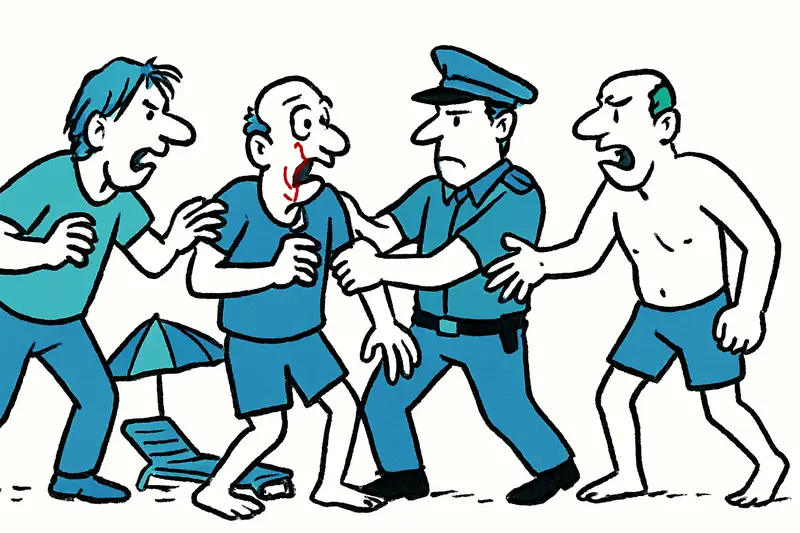
On July 18 a dispute over beach loungers at Playa de Palma got out of control: a lounger vendor was injured and €150 was stolen. Two men were arrested. Key question: Why do such situations escalate so quickly?
Dispute over beach loungers at Playa de Palma escalates – two arrests
Key question: Why can an otherwise trivial dispute over loungers so quickly turn violent?
On the early evening of July 18, a dispute about payment for beach loungers at Playa de Palma in El Arenal got so out of control that the local police had to intervene. Brawl at Playa de Palma: Why a verbal exchange could have ended fatally According to the authorities, two Colombian nationals aged 35 and 59 were arrested on suspicion of aggravated robbery. A lounger vendor suffered facial injuries and was apparently bleeding; the attackers are said to have taken €150 from a belt pouch and threatened him with a folding knife. A witness confirmed to the officers that a violent attack had taken place.
Critical analysis
The bare facts already paint a harsh picture: physical violence, a chokehold, theft, knife threats and an attempted escape. This shows that it is not always about the amount of money – €150 may be a lot or little for an individual actor, but it is irrelevant to the escalation. Tensions on the beach arise where informal business models (umbrella and lounger rentals, small stalls) meet crowds, alcohol and a weak regulatory framework (see Playa de Palma: When Vendors Stop an Arrest — What System Is Behind It?). If communication breaks down or someone is insulted, a small spark can ignite a larger fire.
What is missing in public discourse
We talk a lot about tourist numbers and beach cleaning, but rarely about how simple services are organized and secured. There is neither a clear, widely visible regulation for lounger rentals nor systematic guidance for tourists and seasonal workers on how to handle payments, conflicts or threats. The perspective of small entrepreneurs who carry their takings with them in the morning often remains invisible. Nor is there much discussion about how precarious some working conditions are and how much this can contribute to conflicts.
A typical scene on the promenade
Imagine the promenade at Playa de Palma: bicycle rickshaws ring their bells, street vendors call out to customers, tourists push prams, and the smell of fried tapas mixes with saltwater. In the evening, when the heat subsides, the promenade fills up. In this dense, noisy setting annoyances happen faster – harsh words are like breaking waves, and bottled-up frustration carries the violence with it. It was exactly there, within sight of supermarket car parks and bus lines, that the chase took place until a patrol found a car with its engine running in Calle Marineta de Llucmajor (see Tumults at Playa de Palma: When Controls Threaten the Beach Scene).
Concrete solutions
Vague appeals are not enough. Practical steps could help: clearly marked, registered rental stands with ID for operators; mandatory small-scale safes for daily takings (lockable cash boxes or mobile payment systems); visible notices with prices and behaviour rules in several languages; targeted presence of the local police in peak-season shifts, as well as mediation and de-escalation training for staff; regular checks on the legality of rentals to reduce undeclared work; a low-threshold reporting procedure for workers who feel threatened. All that requires organisation, but little of it would be new – much could be coordinated with existing structures.
What to do in the short term
In the acute phase, vendors should switch to low-cash alternatives, call the police immediately if threatened and identify witnesses where possible. Vendor cooperatives on the Playa could agree shifts so that individuals are not left carrying cash alone every day. The city administration can quickly put up visible notices and increase the presence of local police (see Arrests after threats at the city beach: Why an evening stroll must become safer again).
Pointed conclusion
The incident on July 18 is not an isolated, harmless scuffle, but a wake-up call: when service, security and rules do not align at one of the most visited beaches, violent situations with real victims emerge. What is needed are not grand gestures but pragmatic rules, clear labelling and more attention to the small, often overlooked actors of beach life – before someone else ends up on the promenade with a bloody nose and an empty till.
Frequently asked questions
How do loungers and umbrella rentals operate on Mallorca's beaches, and what can visitors do to avoid disputes?
What can I do to stay safe on crowded Mallorca beaches where there’s a lot of activity and alcohol around?
What practical steps can authorities take to reduce conflicts around beach loungers on Mallorca?
If I witness a threat on a Mallorca beach, what should I do?
What happened at Playa de Palma regarding beach loungers and what were the consequences?
What practical measures could help prevent similar incidents at Playa de Palma's beach loungers?
What should beach vendors in Mallorca do in the short term to stay safer after incidents like this?
What does the Playa de Palma incident say about Mallorca’s beach regulation and working conditions?
Similar News
More water than last year: Mallorca's reservoirs breathe easier
September rain refilled the Tramuntana's reserves: overall fill around 35 percent, Cúber at 40.42 percent, Gorg Blau at ...
Three Luxury Hotels in Banyalbufar: Lots of Money, Many Questions
A Danish investor plans three exclusive accommodations in Banyalbufar — including the historic Son Valentí. The announce...
2.1 tonnes of cocaine on sailing yacht off Spain's coast – a reality check for the coastguard
A 14-metre yacht was seized with 2.1 tonnes of cocaine. Who monitors the ports, how does the international hunt succeed ...

Heat Bonus in Mallorca: 100 Euros Extra for Outdoor Staff at MarSenses
MarSenses pays employees who worked outdoors in August an extra €100 as recognition. Lighter uniforms, reduced hours for...
Renovating in Mallorca: What You Really Can Do Without Neighbour Consent
Many think they can do whatever they want in their apartment. That's partly true — but only as long as structural elemen...
More to explore
Discover more interesting content

Can Cap de Bou

Townhouse Lleo 72
