
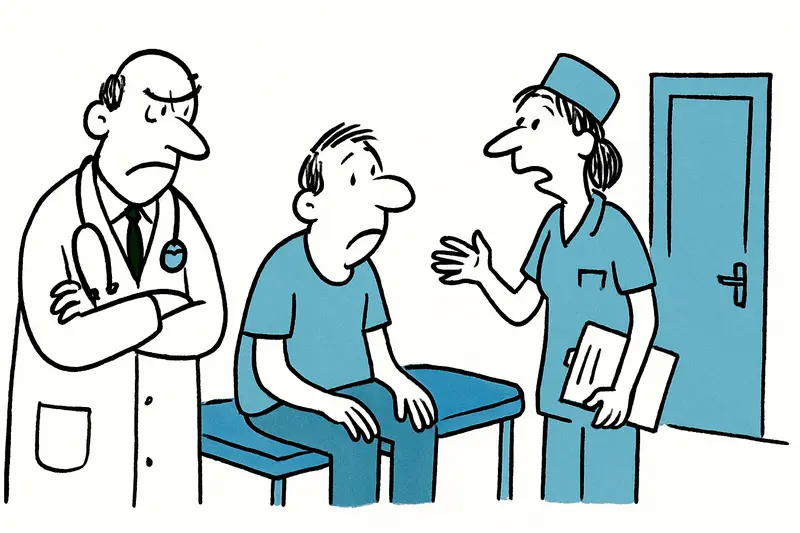
Five-day doctors' strike in the Balearic Islands: Who pays the price?
Five-day doctors' strike in the Balearic Islands: Who pays the price?
A workweek without routine: On Mallorca 278 operations and more than 15,600 consultations were cancelled. The health authority plans to reschedule appointments — but waiting lists are growing. Our reality check: what's missing from the debate and how can the conflict be resolved?
Five-day doctors' strike in the Balearic Islands: Who pays the price?
Last week the Balearic health system stopped work for five days. On Mallorca 278 scheduled operations were not carried out and more than 15,626 consultations and examinations were cancelled; nationwide the cancellations add up to over 20,000 appointments, as reported in Doctors' strike on Mallorca: Who gets left behind?.
Key question
Who bears the cost of this industrial action — the patients, the health staff, or the system itself?
Critical analysis
The trigger lies in reform plans from Madrid: a reorganization of working hours and on-call duties is intended to create as uniform rules as possible. Doctors on the islands criticize that long shifts are not sufficiently recognized as regular working time — with consequences for pay and later pension entitlements. They also demand clearer professional classification that better reflects training and responsibility. These demands are not new. Crucially, the previous negotiations apparently have not reduced the sharpness of the conflict: a week of widespread disruption shows how tense the situation is.
The numbers — 278 cancelled operations and more than 15,600 cancelled consultations on Mallorca — are more than statistics. They mean delayed diagnoses, postponed procedures, unsettled people. IB‑Salut promises rescheduled appointments, but catching up can only shift the time problem: if waiting lists are already growing now, bottlenecks will arise in the coming months, a trend explored in Waiting lists in the Balearic Islands: Too many patients, too little OR time — and what must be done now. The authority speaks of "rescheduling", not of additional resources; this gap is highlighted in Hospital hotline crippled: Why appointment scheduling on the Balearic Islands is failing. Without staff expansion or longer opening hours the outcome will likely be: patients wait longer and staff remain overburdened.
What is missing from the public discourse
The debate currently revolves around numbers and negotiating positions. Four aspects are underrepresented: first, concrete information about which specialties are most affected; that determines whether patients with cancer or heart conditions must tolerate delays. Second, a transparent view of emergency care during the strike week — the public needs clarity on which services were secured. Third, the financial and operational consequences for regional hospitals that have to organize extra work to arrange catch-up appointments. Fourth, a look at the long-term effects on staff: how will the reform affect career paths and retirement claims? Without these details the dispute remains abstract — and public anxiety grows.
Everyday scene from Mallorca
Tuesday morning in front of the main entrance of Son Espases in Palma: an elderly woman in a raincoat waits on a bench, a bag of medication beside her. A taxi driver shrugs when asked whether he takes patients to cancelled appointments; his voice is drowned out by the traffic noise of the Avenidas. On Calle Sindicato phones ring, relatives sign new forms, in a small bakery across the street customers quietly discuss the prospect of longer waiting times. Scenes like this repeated in villages and towns across the island — not a state of emergency, but a palpable unease in everyday life.
Concrete solutions
Transparent recording of working hours: On-call times must be recorded so that pay and social security entitlements can be calculated unambiguously. A pilot project with digital time tracking in selected hospitals could quickly provide clarity.
Staged classification: An immediately implementable measure would be a phased reordering of professional classification, coupled with clear criteria for responsibility and further training. This would allow top demands to be negotiated in partial packages.
Capacity and workforce planning: IB‑Salut should disclose how catch-up appointments are concretely planned — including additional shifts, incentives for overtime and, if necessary, temporary support from the mainland. Telemedicine follow-ups can help free up space in practices.
Mediation with a timeline: An independent mediator and clear deadlines for negotiations would break the escalation spiral. Both sides could accept compromise proposals in advance within the mediation mandate.
Conclusion
The strike week has shown that the system is strained in sensitive areas. Politics in Madrid, the regional administration and professional associations must now not only talk but show binding steps: clear rules for evaluating working time, realistic plans for dealing with the backlog and short-term relief for hospitals and staff. As long as these building sites remain open, the risk of recurring work stoppages remains — and once again patients will feel the consequences.
Frequently asked questions
How does a doctors’ strike in Mallorca affect patients’ appointments and operations?
What should I do if my hospital appointment in Mallorca was cancelled because of a strike?
Why are doctors in the Balearic Islands striking?
Will a doctors’ strike in Mallorca make waiting times longer?
Is emergency care in Mallorca affected during a doctors’ strike?
What does the doctors’ strike mean for Son Espases in Palma?
How many appointments were cancelled on Mallorca during the five-day doctors’ strike?
Will doctors in Mallorca just catch up after the strike?
Similar News
Mistaken identity with fatal consequences: Brutal assault in S'Aranjassa — what's missing in the follow-up?
At S'Aranjassa a visitor to a finca was tied up, beaten and thrown out of a van. Three men have been arrested, including...
High heel slips, car accelerates: accident on Camí de Son Hugo
A woman lost a high-heeled shoe on the forecourt of the sports facility at Camí de Son Hugo. The car accelerated, mounte...
Phone Scam: How Two Hotel Employees at Playa de Palma Lost Thousands of Euros
One morning in September, two reception employees at Playa de Palma were pressured by alleged alarm-company staff — in t...
When the Wallet Becomes a Danger: Attack in Peguera and Lessons for Mallorca
In Peguera, two women are said to have stolen the wallet from a 75-year-old German couple. When the victim intervened, t...
Plata stays Plata: Young people take over, Llonguets remain
A small bar on Carrer de l'Argenteria will continue: Tolo Serra hands the place over to young Mallorcans at the end of t...
More to explore
Discover more interesting content

Can Cap de Bou

Townhouse Lleo 72
