
When the Dune Breathes: How s'Estanyol near Llucmajor Is Disappearing Piece by Piece
The dunes at Camí de s'Estanyol are shrinking — not from storm surges, but from footprints, parking and missing paths. A look at causes, consequences and practical solutions from the neighborhood.
When the Dune Breathes: A Familiar Piece of Coast Is Disappearing
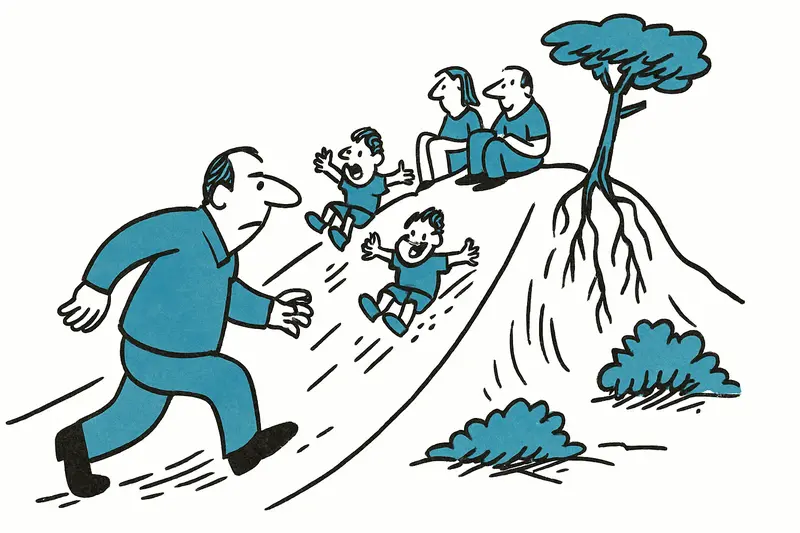
You can hear the sea here, the crunch of sand underfoot and occasionally the clatter of cards in a petanca bar around the corner. On a windy Saturday morning I met two families at Camí de s'Estanyol. Children ran across a dune that had become lower, laughing and sliding, and behind them stood pine trees whose roots jutted out of the ground like pale fingers. It is not a dramatic sight at first glance — rather a slow disappearance, a thinning of the landscape that you only notice if you come often.
How Small Steps Leave Big Traces
A single footprint is harmless. When there are hundreds, they become trampling paths, and what was once a dense carpet of dune plants turns into bare sand. The beachgrass marram grass (Ammophila arenaria) that holds the dune together has disappeared in several places. Where it was missing, the wind has an easy time: sand slips away, becomes free, and in front of s'Estanyol there is not a gentle sandy seabed but rocky sea. The currents carry the sediment away — it does not simply remain on site and the dune does not grow back.
Longtime visitors say that ten years ago hardly any tourist groups found their way here. Today the small car park is often full, rental cars line up, and quick trips from the car to the beach have become habitual. What looks like normal recreation puts sustained pressure on fragile dune structures.
Between Everyday Life and Responsibility: Voices from the Neighborhood
“We used to sit under the pines and listen to the sea,” says María, 62, who has spent her Sundays for decades playing cards in that bar. “Now the children are sent onto the dune so the parents can talk in peace.” Such remarks sound familiar and unspectacular, yet they sum up what is missing: awareness and simple, clearly visible alternatives to trampling across the landscape.
That hits the core question: how do you prevent ordinary everyday decisions by many people from changing the coast in the long term? Prohibition signs alone rarely suffice. What matters are designed access points that guide the path of least resistance so the protected area is preserved.
What Has Been Lacking So Far
Public debate often fails to mention how closely behavioral patterns, infrastructure and geology are linked. At s'Estanyol several factors come together: a lack of visitor guidance, high parking pressure, few information boards and the natural fact that removed sand is not rebuilt in place. Holiday rental hosts and landlords could also have an influence here — brief notices at check-in could help a lot.
Another aspect is the social dynamic: tourist groups follow paths they find on Google Maps or are shown by neighbors, hosts or Instagram photos; local reporting documents how these paths contribute to the dune's disappearance. Context is often missing — why a dune is fragile becomes clear only after the plants have been trampled.
Solutions That Could Work
The good news: intervention is possible without prohibitive bans or large construction projects. Practical measures that have worked elsewhere would also make sense here:
Boardwalks and marked paths steer visitors over sensitive zones while creating photo stops and shaded spots. Targeted plantings of beachgrass and young pines, accompanied by maintenance efforts from local associations, can strengthen the dune again. Information offers — from signs at the car park to short leaflets for holiday guests and targeted notices in rental portals — increase understanding. Local volunteer groups could also adopt specific dune sections as sponsors.
It is important that the measures are low-threshold: simple wooden boardwalks, short trainings for hosts, a few information boards and occasional planting actions can achieve a lot. Fines or strict closures are less effective if they are not explained.
Why It Matters Now
If the dune continues to shrink, it changes not only the look of the coast: the beach becomes narrower, pines lose their grip, and insects, reptiles and shorebirds lose habitat. The entire stretch of coast becomes more vulnerable to wind and storm events. The situation in front of s'Estanyol is particularly sensitive because the lost sediment does not simply remain at the shore.
Sometimes small changes in the behavior of many people are enough to stop the trend. If, in the late afternoon, more sand is again in its place and the pines no longer stand with half-exposed roots, the neighborhood will have gained something — without anyone having been denied enjoyment.
What you can do: Stick to marked paths, use wooden boardwalks, explain to children that dunes are not slides, take your rubbish with you and ask local residents for tips. Small acts of consideration, practiced more often, keep a landscape alive.
Frequently asked questions
Why are the dunes at s'Estanyol near Llucmajor disappearing?
Is s'Estanyol in Mallorca still a good place to visit for a quiet beach walk?
What should I wear or bring when visiting a dune beach in Mallorca?
What is the best way to protect dune areas in Mallorca when visiting?
What makes the coastline near s'Estanyol so vulnerable to erosion?
Can boardwalks help save dune areas in Mallorca?
Are the dunes at s'Estanyol a problem only for nature, or also for the beach itself?
What can local hosts and holiday rental owners do to help protect Mallorca's coastal areas?
Similar News
First Day, First Consequences: What Palma's Rent Freeze Really Means
A new decree stops a planned eviction in Palma — but what really changes for tenants and landlords? A reality check with...
When Housing Becomes a Matter of Survival: Mallorca Between Rental Frenzy and Everyday Life
The case of 87-year-old Maricarmen showed that on Mallorca many people's lives are poised between affordable and uninhab...
Autumn in Mallorca: When Melancholy Gets a Window
Why autumn quietly tightens here — and how to make use of the mood: walks, culture, candles and the light from Palma to ...
Near-miss on Lanzarote: Landing Ryanair Jet and Iberia Takeoff — what really went wrong
On Lanzarote there was a dangerous incident: A Ryanair flight (FR5910) from Dublin landed on runway 03 while an Iberia E...
Eurowings introduces new Premium Business seats on Mallorca routes
From December 1, selected Eurowings flights to Palma and other destinations will feature eight particularly generous sea...
More to explore
Discover more interesting content

Can Cap de Bou

Townhouse Lleo 72
