
Early Jellyfish at Sa Foradada: A Warning Sign for the Sea
Early Jellyfish at Sa Foradada: A Warning Sign for the Sea
At the end of April the first jellyfish of the year appeared at Sa Foradada. Why their early arrival is more than an unpleasant surprise for bathers — and which questions remain open.
Early Jellyfish at Sa Foradada: A Warning Sign for the Sea
What does the unusually early appearance mean for the coast between Valldemossa and Deià?
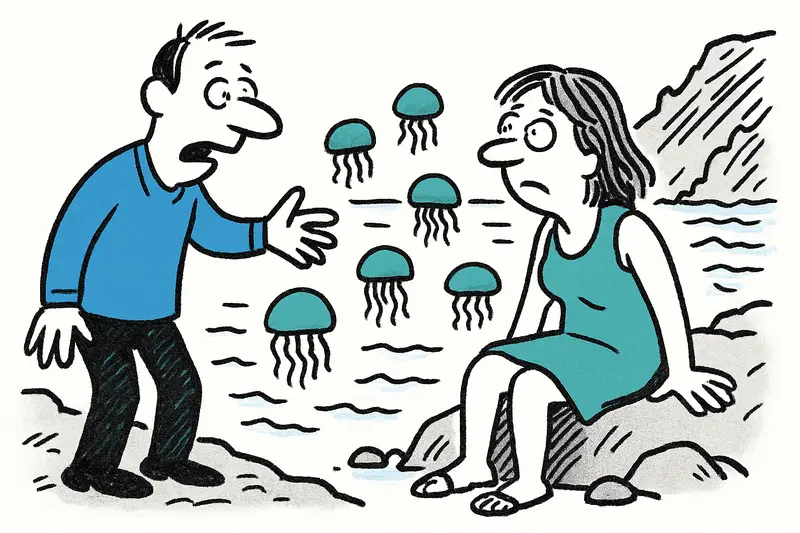
On the rocky path to the cove of Sa Foradada last Friday several people stopped, smartphones in hand, to film the clear bay: small spheres, translucent and slowly drifting, not the usual isolated individuals but enough that no one cheerfully went into the water anymore. The scene: the fine scent of pine, the sound of waves against the rocks, tourists with backpacks and locals in flip‑flops — and suddenly that uneasy feeling of preferring to sit on the rocks rather than splash in the sea.
In short: the first jellyfish of this season were observed significantly earlier than usual. Normally bathers and lifeguards report increased stings and sightings only with the start of summer or in autumn. This year the appearance already at the end of April coincided with several very mild days that noticeably warmed the water in shallow coves.
Key question: Does this early arrival only tell us that the summer sun was active too soon — or is it a much deeper problem in our sea? The sober answer: an early outbreak is not a single natural event but a symptom. Factors such as warmer surface temperatures, changed currents, nutrient input and the decline of natural predators act together.
Analytically the situation is complex. Certain species, notably the bright pink Pelagia noctiluca, benefit from warm, nutrient‑rich layers; this leads to rapid reproduction cycles. Overfishing reduces large predators that would eat jellyfish larvae and juveniles. Agricultural runoff and urban discharge provide algae food that indirectly supports the jellyfish population. The combination creates local hotspots — often in small, windless coves away from monitored beaches.
What has so far been missing in public exchange: hard numbers for our stretch of coastline. Regularly updated beach logs for the west coast are lacking, an interface through which fishermen, dive centers and municipalities could report jellyfish findings is missing, and there is no transparent assessment of the role of local sewage or agricultural nutrient inputs. Similar mass sightings have been reported elsewhere, such as the fried‑egg jellyfish off Santa Ponça. Instead, frantic one‑off solutions arise in summer: red flags, sporadic beach closures (for example, those caused by the blue‑and‑white sea slug that forced closures), rumors on WhatsApp.
Everyday observation: On the Ma‑10, between Valldemossa and Deià, fishermen wave to passing boats early in the morning. Some of them talk about "more gelatine in the nets" than before; others see it as normal spring play. Lifeguards in Port de Sóller prepare rescue boats and first‑aid kits while cafés on the quay already hope for sun. Such small observations are worth gold, but they are currently not collected systematically.
Concrete approaches, without which every warm spring will bring a nasty surprise: first, build a local reporting system for jellyfish observations — mobile, multilingual and open to fishermen, dive schools, tourism businesses and citizens. Second, closer coordination between the island council, environmental authorities and fisheries associations to regulate regional catch levels so that natural predators can recover. Third, agricultural measures to reduce nutrient inputs into coastal waters; targeted buffer zones and modern wastewater treatment in municipalities within the catchment. Fourth, beach management: clear warning signs, better training of lifeguards for jellyfish stings, and a lending network for simple first‑aid kits at popular coves, including compact removal tools like the Stingblade available in Port Adriano.
Practical and local: a weekend monitoring scheme in which volunteers from Deià and Valldemossa walk the coves in the mornings, collect data and share it with the municipality costs little, raises awareness and fills the gap between AEMET weather data and what is actually happening on site. Small visible measures like additional bins on the access path to the cove also reduce plastic fragments that can indirectly affect jellyfish.
A safety note: most jellyfish that appear in the Mediterranean are not life‑threatening, but some species can cause painful stings. If unusual knotted shapes or long, ribbon‑like tentacles appear, caution is advised. Anyone with sting‑like symptoms should contact local rescue services or a health facility — simple first‑aid measures on site often help immediately.
Conclusion: the jellyfish bloom off Sa Foradada is not just a natural curiosity — it reflects changes in the ecosystem. Acting now links short‑term bathing protection with long‑term marine conservation. Small municipalities, committed fishermen and informed bathers can quickly improve many things; real impact will only be visible when politics, research and everyday life work together. Until then: look, report, and keep an eye beneath the water's surface.
Frequently asked questions
What is the best time of year to visit Mallorca for good weather?
Can you swim in Mallorca outside the summer months?
What should I pack for a trip to Mallorca?
Is Mallorca too hot in the summer for sightseeing?
What is Palma de Mallorca like for a short city break?
Is Sóller worth visiting on a Mallorca trip?
What makes Alcúdia a good base in Mallorca?
What is the Serra de Tramuntana like for visitors?
Similar News

Fewer Airlines, Fewer Destinations: What Palma's Winter Flight Schedule Means for Mallorca
Analysis shows: Winter at Son Sant Joan Airport will be quieter, with significantly fewer airlines and destinations. Who...

German tourist dies in Sa Calobra – a reality check for emergencies on Mallorca's beaches
A 40-year-old tourist died at the Torrent de Pareis. The emergency call, a doctor who happened to be present, a defibril...

Deadly Tractor Accident in Bunyola: What Needs to Be Done Now
In a work accident on an estate near Bunyola, a roughly 40-year-old man lost his life. His wife and a small child were o...
Head-first dive into the shallow part of Cala Fonoll: An accident and the unresolved question of responsibility
A young tourist dove into Cala Fonoll and was seriously injured. Key question: Why are clear warning signs missing at da...

Mistaken identity with fatal consequences: Brutal assault in S'Aranjassa — what's missing in the follow-up?
At S'Aranjassa a visitor to a finca was tied up, beaten and thrown out of a van. Three men have been arrested, including...
More to explore
Discover more interesting content

Can Cap de Bou

Townhouse Lleo 72
