
Easter in Mallorca Is Getting Expensive: Who Pays for the Flight-Price Madness?
Easter in Mallorca Is Getting Expensive: Who Pays for the Flight-Price Madness?
Shortly before the Easter holidays, ticket prices to Mallorca are rising dramatically. Those who book now often pay several hundred euros one-way. A critical examination with practical tips from Palma.
Easter in Mallorca Is Getting Expensive: Who Pays for the Flight-Price Madness?
Key question: Why are ticket prices exploding right now and what can travelers (and the island) do about it?
Early in the morning in Palma, on Avenida Jaime III, you can hear the street sweepers, taxi drivers discuss the first ferry, and at the bus stop toward the airport travelers stand with rolling suitcases and puzzled faces. Son Sant Joan seems busy but not overcrowded — yet prices on booking sites tell a different story: individual one-way tickets from major German metropolitan areas are costing several hundred euros this week.
This is no longer an isolated case. Examples from search queries show: a one-way offer from Frankfurt is nearly €687, from a large NRW airport a low-cost connection demands around €447 on Saturday, and even discount carriers show prices around €316 one-way. What remains is the feeling that demand, the calendar and business models currently form an unfortunate mix.
Critical analysis: What drives the prices? First, timing. In federal states with Easter holidays — NRW, Hesse, Bavaria — millions of vacation days coincide. Demand concentrates on a few days while attractive slots in the mornings and afternoons are limited. Airlines exploit this by marking availabilities at high prices. Second, yield management: carriers control capacity and fares so that premium fares for last-minute bookers are very high. Third, seasonal crew planning and remaining spare capacity may play a role — relocated crews, fewer short-haul aircraft in operation and rotation planning drive up costs.
What is often missing in public discourse is a clear presentation of how supply and demand interact in the short term. There is a lot of talk about "price drivers," but little about the responsibility of tour operators, airport infrastructure and politics to ensure fair frameworks. The perspective of the local economy is also rare: hoteliers, taxi drivers and restaurant operators on the one hand see full hotels as an opportunity, on the other they fear that exclusive prices will deter regular guests, as explored in Rising Cost of Living in Mallorca: Who Pays the Price?.
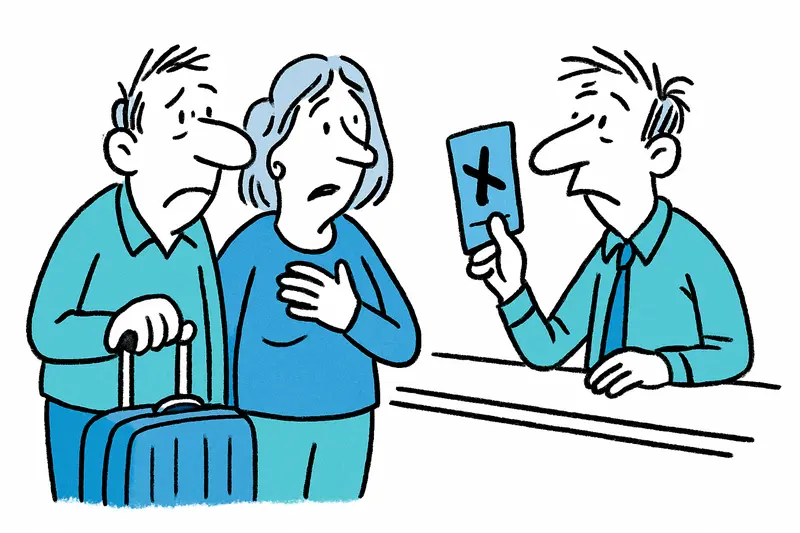
An everyday sketch from Palma: Around 10 a.m. at the Mercat de l’Olivar a vendor says regular customers from Germany canceled at short notice because flights became too expensive. On Passeig Mallorca app taxis are being hailed while an elderly couple stands at the terminal with a paper cup of coffee debating whether to spend the money on a more expensive ticket or fly later. Such scenes show that the price increases are not abstract — they change travel decisions on the spot.
Concrete solutions for travelers: 1) Flexibility with travel dates pays off: moving a day earlier or later can often save a lot. 2) Book round trips instead of searching one-way: return-and-departure bundles are often cheaper than two separate one-way tickets. 3) Check alternative airports: departures from smaller regions or neighboring countries can be cheaper when total costs are considered, and consider car rental trends covered in Why Rental Cars in Mallorca Have Become Noticeably More Expensive — and What You Should Know. 4) Book early if the travel period is fixed, or consciously take last-minute risks — both are strategies with different risks. 5) Ask travel agencies and local operators: some have allocations not visible online.
What should authorities and providers do? First: create more transparency. Consumers deserve clearer information about why short-term prices vary so much. Second: improve capacity management. Airport operators, slot coordinators and airlines could coordinate better to smooth peaks — that would produce fewer extreme price spikes. Third: create incentives for off-peak travel. Local tourism boards and hotels could offer targeted discounts for fringe times to spread demand, an approach related to pressures described in When the Off-Season Gets Expensive: Why Mallorca's Hoteliers Keep Raising Prices.
Practical tip from Palma: If you are flexible, avoid Saturday and Sunday afternoons; early mornings or evenings offer better chances for cheaper tickets. And if you are in town: ask at the counter about allocations or contact local agencies — sometimes hidden options exist there.
Pointed conclusion: The high ticket prices at Easter are not a natural event but the result of market mechanisms, calendar constellation and tight planning. For travelers this means: control your decisions, don’t be driven by portals. For the island: it is time to think about spreading demand — exploitative last-minute prices harm not only the traveler but, in the long run, the reputation as a reliable, accessible destination.
Frequently asked questions
Why are flights to Mallorca so expensive at Easter?
Is it cheaper to fly to Mallorca on a weekday than on the weekend?
Should I book a round trip to Mallorca instead of two one-way tickets?
When is the best time to book a flight to Mallorca for Easter?
Can flying from a different airport save money on Mallorca tickets?
What should I pack for Easter in Mallorca?
Can I still find cheaper flights to Mallorca through a travel agency?
How do expensive Easter flights affect Mallorca’s local economy?
Similar News
When the Wallet Becomes a Danger: Attack in Peguera and Lessons for Mallorca
In Peguera, two women are said to have stolen the wallet from a 75-year-old German couple. When the victim intervened, t...
Plata stays Plata: Young people take over, Llonguets remain
A small bar on Carrer de l'Argenteria will continue: Tolo Serra hands the place over to young Mallorcans at the end of t...
Unnoticed in the Luggage Compartment: How a Boy Traveled More Than 100 Kilometers in a Team Bus
A minor traveled in the undercarriage of a team bus for more than 100 kilometers until his cries for help were heard. A ...

Cap Vermell Grand: Second Michelin Key – a Gift for the East
The Cap Vermell Grand in Capdepera has been awarded its second Michelin key. For the region this elevates the luxury off...
Eurowings lets four aircraft carry names – a friendly idea that also reaches Mallorca
Eurowings is launching a campaign: four Airbus A320s are to carry the first names of people who help others in everyday ...
More to explore
Discover more interesting content

Can Cap de Bou

Townhouse Lleo 72
