
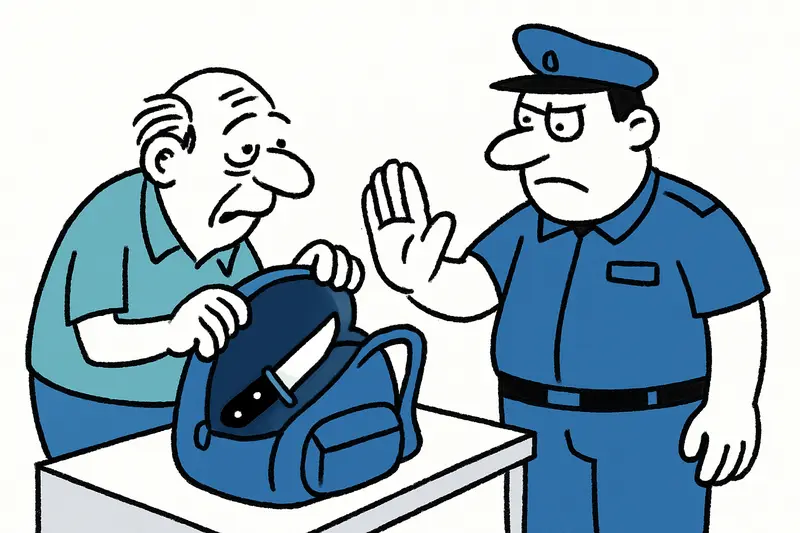
Elderly man tries to fly to Mallorca with knife in backpack — a security check for travelers and authorities
Elderly man tries to fly to Mallorca with knife in backpack — a security check for travelers and authorities
A 68-year-old passenger was stopped at Cologne/Bonn airport after a one-handed folding knife was found in his backpack en route to Palma. Why these incidents occur more often and what the bigger issue is on Mallorca.
Elderly man tries to fly to Mallorca with knife in backpack — a security check for travelers and authorities
Key question: How many individual cases are needed before airports and travelers truly understand what is allowed in carry-on luggage — and what is not?
On Good Friday, security officers at Cologne/Bonn airport discovered a one-handed folding knife with an approximately nine-centimeter blade in the carry-on luggage of a 68-year-old German who intended to travel to Palma de Mallorca. The Federal Police confiscated the item; criminal proceedings are now being initiated against the man. That is the immediate fact. But the underlying question is larger: what does this incident say about our security routines and the information available to passengers?
In short: this is not a curious exception. At Cologne/Bonn, prohibited items are repeatedly found among travelers to Mallorca — from airguns to live ammunition (see Cartridge in Hand Luggage: What Mallorca Travelers Need to Know Now). The pattern is similar: items end up in backpacks through carelessness or ignorance, the controls detect them, the trip is delayed, and often legal steps follow. These reports stand out for the island because the destination is Mallorca, but the underlying problem is present at both ends of the journey: departure and arrival.
A critical analysis reveals several problem areas. First: information deficits. Many travelers do receive pre-trip emails from their airline, but warnings about prohibited items get lost in the flood of travel information. Older passengers who do not fly regularly easily overlook details. Second: visibility at airports. There are large display halls and signs, but they often seem superficial and disappear in the visual overload of the departure area. Third: language and cultural barriers. Not every tourist or commuter understands the small symbols or legal formulations around weapons laws and transport regulations.
What is often missing from the public debate is a concrete look at the everyday situation here in Mallorca. In Palma's early mornings, delivery vans roll down Passeig des Born, the city fills with sun-seekers and office workers; in the evenings, ferries and charter flights arrive. A seemingly unremarkable luggage check at Son Sant Joan airport may be taken for granted by locals — as documented in Rollator as a Hiding Place: Arrest at Palma Airport – Questions for Security and Prevention, but for many holidaymakers it is a new experience. If at check-in an older lady forgets her small pocket knife in her hand luggage — for her it is a kitchen helper, for the authorities a prohibited object. The question remains: how do we make rules tangible and understandable before a police intervention occurs?
Concrete, practical solutions are feasible and would benefit both sides: authorities and travelers. Suggestions from experience on site and observations at airports:
1) Clearer, primarily visual notices — not just text, but simple pictograms in multiple languages directly at the check-in counters and entrance gates. Many people react faster to a picture of a blade than to a legal text.
2) Amnesty stations before security checkpoints — small, clearly visible containers or counters where forgotten items can be voluntarily handed in without immediate threat of penalties. This reduces escalation risk and eases the workload of security staff.
3) Advance notices from travel agents and hosts — holiday homes, fincas and rental platforms can inform their guests with a single sentence: “No knives in carry-on luggage.” A simple note in the rental agreement or in the arrival email often reaches more people than a long legal citation.
4) Staff training — security officers and ground staff should be sensitized to issues of age and uncertainty: a calm explanation is often more effective than an immediate fine or legal procedure. That does not mean being lenient, but acting to de-escalate.
5) Joint campaigns — airports, airlines and state police forces could set seasonal information priorities, especially ahead of holiday travel to island destinations like Mallorca. Short videos, checklists and social media posts in multiple languages would increase reach.
All of this costs little but would lead to fewer controversies at Gate C, fewer missed flights and fewer investigations. On Mallorca we notice such incidents most when a delayed aircraft disrupts arrival times — a disruption comparable to other incidents described in Hidden in the lavatory: the Zurich stowaway and what it means for Mallorca travelers, when rental cars are collected late or families become restless at baggage claim. Small rule violations in luggage routines therefore have tangible effects on everyday life here.
Conclusion: The case involving the 68-year-old traveler is not an isolated incident but a warning sign. Instead of merely lamenting the headline, authorities and service providers should improve information chains, rely on simple visual communication and train staff in gentle conflict resolution. That way most journeys remain relaxed — and checks do what they are meant to do: ensure safety without needlessly unsettling people.
Frequently asked questions
Can I take a pocket knife in hand luggage on a flight to Mallorca?
What happens if security finds a prohibited item in my luggage before a flight to Mallorca?
Why do travelers keep bringing banned items onto Mallorca flights?
How can airports make hand luggage rules clearer for Mallorca travelers?
Are there ways to give up a forgotten knife before airport security in Mallorca?
What should I pack differently when flying to Mallorca if I normally carry tools or pocket items?
Why does a luggage problem at Cologne/Bonn affect Mallorca travelers so much?
How can Mallorca holidaymakers avoid problems with airport security before departure?
Similar News
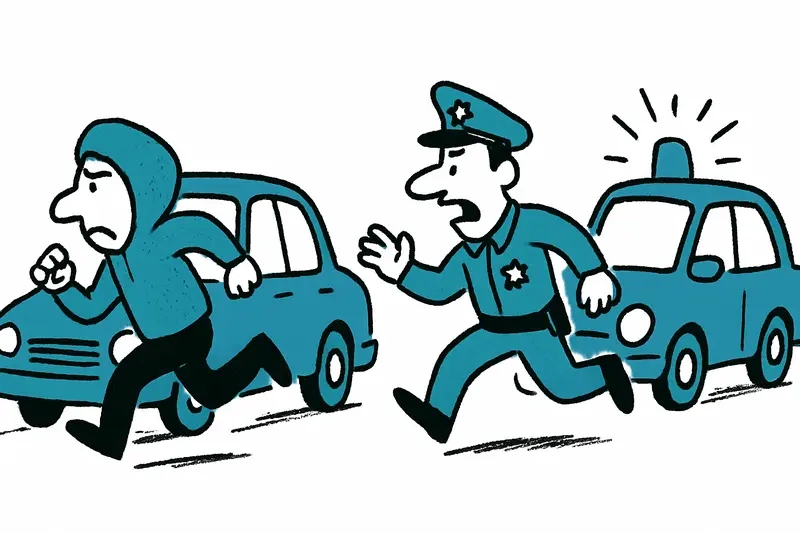
Rental Car Theft in El Arenal: What This Incident Reveals About Our Gaps
A teenager steals a running rental car in El Arenal, flees on foot, climbs over walls and is caught by the Guardia Civil...
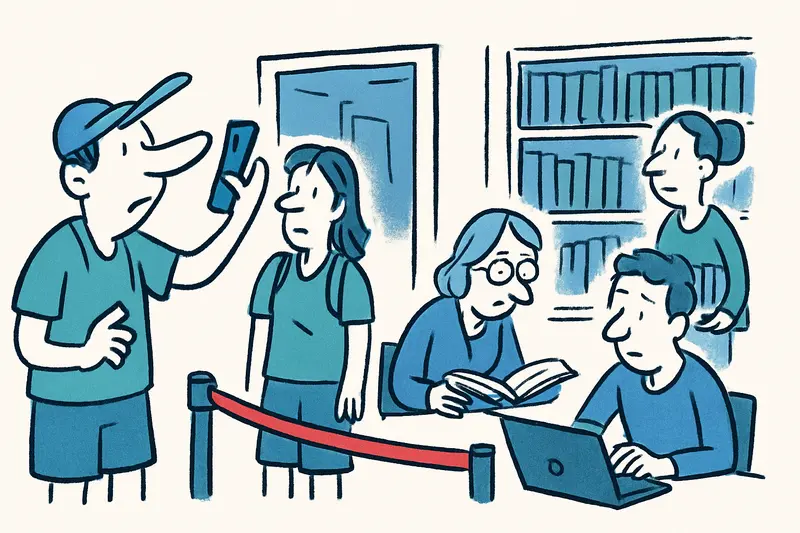
Red Rope in Palma's Library: What Helps Against Selfie Tourism — and What's Missing
Palma's city library cordoned off an area with a red rope to keep selfie tourism away from reading and working activitie...

Fort San Carlos: Museum, Harbor Dispute — and a Conflict That Demands Answers
The military museum at Fort San Carlos sits right on Palma's harbor, with unexpectedly quiet rooms filled with cannons a...
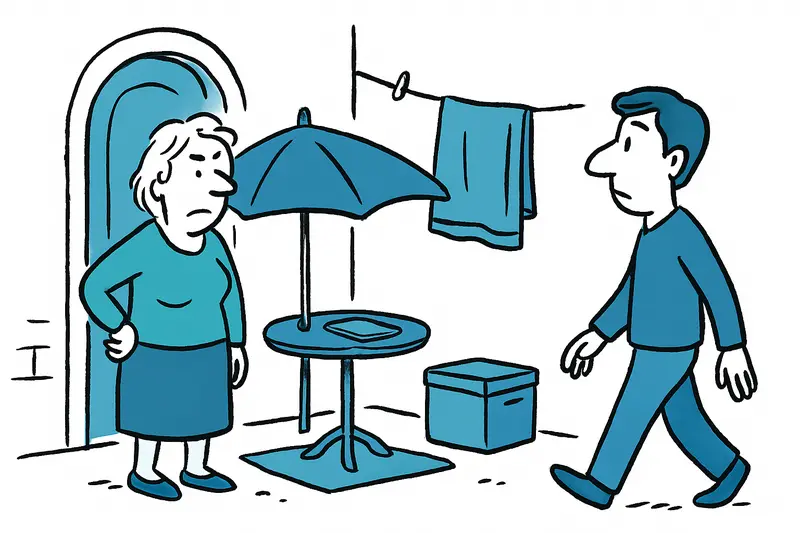
Old Town Under Pressure: When a Doorway Becomes a Sleeping and Shower Place
For months a woman has been living with a parasol, a clothes rack and personal belongings next to the social welfare off...

When Shopping Weighs Heavier: Mallorca Demands a Tax Pause on Food and Fuel
Rising prices are putting pressure on households and agriculture. The Balearic Islands are calling for temporary tax rel...
More to explore
Discover more interesting content

Can Cap de Bou

Townhouse Lleo 72
